
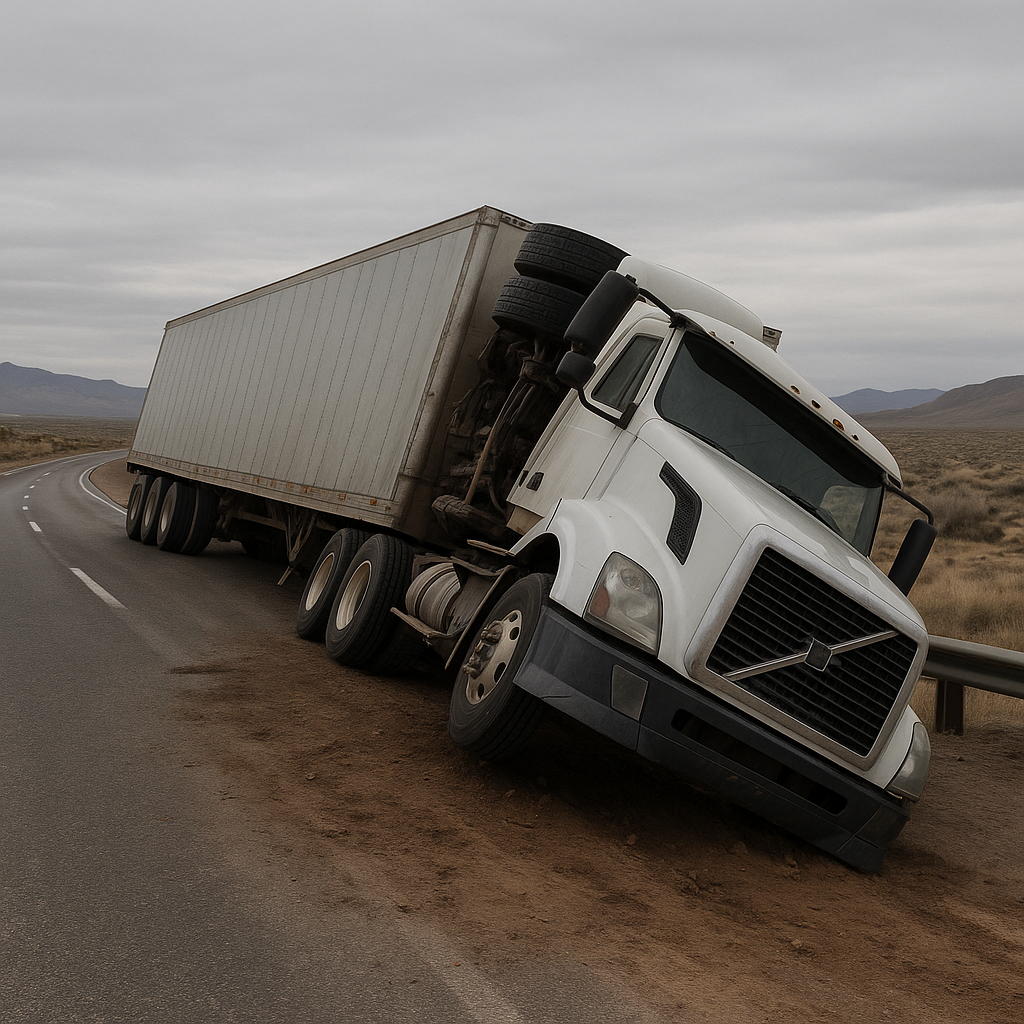
How Common Are Semi Truck Rollovers in Nevada?
Why Nevada Drivers Ask This Question
Every driver who has traveled the highways of Nevada has likely encountered massive commercial trucks dominating the road. The sight of semi trucks, especially on major interstate routes like I-15, I-80, and US-95, is extremely common due to Nevada’s important role as a transportation hub between California, Utah, and other western states. Given the vast stretches of open desert highways, high speed limits, and Nevada’s sometimes fierce weather conditions, it’s no surprise that local residents and travelers alike ask: How common are semi truck rollovers in Nevada?
This is a question grounded in practical concerns. A semi truck rollover is a dangerous event—not only for the truck driver, but also for every vehicle sharing the road. Rollovers can block entire lanes, scatter cargo, cause traffic delays, or, in the worst cases, result in severe injuries or fatalities. Nevada drivers, particularly those commuting regularly or working in industries reliant on trucking, understandably want to know how frequently these incidents happen and whether the risk is higher in Nevada compared to other states.
Clear Explanation with Nevada Context
While precise year-to-year data for Nevada can fluctuate, semi truck rollovers are a real concern on the state’s highways. According to the Nevada Department of Transportation and reports from the Federal Motor Carrier Safety Administration (FMCSA), large trucks—including semis, big rigs, and tractor-trailers—are involved in hundreds of accidents annually across the state. Of these, a small but significant percentage are categorized as rollovers.
On average, Nevada sees between 40 and 60 semi truck rollover accidents each year, based on available state traffic safety and crash reports. This number might seem small compared to the total number of truck accidents, but the severity and visibility of rollovers often make them stand out. Additionally, the likelihood of a rollover is not uniform throughout the state and can depend on several regional factors:
– Northern Nevada (I-80 corridor): Frequent wind gusts and mountainous terrain increase rollover risk, especially during winter storms.
– Southern Nevada (Las Vegas area, I-15): Heavy traffic, sudden lane changes, and freeway ramps are common settings for truck instability.
– Open desert highways: High speeds and monotony can lead to driver fatigue or overcorrection, both key factors in rollovers.
In summary, while the overall number of rollovers relative to the volume of truck traffic remains low, they are “common enough” to be a regular topic of concern for state transportation officials and local drivers alike.
Helpful Background Information
To better understand why and how semi truck rollovers occur in Nevada, it helps to look at contributing factors and specific risks peculiar to the Silver State.
Factors that increase the risk of rollovers in Nevada include:
– Weather Extremes: Nevada’s climate varies widely, ranging from triple-digit summer heat to unexpected snow or ice in higher elevations. High winds are a particular hazard, especially in areas like Washoe Valley and Ely, where sudden gusts can catch a tall, lightly loaded trailer off-guard.
– Long Distances and Driver Fatigue: With many stretches of highway running through sparsely populated regions, truck drivers often face long, uninterrupted hours. Driver fatigue is a major factor in loss-of-control crashes, including rollovers.
– Shifting Cargo: Improperly secured loads make trucks top-heavy and prone to tipping over, especially during sudden maneuvers or sharp turns on freeway onramps and offramps.
– Highways Designed for Speed: Nevada’s highways often see speed limits of 70 mph or greater. Navigating curves or reacting to obstacles at high speed increases the chance of a rollover, particularly when combined with any of the other factors listed above.
Common Misconceptions
There are several misconceptions about semi truck rollovers in Nevada. Here are a few to keep in mind:
– Myth: Rollovers are caused by high winds alone.
Fact: While high winds are a well-known hazard, most rollovers are the result of a combination of contributing factors—overloaded trailers, sudden steering corrections, speeding, and fatigued drivers all play a role.
– Myth: Rollovers happen only in remote desert areas.
Fact: Rollovers can and do occur on busy city freeways, especially near complex interchanges and onramps. Urban areas such as Las Vegas frequently report truck rollover incidents during peak traffic hours.
– Myth: Most rollover accidents result in severe injuries.
Fact: Not every rollover results in a serious injury or fatality, particularly if the truck is empty or traffic is light. However, given the size and momentum of semi trucks, the potential for significant damage or injury is always present.
Closing Paragraph
So, how common are semi truck rollovers in Nevada? While not an everyday occurrence, they are frequent enough to be a recognized and serious traffic safety issue, especially in certain hotspots and during extreme weather conditions. Drivers in Nevada should remain aware of the factors that increase rollover risks—like high winds, fatigued driving, and fast curves—and always exercise caution when sharing the road with large commercial trucks. Increased awareness and safe driving practices go a long way toward reducing the impact and frequency of these dangerous events on Nevada’s highways.