
How Insurance Evaluates Vehicle Damage After Truck Accidents
Introduction to Insurance Claims in Truck Accidents
Truck accidents often involve significant damage and complexity, requiring a thorough evaluation by insurance companies. Understanding the process of how insurance evaluates vehicle damage after such incidents can help policyholders navigate the claims process more effectively.
How the Claims Process Typically Works in This Situation
When a truck accident occurs, the impacted parties usually contact their respective insurance companies to report the incident. The insurer then initiates a systematic process to handle the claim, aiming to assess damage and determine coverage.
Key Steps Involved in Handling a Claim
1. Initial Report: Insured parties must promptly report the accident to their insurance company, providing details such as the date, time, location, and description of the incident.
2. Documentation: Insurers require documentation, including photographs of the damage, police reports, and witness statements, to accurately assess the situation.
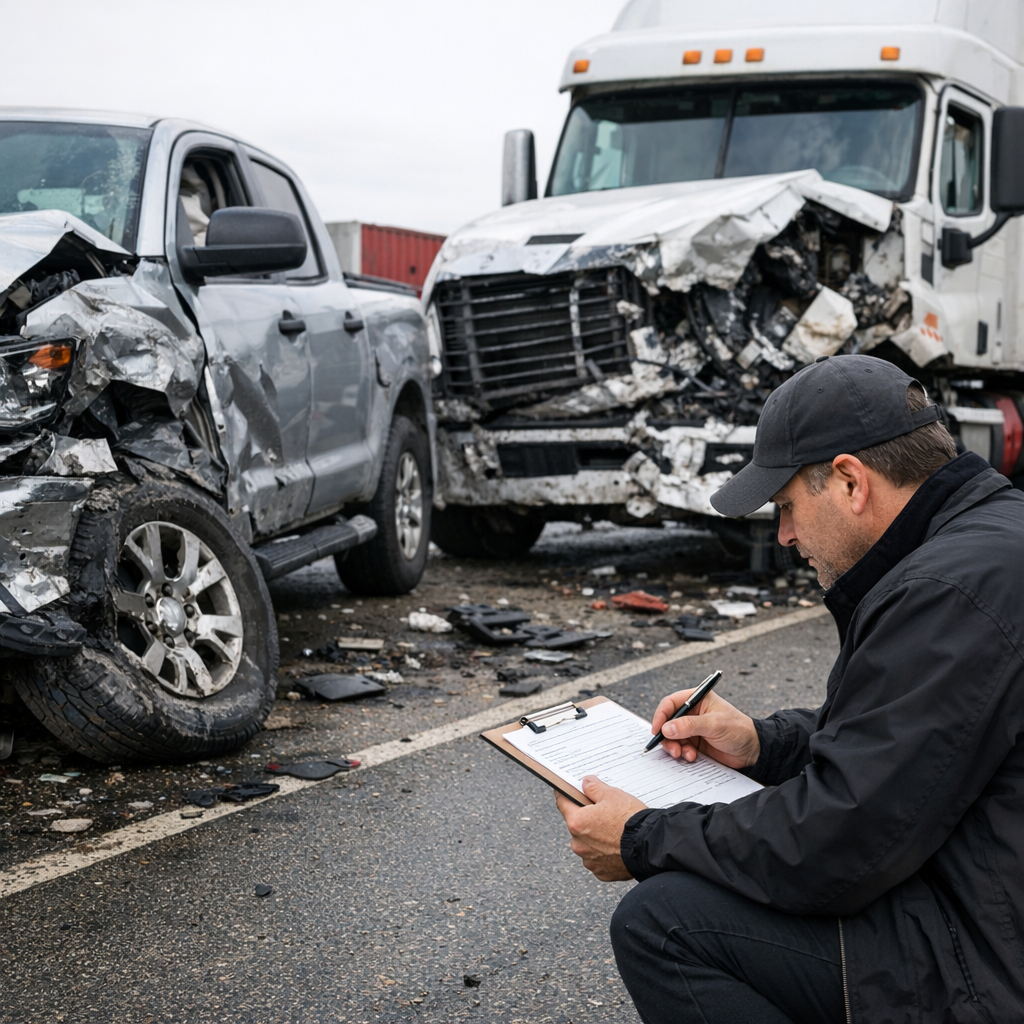
3. Damage Assessment: An adjuster or a designated representative evaluates the extent of the vehicle damage. This often involves inspecting the truck and, occasionally, consulting with mechanics or repair shops.
4. Replacement and Repair Estimates: Estimates for repair or replacement of damaged parts are obtained, sometimes through approved repair facilities. These estimates play a crucial role in determining the claim’s value.
How Insurance Companies Review and Evaluate Claims
Insurance companies review claims by:
– Analyzing Documentation: All submitted documents are carefully reviewed to verify the details and legitimacy of the claim.
– Adjuster Evaluation: An adjuster, skilled in assessing vehicle damage, visits the site, if necessary, to conduct a detailed evaluation of the truck’s condition.
– Cost Analysis: Based on the adjuster’s report and repair estimates, insurers analyze the costs involved in repairs compared to the truck’s pre-accident value.
Common Issues or Delays That May Arise
Delays in the claims process can occur due to missing documentation, disputes over fault, or disagreements regarding repair costs. In such cases, clear communication with the insurance company could facilitate faster resolution.
How Decisions and Payouts Are Generally Determined
Insurers base their decisions on the evaluation outcome, policy details, and liability factors. Payouts reflect the assessed damage minus any applicable deductibles. The claims process also considers whether the vehicle is declared a total loss or if repairs are feasible and economically viable.
General Awareness of Options When Challenges Occur
Policyholders encountering obstacles or disagreements during the claims process have several options:
– Clarification and Negotiation: Engaging with the insurance company for clarification or negotiating terms is a standard approach.
– Seeking Professional Input: Some individuals choose to seek professional or legal advice, especially when complexities or disputes arise.
Closing Informational Summary
Navigating the insurance process after a truck accident involves understanding key steps, from initial reporting and documentation to final claim evaluation and payout. While challenges may arise, staying informed and proactive can enhance the experience, ensuring a smoother journey through what might otherwise be a complex process.