
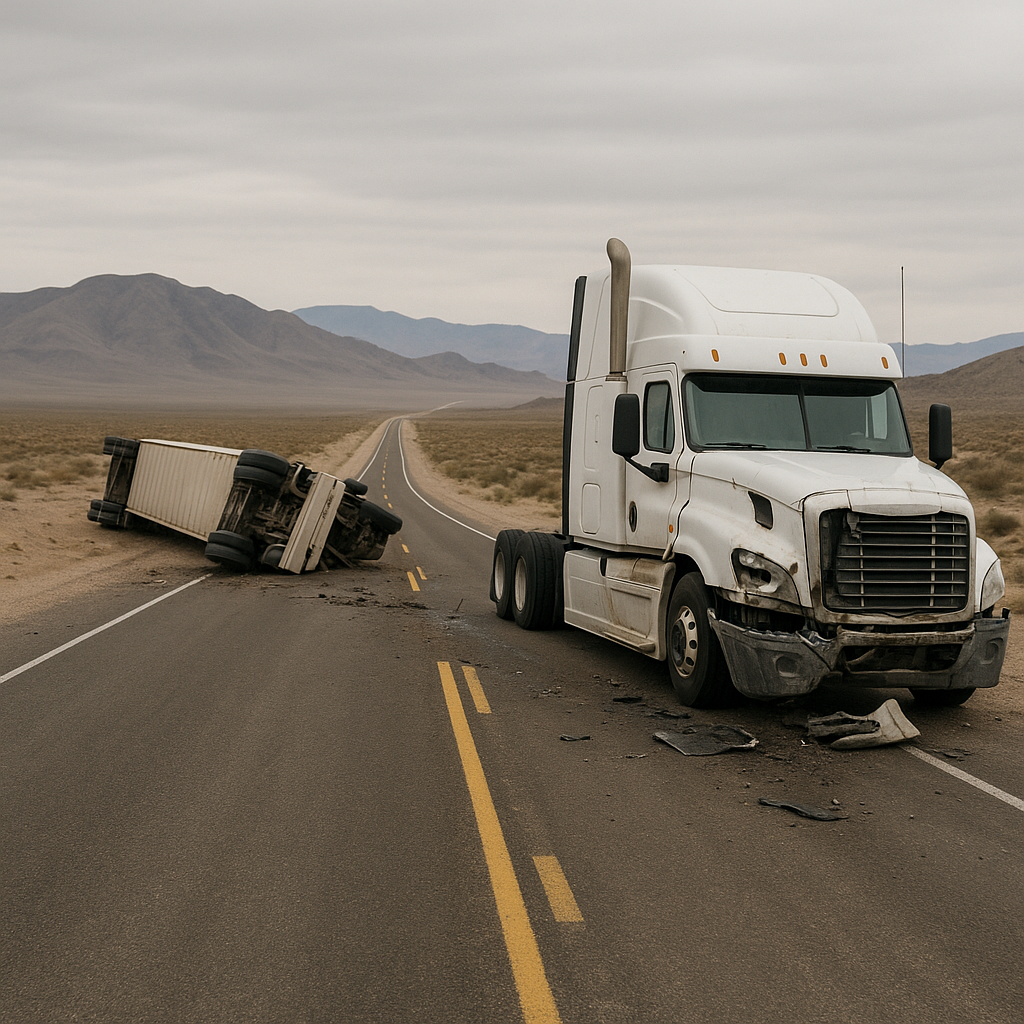
Truck Crash Patterns on Desert Highway Stretches in Nevada
Overview of the Nevada Location or Highway Segment
Nevada’s vast expanse is marked by long, straight highways threading through arid desert landscapes—a setting emblematic of the American West. This environment is defined by iconic and sometimes lonely stretches of roadway such as Interstate 80 (I-80), US Highway 95, US 50 (famously known as “The Loneliest Road in America”), and portions of Interstate 15, among others. These highways play a pivotal role in cross-country freight transport, connecting Nevada’s major cities—Las Vegas, Reno, and smaller towns in-between—with the broader logistical web of the western United States.
Truck traffic is constant and crucial on these desert highways. For many miles, these roads are bordered by open desert, mountain foothills, and sparse vegetation, with few towns, rest stops, or services. This unique landscape, in combination with the functional demands of interstate commerce, shapes distinct truck crash patterns that set Nevada apart from other states. Understanding the nuances of truck crashes in these locations is important for both commercial drivers and those who frequently share these desert highways.
Why Truck Accidents Are More Common in This Area
When examining why desert highway Nevada truck crashes are more prevalent, several contributing factors emerge that reflect both the physical characteristics of the roads and human or operational considerations. Key aspects include geographic isolation, monotonous driving environments, weather extremes, and the sheer volume of freight traffic moving large distances across sparsely populated stretches.
Road Design Factors That Influence Crashes
Though Nevada’s highways are generally well-maintained, the geography and necessity of spanning long distances with minimal services create inherent design challenges. Many desert roads are characterized by:
– Long, Straight Segments: Extended periods of driving without changes in direction or speed can lead to driver fatigue and reduced attention—a phenomenon sometimes called “highway hypnosis.” Truck drivers, who often travel hundreds of miles between stops, are particularly susceptible to the mental lulls induced by endless, unvarying vistas.
– Limited Shoulder Space: Some older segments of highway, particularly in more remote areas, offer narrow or non-existent shoulders. In the event of mechanical failure or emergencies, trucks have limited safe refuge.
– Few Rest Areas: While major highways do provide occasional rest stops, the distances between them can be substantial. This scarcity can encourage drivers to push beyond optimal driving periods—potentially exacerbating fatigue-related incidents.
– Elevation Changes and Grades: Certain desert highways in Nevada cross mountain passes where road grades become steeper. These elevation changes can challenge heavily-laden trucks, particularly on descents where brake failure and loss of control become concerns.
– Limited Lighting: Nighttime navigation becomes more challenging due to absent or minimal highway lighting, increasing the risk for both fatigue-related incidents and collisions with wildlife that cross the darkened roads.
Traffic Patterns and Truck Volume Considerations
Truck crash patterns on Nevada’s desert highways are also shaped by commercial traffic realities:
– Heavy Freight Volume: Nevada is a main thoroughfare for transcontinental trucking. I-80, for instance, serves as a major east-west corridor for goods between California and points east, while US 95 supports north-south routes between Las Vegas and northern states. The proportion of trucks on these highways can be especially high, with some stretches dominated by tractor-trailers during certain hours.
– Variable Passenger Vehicle Density: While cities like Las Vegas and Reno see heavy combined traffic, desert segments often oscillate between periods of relative emptiness and sudden clusters of vehicles—especially during holiday travel peaks or special events. When truck and passenger vehicle interactions increase after long, solitary stretches, the risk of collisions can spike.
– Fatigue and Scheduling Pressures: Truck drivers traversing desert stretches often face tight logistical schedules. The combination of long hours, regulatory limits, and the desire to cover as many miles as possible within set windows can push drivers to continue through fatigue, sometimes at odd hours when alertness is lowest.
– Seasonal and Diurnal Variation: Extreme heat in the summer can lead to increased tire blowouts or mechanical stress, while winter nights occasionally bring freezing temperatures or rare desert snow and ice, all of which can affect drivability and crash propensity.
Safety Awareness Considerations (Non-Advice Tone)
Awareness of these patterns can be valuable for operators of heavy trucks and smaller vehicles alike—not for the purpose of giving advice, but to highlight situational realities that those who spend time on Nevada’s desert highways may observe.
Both routine commuters and long-haul drivers regularly encounter vast stretches where isolation means help might be some distance away. The mental demands of scanning the horizon for hours, managing vehicle performance on steep grades, and staying alert for unexpected wildlife crossings are prevalent concerns. Additionally, the lack of frequent rest stops may be a topic of attention when planning trips across these desert segments.
Day and night conditions bring their own challenges. The glare of midday sun on pavement can contribute to visibility issues, while darkness increases the potential for fatigued driving and makes it harder to spot slower-moving vehicles or hazards. Shifting weather patterns—though the desert climate is generally dry—occasionally bring dust storms that reduce visibility to near-zero, creating sudden and hazardous driving conditions.
Interplays between high freight volumes and sporadic personal vehicle traffic also alter normal traffic dynamics. After hours of low-density travel, a sudden slowdown or emergence of denser traffic near a rest area, intersection, or town may create unexpected stop-and-go situations. Wild variances in vehicle speed, size, and performance (for example, passenger cars overtaking slower trucks ascending hills) can lead to increased crash risk, particularly when mixes of driver fatigue and local road limitations are considered.
Neutral Closing Paragraph
The patterns and conditions influencing truck crashes on desert highway stretches in Nevada reveal a convergence of environmental, logistical, and human factors unique to the Silver State. Geographic isolation, long unbroken roads, fluctuating traffic volumes, and intermittent services create a distinctive environment that shapes the movement of commercial vehicles and those who share their route. Studying these dynamics not only brings greater understanding to Nevada’s transportation challenges but also provides insight into how the demands of interstate commerce interface with the realities of desert travel. As Nevada continues to serve as a hub within the national freight network, ongoing awareness and research into truck crash patterns remain important for all who traverse its iconic desert highways.