
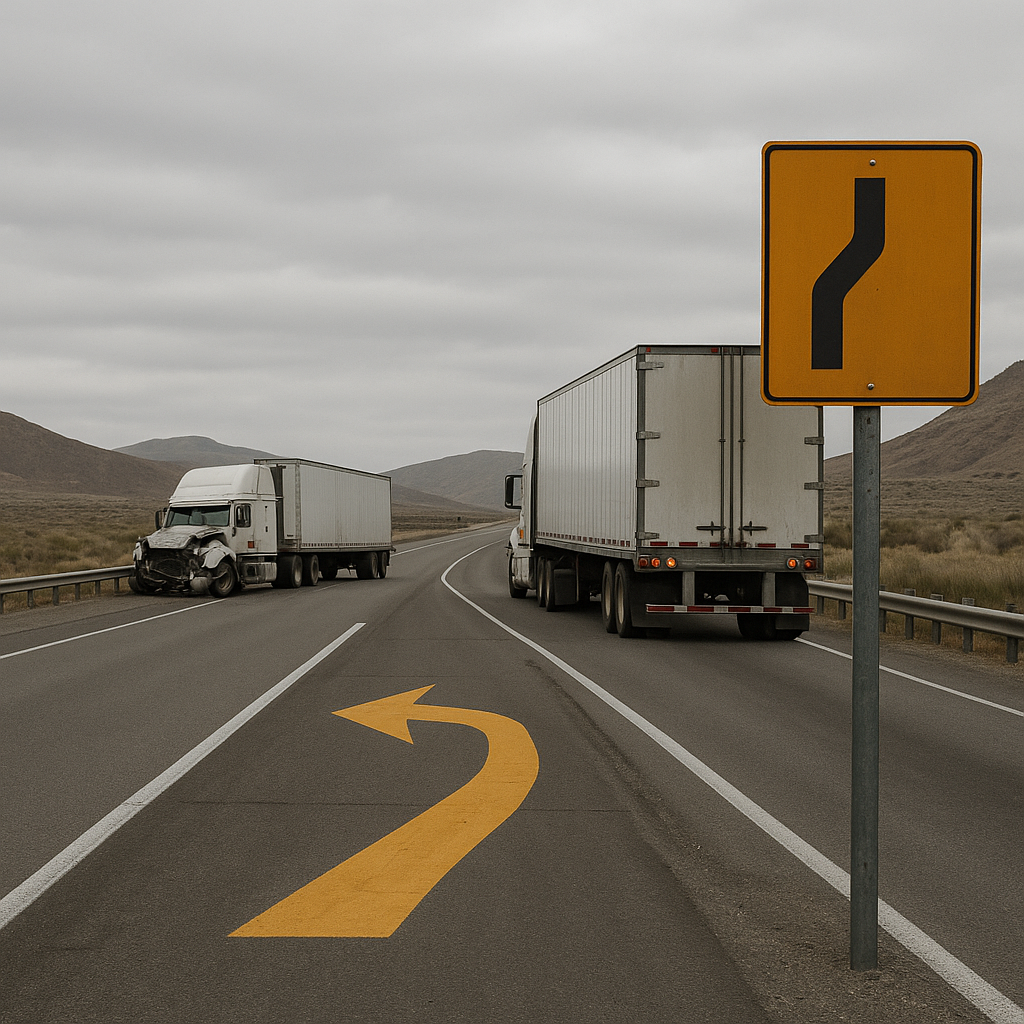
Nevada Highway Merge Zones That Increase Truck Accidents
Overview of the Nevada Location or Highway Segment
Nevada’s vast highways connect sprawling urban areas with remote corners of the Silver State, carving paths through mountain passes, deserts, and the thriving Las Vegas metropolis. Among these thoroughfares, certain merge zones along highways such as Interstate 15 (I-15), Interstate 80 (I-80), and U.S. Route 95 (US-95) have consistently shown higher rates of truck-involved accidents. With Nevada’s strategic location between California, Utah, and Arizona, the state sees a significant volume of trucking activity, making the design and function of merge zones critical points of concern.
For example, the I-15 corridor—spanning from the California border through Las Vegas and onwards to Utah—is a prime artery for freight and passenger traffic. Similarly, I-80, crossing the northern expanse from Reno to Elko and beyond, serves as a major cross-country trucking route. Key merge points, particularly near dense interchanges (like the Spaghetti Bowl in Las Vegas or the Spaghetti Bowl in Reno), are commonly flagged in reports from NDOT and Nevada Highway Patrol for higher accident frequencies involving tractor-trailers and other large commercial vehicles.
Why Truck Accidents Are More Common in This Area
Several Nevada merge zones have emerged as hotspots for truck accidents, with contributing causes rooted in both physical and operational conditions. As Nevada highways intersect with urban growth and transit demands, merge zones experience surges in both truck and commuter traffic. The mix of high-speed vehicles and the daunting size of commercial trucks creates a challenging dynamic—especially in areas where:
– Lanes narrow rapidly or merge onto high-speed roads
– Entrance ramps are shorter than recommended for optimal merging
– Sight lines may be obscured by landscape or construction
Between the state’s economic growth, tourism, and its pivotal freight corridors, congested merge points can often devolve into flash points for dangerous interactions between trucks and smaller vehicles.
Road Design Factors That Influence Crashes
A closer look at Nevada’s highway engineering illuminates several design features that can heighten the risk of truck accidents in merge zones:
Short Acceleration Lanes: In several locations, particularly older segments of highway or near construction zones, acceleration lanes are shorter than optimal. This puts truck drivers—who require more distance and time to reach highway speeds—at a disadvantage. When trucks cannot smoothly integrate, abrupt braking or swerving may follow, increasing rear-end collision risk.
Reduced Visibility: Some merge zones near curves, overpasses, or embankments can limit a driver’s forward visibility. For instance, merging onto I-15 northbound from downtown Las Vegas at night or during rush hour can complicate judgments about how and when to enter fast-moving traffic. For truckers, whose blind spots are larger, this becomes even more pronounced.
Lane Drops and Merges: In the Reno Spaghetti Bowl and portions of I-580 approaching south Reno, frequent shifts from three lanes to two—sometimes coinciding with on-ramp merges—require drivers to make quick decisions. Trucks, being less agile, may inadvertently block or cut off other drivers during these transitions.
Inadequate Signage and Markings: When signage or road markings are unclear—sometimes due to construction, weathering, or vandalism—drivers may have little warning of lane drops or merging lanes. For truck drivers unfamiliar with the area, this can cause hesitation or erratic maneuvers.
Traffic Patterns and Truck Volume Considerations
Another layer to the issue is the sheer volume of freight transported through and within Nevada. According to the Nevada Department of Transportation, as much as 70% of all goods arrive by truck. This persistent flow peaks during certain hours or holiday seasons, causing particular merge zones to face extreme congestion.
Peak Travel and Event Traffic: In Las Vegas and Reno, local events, conventions, and holiday weekends create unpredictable traffic surges. Merge points along I-15, for instance, become cluster points for both local commuters and heavy trucks.
Mixed-Speed Traffic: Nevada’s highways are often populated by a blend of long-haul trucks maintaining regulated speeds and local drivers eager to accelerate or decelerate rapidly. Merge zones become conflict points when passenger vehicles cut in front of trucks with little warning, forcing sudden braking or swerving.
Weather Impacts: Nevada’s weather—especially in the north during winter—can further compound merging hazards. Icy conditions around Reno or sudden dust storms south of Las Vegas reduce traction and visibility, hampering both truck drivers and other motorists during merging movements.
Freight Growth and Infrastructure Strain: As e-commerce and logistics operations increase year over year, Nevada’s highways bear more strain from increased truck traffic. Existing merge infrastructure, sometimes designed for lower traffic volumes, now contends with these elevated demands.
Safety Awareness Considerations (Non-Advice Tone)
The interplay of road design, truck volume, and diverse traffic makes awareness paramount for highway users navigating Nevada merge zones. Understanding the local context—such as anticipating heavy trucking through distribution hubs like Reno and North Las Vegas, or recognizing that events and tourism can swell traffic—can help foster more careful driving behavior.
Awareness of large vehicle blind spots, the extended stopping distances required by trucks, and the limited maneuverability of tractor-trailers in tight merge situations is frequently emphasized by state transportation agencies in Nevada. In periods of road construction or when signage is temporarily modified, a conscious effort to account for shifting merge patterns could mitigate confusion on the road.
The Nevada Department of Transportation’s public campaigns often highlight the unique features and challenges of state highways, urging all drivers—commercial, local, or tourist—to remain attentive at frequently cited merge trouble spots. Sharing the road equitably with trucks at these critical points remains a collaborative responsibility, acknowledged by both trucking associations and safety advocates alike.
Neutral Closing Paragraph
Nevada’s highway system is an essential lifeline for commerce, tourism, and local communities alike. While merge zones present specific challenges that can increase the occurrence of truck accidents, awareness of the regional characteristics, road layout, and prevailing traffic conditions offers valuable perspective on the issue. As metropolitan areas grow and freight corridors evolve, ongoing infrastructure improvements, education efforts, and attentive driving all play a part in shaping safer outcomes along Nevada’s dynamic highways. By recognizing and understanding the factors influencing merge zone safety, everyone using these roads contributes to a more resilient transportation network for the Silver State.