
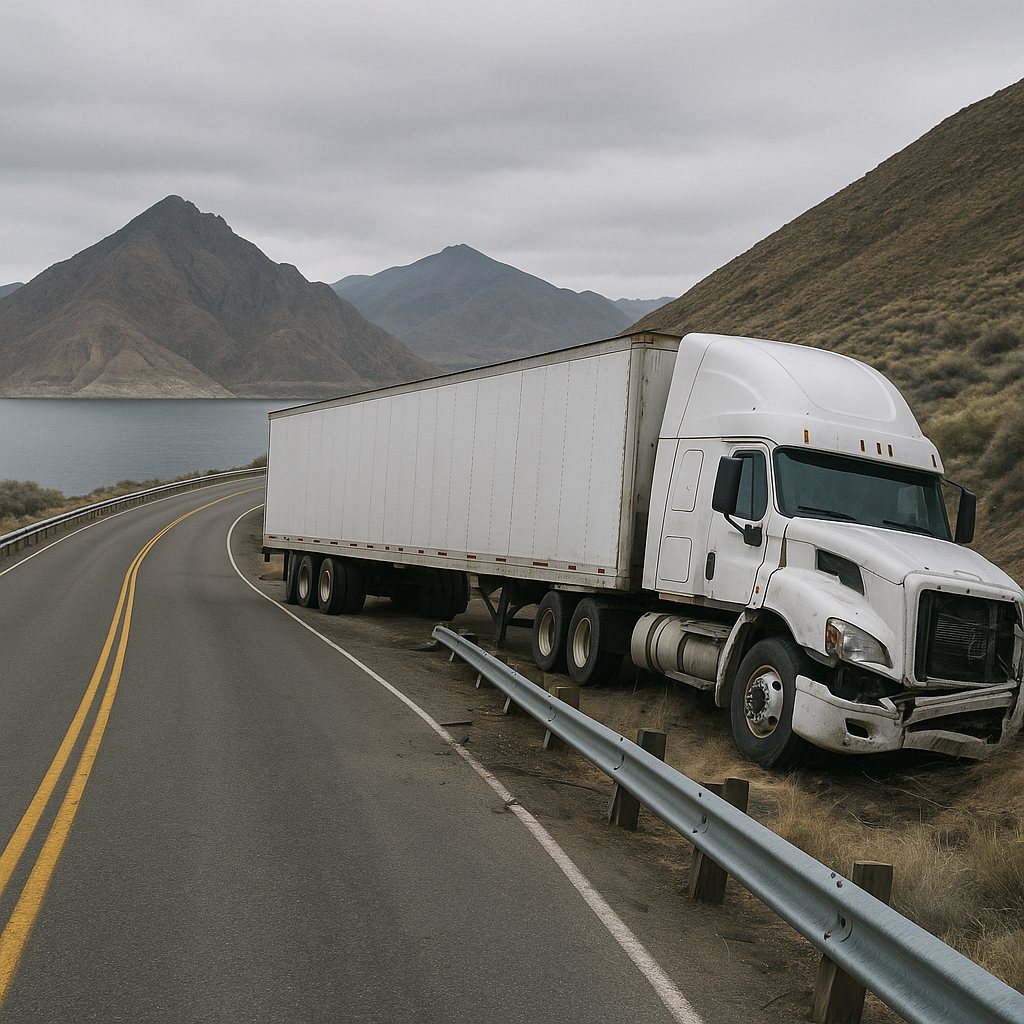
Truck Crash Danger Zones Near Pyramid Lake Routes
Overview of the Nevada Location or Highway Segment
Pyramid Lake is a stunning high desert lake situated about 40 miles northeast of Reno, Nevada. Hugely significant to the Pyramid Lake Paiute Tribe and home to unspoiled beaches and unique rock formations, the area is a favored outdoor destination. However, the highways winding through this landscape also support essential transportation links, connecting the Reno-Sparks area to communities in northern Nevada and beyond.
Of particular note are State Route 445 (SR-445, also known as Pyramid Highway), State Route 446 (Wadsworth–Nixon Road), and State Route 447 (Gerlach Road), which form the primary arteries around the lake. SR-445 snakes its way from the edge of Sparks, tracing an often desolate but scenic route to Sutcliffe and Nixon. These highways act as critical connectors not only for tourists but also for commercial vehicles, including long-haul trucks and regional delivery transport.
This mix of recreational, residential, and freight traffic, paired with stretches of rural two-lane roads, renders the region particularly sensitive to truck crash incidents. As a result, the topic of “Pyramid Lake truck crash danger” is frequently discussed among motorists and community planners concerned with highway safety in northern Nevada.
Why Truck Accidents Are More Common in This Area
Several unique factors make truck accidents more prevalent in the Pyramid Lake route area compared to other regions. The interplay of remote geography, the pressures of heavy trucking demand, and the limitations of rural highway infrastructure all contribute to heightened crash risks.
Trucks use these routes for various reasons: delivering goods to remote communities, hauling materials from mining operations, and supporting the broader logistics needs of northern Nevada. Peak tourist seasons and regional events like Burning Man (held annually north of Pyramid Lake) can further intensify truck and passenger vehicle volumes. When these transportation needs overlap with the physical and logistical constraints of the highways, the area becomes a hotspot for truck crash danger.
Road Design Factors That Influence Crashes
One of the pivotal elements increasing crash potential near Pyramid Lake is the design characteristics of the region’s highways. SR-445, for instance, is largely a two-lane rural road with limited shoulders and sparse passing zones. Curves and elevation changes, along with occasional dramatic wind shifts typical of Nevada’s desert basins, can catch even experienced drivers off guard.
Certain segments, particularly north of Spanish Springs and into the reservations near Nixon and Sutcliffe, are notably isolated. Roadside infrastructure is minimal: there are few safe areas for pull-offs, scarce street lighting, and long stretches without cell service. During adverse weather—dust storms, icy patches in winter, or the sudden downpour—visibility and traction can deteriorate quickly.
Intersections, such as those near the entrance to the Pyramid Lake Paiute Reservation or where SR-446 and SR-447 converge, further compound the danger. These junctions may not be equipped with comprehensive traffic control devices or regular patrols, leaving a margin of unpredictability for approaching trucks and passenger vehicles alike.
Traffic Patterns and Truck Volume Considerations
Highway traffic in the Pyramid Lake region ebbs and flows based on seasonal, economic, and social factors. During summer months and major regional events, such as the arrival of festival-goers or outdoor enthusiasts, the roads experience a dramatic surge in mixed-vehicle use. Trucks hauling supplies, water, and equipment for events join local commuter and tourist traffic, resulting in congestion on roads not originally engineered for such volumes.
Regional commerce also contributes significantly to truck volumes. State Route 445 and its connectors serve as alternate routes for truckers avoiding busy sections of I-80 or heading to northern Nevada mining and agricultural sites. Increased commercial trucking inherently adds to crash risk due to larger vehicle sizes, broader turning radii, and longer stopping distances compared to regular passenger cars.
Fatigue is another factor inherent to rural trucking. Drivers covering long distances without sufficient rest areas may be more susceptible to delayed reaction times. Given the monotony and remoteness of the terrain, fatigue-linked incidents can and do happen.
Safety Awareness Considerations (Non-Advice Tone)
Awareness and understanding of the unique risks on Pyramid Lake routes can have a marked impact on individual and community safety perceptions. The region’s highways are widely regarded as scenic byways, but their hazards—especially as they relate to truck crash danger—are equally notable.
Travelers using these routes often encounter a range of vehicles, from RVs and passenger trucks to massive tractor-trailers. Knowledge of blind corners, stretches with no cell phone coverage, or the locations of the few available pull-outs is considered valuable information within the local driving community.
Local agencies and the Pyramid Lake Paiute Tribe participate in ongoing efforts to promote roadway safety. Electronic signage sometimes communicates real-time hazards or reminders of wildlife crossings, while public safety campaigns are occasionally launched in advance of peak travel periods. The presence of law enforcement may increase during major events, but vast stretches of the highways remain outside regular patrol ranges, heightening the importance of driver attentiveness.
Weather unpredictability also overlays another layer of complexity, as sudden storms or wind gusts can shift road conditions rapidly. Experienced drivers recognize that the road can look dramatically different within a single hour, influencing how even the most routine routes are approached.
Neutral Closing Paragraph
In summary, highways near Pyramid Lake, such as SR-445, SR-446, and SR-447, play a vital role in connecting northern Nevada’s diverse communities and industries. These routes, while scenic and essential, are also marked by factors that can elevate the risk of truck crashes, from challenging road designs to fluctuating vehicle volumes and unpredictable weather patterns. As efforts to promote highway safety continue, awareness of these “Pyramid Lake truck crash danger” zones remains an ongoing point of community focus, helping to inform the daily decisions of travelers, local residents, and commercial drivers alike.