
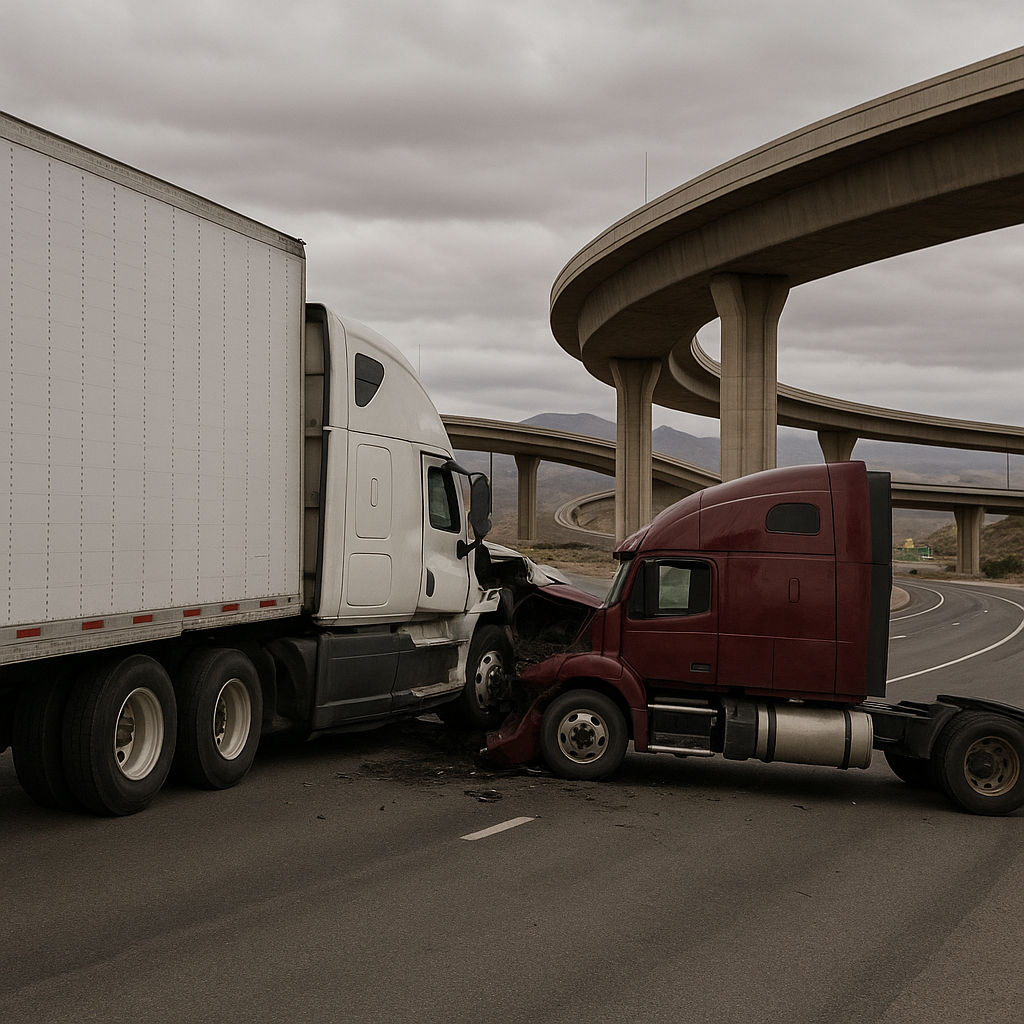
Truck Accident Hotspots Near Nevada Freeway Interchanges
Overview of the Nevada Location or Highway Segment
Nevada’s network of freeways forms the lifeline of the state, supporting commerce, tourism, and everyday traffic. The state’s unique geography—vast stretches of desert punctuated by bustling cities like Las Vegas, Reno, and Henderson—requires a robust transportation infrastructure. Among these, several major freeway interchanges such as the “Spaghetti Bowl” in Las Vegas (the junction of I-15 and US 95), the I-80/I-580 interchange in Reno, and critical segments near the California border, stand out not only for their traffic volume but for their reputation as truck accident hotspots.
These high-traffic nodes experience a convergence of long-haul trucks, local delivery vehicles, and commuter cars. As Nevada continues to serve as a crucial link for freight moving between Southern California, the Pacific Northwest, and the Rocky Mountain region, understanding why certain freeway interchanges are particularly susceptible to truck accidents is fundamental for those who use these vital routes.
Why Truck Accidents Are More Common in This Area
Truck accidents are disproportionately frequent near Nevada freeway interchanges compared to other segments of highway. Several interrelated factors contribute to this trend, ranging from the layout of the roadway to the sheer volume and type of traffic passing through each junction.
Road Design Factors That Influence Crashes
Freeway interchanges—by nature—are complex. In Nevada, such complexity is heightened by unique regional challenges:
– Multiple-lane transitions: Interchanges like the Spaghetti Bowl in Las Vegas or the I-515/I-215 junction near Henderson often have several lanes merging, diverging, or changing direction within a short distance.
– Sharp curves and elevation changes: The need to fit interchanges into urban landscapes or desert terrains can result in tight curves, sudden grade changes, and limited visibility.
– Short on-ramps and off-ramps: Especially in older segments of Nevada’s freeway system, some ramps may not provide sufficient space for heavy trucks to accelerate or decelerate, increasing the risk of rear-end collisions or sideswipes.
– Construction and maintenance zones: Given Nevada’s commitment to infrastructure upgrades, active or recent construction zones can present unpredictable lane shifts, uneven pavement, and constantly changing traffic patterns.
These road design elements demand quick adjustments, precise vehicle control, and heightened situational awareness. While all drivers are affected, large trucks—due to their length, weight, and limited maneuverability—are more vulnerable to these rapid changes.
Traffic Patterns and Truck Volume Considerations
Nevada’s geography and economic profile ensure that its freeway interchanges experience high truck volumes, especially near urban centers and logistics hubs.
Heavy Freight Corridors
Key interstates such as I-15 and I-80 are major freight corridors. I-15, for example, connects Southern California’s ports to markets in Utah and beyond, funneling thousands of long-haul trucks through the Las Vegas area daily. Interchanges along these routes see a near-constant flow of large vehicles, particularly during peak shipping periods.
Urban and Recreational Traffic
Urban interchanges, such as those in Las Vegas and Reno, don’t just see freight traffic. These areas are magnets for tourists—bringing myriad rental vehicles and drivers unfamiliar with local roadways into the mix. During weekends, holidays, or major conventions, the volume and unpredictability of traffic increase markedly.
Time-of-Day and Seasonal Trends
Truck volumes spike late at night or in the early morning, aligning with delivery schedules that aim to avoid city rush hours. Seasonal weather is another factor: In winter, conditions near interchanges in northern Nevada can change rapidly due to snow or ice, while summer brings blinding glare and heat-induced road surface issues.
Taken together, these patterns mean that specific Nevada freeway interchanges experience persistent heavy truck traffic ranging from cross-state haulers to local delivery rigs. The mix of vehicle types and purposes at these nodes amplifies the risk of collisions, particularly under challenging road or weather conditions.
Safety Awareness Considerations (Non-Advice Tone)
Awareness of these dynamics can help all road users—from professional drivers to daily commuters—better understand the particular risks associated with Nevada freeway interchange zones.
– Signage and Lane Markings: Popular interchange areas are marked with large, sometimes rapidly changing digital signs indicating exits, speed limits, or upcoming lane reductions. In high-volume truck corridors, these messages may shift depending on congestion, construction, or weather conditions.
– Peak Activity Times: Recognizing when truck traffic is highest—typically overnight or early morning—can provide context about why certain interchanges feel congested or hectic at specific hours.
– Visibility Challenges: Dust, sun glare, and nighttime lighting all play a role in visibility near interchange zones, particularly around Nevada’s desert-adjacent freeways. Awareness that truck drivers contend with larger blind spots than passenger cars underscores the complexity of these environments.
– Incident Response: Commonly, truck-related incidents at busy Nevada interchanges prompt a swift response from highway patrol and roadside crews, who prioritize containment and clearance to minimize disruptions to the interconnected freeway system.
– Infrastructure Updates: Ongoing construction and reconfiguration projects at major interchanges highlight state-level priorities for reducing crash frequency and improving traffic flow. Temporary changes, such as rerouted lanes or new signage, can create unfamiliar scenarios even for regular users of these roads.
Neutral Closing Paragraph
Nevada’s freeway interchanges are pivotal links in both the state’s economic engine and its daily mobility. The demands placed on these junctions—by the size and frequency of truck traffic and the interchange design itself—make certain locations more prone to accidents than others. By examining the unique characteristics of these hotspots and factoring in road layout, traffic patterns, and awareness insights, observers gain a clearer picture of the conditions that foster truck accidents near Nevada’s major freeway interchanges. As development and infrastructure improvements progress, the landscape of risk will continue to evolve, requiring ongoing attention and understanding from all who share the road.