
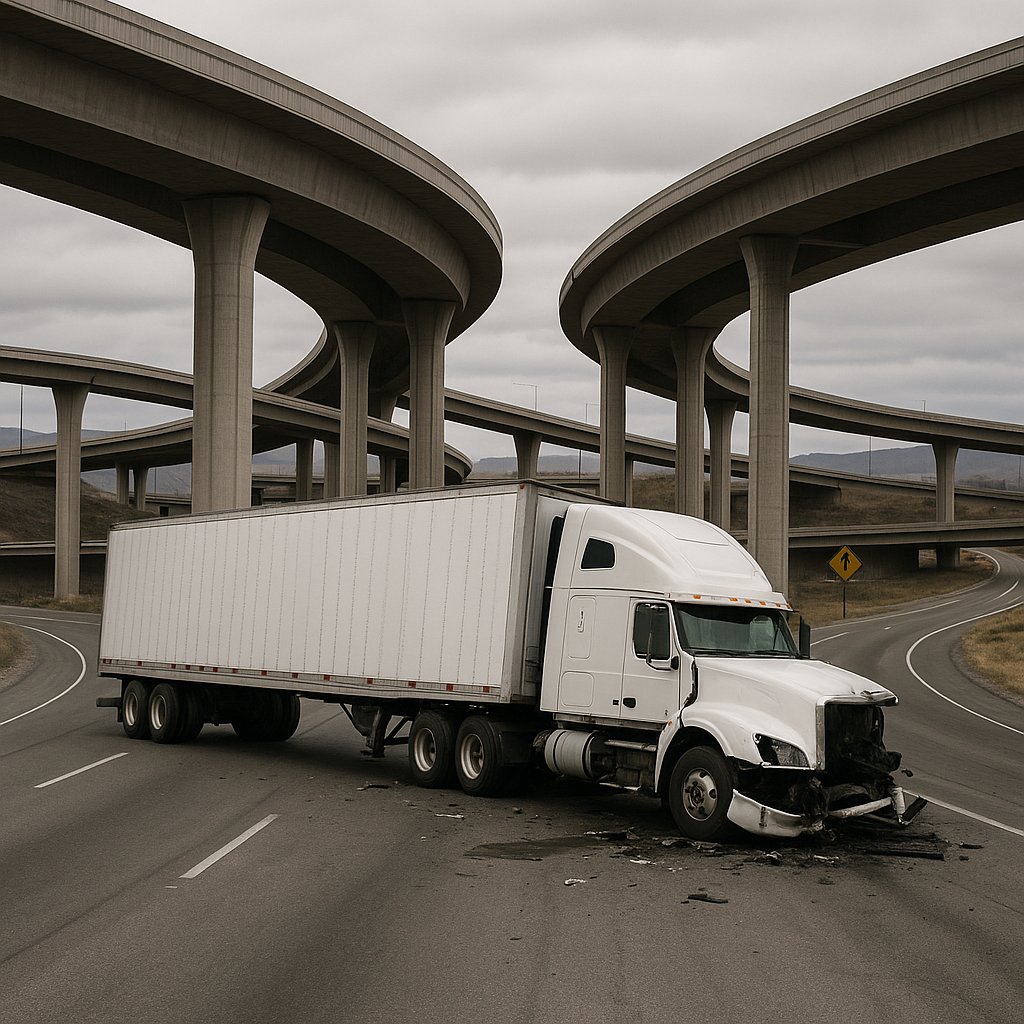
How Reno Highway Junctions Contribute to Truck Accidents
Highway systems are vital lifelines for commerce, particularly in an economically pivotal state like Nevada. Nowhere is this more evident than in Reno, a city often described as the “Biggest Little City in the World.” Reno sits at the crossroads of significant interstate and state routes, making it a commercial hub with high volumes of truck traffic. However, the convergence of busy highways and complex junctions in the Reno area brings its own set of challenges. Truck accidents are a recurrent topic of concern, with many factors at play in these sometimes fatal incidents. This article explores how Reno highway junctions contribute to truck accidents, framed within the distinct context of Nevada’s geography, infrastructure, and traffic dynamics.
Overview of the Nevada Location or Highway Segment
Reno is strategically positioned in northwestern Nevada near the California state line. Its proximity to major markets on the West Coast and access eastward through the Sierra Nevada makes it a critical node for regional transportation. The city’s primary arteries are Interstate 80 (I-80), which runs east–west, and US Route 395 (recently redesignated as Interstate 580 in the Reno area), which runs north–south.
Some of the most notable highway junctions in Reno include:
– The “Spaghetti Bowl”: This is the colloquial term for the interchange where I-80 and US 395/I-580 meet. This intricate, multi-level junction serves as Reno’s main transportation crossroad.
– East McCarran Boulevard and Pyramid Way intersections: These connect state highways and major arterial roads, often feeding directly into the freeway system.
– The I-80/Patrick Interchange, east of downtown, an important access point for industrial zones.
These junctions link not only local roads and city neighborhoods but also play a role in transcontinental and interstate traffic that traverses the region. The result: a constant mix of long-haul trucks, local delivery vehicles, commuters, and recreational drivers.
Why Truck Accidents Are More Common in This Area
Truck accidents at Reno highway junctions are more prevalent than in some comparable regions. This is due to a combination of Reno’s geographic function, increasing traffic demands, and the inherent challenges of its junction designs. Several factors converge:
– Heavy Truck Volume: Due to Reno’s logistics and distribution sectors, highway corridors are frequented by 18-wheelers, freight trucks, and delivery vehicles.
– Challenging Infrastructure: Aging infrastructure, ongoing roadwork, and complex interchange layouts demand heightened attention from all drivers, particularly those maneuvering large vehicles.
– Weather Variability: Reno’s climate can swing from summer heat to winter snow and ice, introducing additional hazards for trucks, which already require more time and distance to stop or change lanes.
– Rapid Population Growth: Urban expansion brings more vehicles onto the road, intensifying congestion during peak hours.
Many crashes occur while negotiating ramps, merging lanes, or navigating tight turns—scenarios where visibility, judgment, and reaction times are all put to the test.
Road Design Factors That Influence Crashes
Several aspects of Reno’s highway junction design can heighten the risk of truck accidents:
– Interchange Complexity: The “Spaghetti Bowl” interchange is a defining feature of Reno’s highway system. Its numerous ramps, overpasses, weaving lanes, and abrupt merges can confuse drivers, particularly those unfamiliar with the area or driving large trucks with limited maneuverability.
– Short Merging Zones: Certain on-ramps and off-ramps in Reno leave little room for acceleration or deceleration, challenging trucks that need more space and time to adjust speed safely. Trucks often must merge into fast-moving traffic, increasing the risk of sideswipes and rear-end collisions.
– Sharp Curves and Tight Radii: Some junction ramps—engineered long ago—were not built for modern commercial truck dimensions. Negotiating tight curves at these interchanges can lead to trailer instability, rollover risks, or loss-of-control incidents.
– Signage and Visibility: Multiple exits, closely spaced signs, or poorly marked lanes can be disorienting. Limited visibility due to overpasses or Nevada’s brightness glare can further hinder safe navigation for truck drivers.
– Construction Zones: Reno’s growth and regular maintenance mean that highway junctions are frequently subject to construction. Temporary lane shifts, reduced speed limits, and sudden closures can be especially challenging for large vehicles.
Traffic Patterns and Truck Volume Considerations
Beyond the physical environment, traffic patterns and trucking activity add layers of complexity:
– Peak Traffic Hours: Morning and evening rush hours in Reno, especially around downtown and major employment centers, create periods of dense traffic. Trucks may encounter frequent stop-and-go movement, rapid lane changes, and impatient drivers, heightening accident risk.
– Mixed Vehicle Types: Highway junctions in Reno serve everyone from local commuters to cross-country truckers. Differences in driving patterns, speed expectations, and familiarity with the roads can lead to unpredictable interactions.
– Industrial Proximity: Reno’s Eastern industrial districts, served by interchanges such as those near Patrick and Sparks, contribute a steady flow of inbound and outbound heavy truck traffic. Increased freight shipments for manufacturing, warehousing, and distribution directly impact these highways.
– Truck Restrictions and Detours: Routes like US 395/I-580 occasionally impose lane restrictions or truck detours due to weather, roadwork, or special events, redirecting higher truck concentrations through alternate junctions that may not be ideally suited for heavy vehicles.
Together, these traffic factors and the high proportion of large commercial vehicles help explain the incidence of Reno highway junction truck accidents.
Safety Awareness Considerations (Non-Advice Tone)
Awareness of Reno’s unique transportation challenges benefits all road users. Highway planners, trucking companies, and private motorists alike maintain a collective interest in minimizing crash risks around these busy junctions.
Detailed attention to highway signage, posted speed recommendations, and route planning—particularly for those new to driving in the Reno region—can support smoother traffic flow at critical interchanges. For commercial truck drivers, understanding the nuances of the “Spaghetti Bowl” or knowing where short ramps and sharp curves are located may help navigate tricky segments more safely.
Local authorities continue to invest in public awareness campaigns, highlighting the importance of patience, caution, and respect for the constraints of large vehicles. These efforts dovetail with infrastructure upgrades, such as the Nevada Department of Transportation’s ongoing projects to modernize interchanges and reduce collision points. While these improvements are gradual, community efforts to promote informed, responsible driving remain central to overall safety near Reno highway junctions.
Neutral Closing Paragraph
Reno’s highway junctions play an essential role in connecting people, businesses, and goods throughout Nevada and the wider region. At the same time, the junction design, truck volume, and evolving urban landscape contribute to the occurrence of truck accidents in the area. By considering the structural and practical influences on traffic at these interchanges, residents, policymakers, and the transportation industry can gain a clearer understanding of the situation. As Reno continues to grow, the interplay between infrastructure, driver behavior, and economic activity will remain a defining feature of local transportation safety discussions.