
How Nevada Weather Affects Semi Truck Accidents
Navigating Nevada’s highways can be challenging for all drivers, but for those operating semi trucks, unique weather and seasonal patterns in the Silver State present even greater obstacles. Understanding how Nevada weather affects semi truck accidents not only helps local fleet operators, commercial drivers, and everyday motorists to stay alert but also brings awareness to the road safety issues that arise in this distinctive region.
Overview of Nevada’s Unique Weather and Road Condition Factors
Nevada is famous for its dramatic landscapes, stretching from the Mojave Desert in the south to the snow-capped peaks of the Sierra Nevada. With its vast open highways, remote passes, and rapidly changing weather conditions, the state presents unique challenges, especially for semi truck operators hauling heavy loads across long distances.
Key weather-related and road condition factors in Nevada include:
– Extreme heat (especially in southern regions like Las Vegas and Laughlin)
– Flash floods (occurring suddenly after rain due to desert terrain)
– High winds (common in valleys and open desert stretches)
– Heavy winter snow and ice (notably in northern hubs like Reno, Elko, and mountain passes such as Donner Summit)
– Dust storms and reduced visibility
– Black ice, especially on bridges and in shaded mountain zones
Each of these factors can independently or collectively contribute to the causes and severity of semi truck accidents, making it necessary for drivers to be vigilant and prepared for Nevada’s fast-changing road conditions.
How These Conditions Affect Trucks Differently Than Cars
While all vehicles are subject to the dangers of inclement weather, semi trucks face unique challenges due to their size, weight, and handling characteristics.
1. Weight and Size:
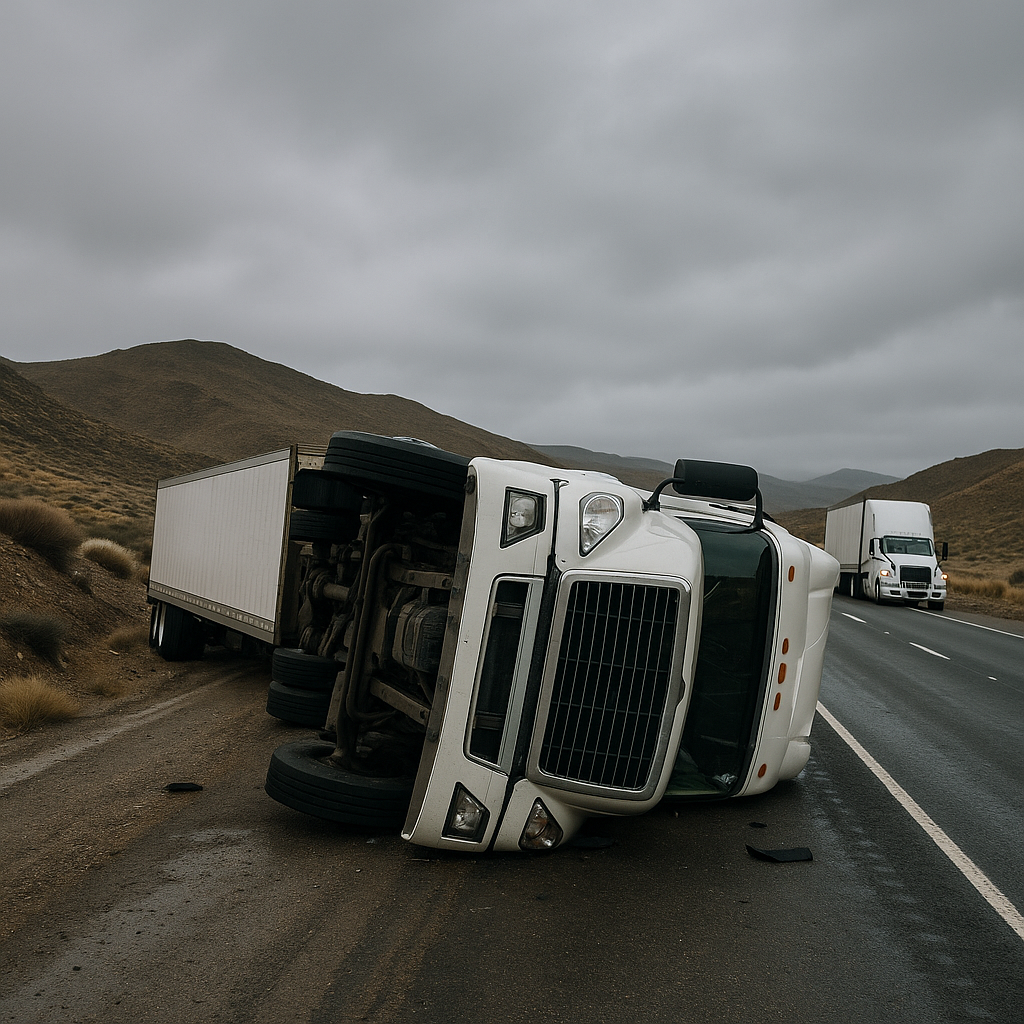
A fully loaded tractor-trailer can weigh up to 80,000 pounds, making stopping distances much longer than those of passenger cars. For example, wet or icy roads can dramatically increase a truck’s braking distance, while high winds have a greater impact on tall, boxy trailers, increasing the risk of rollovers.
2. Reduced Maneuverability:
Semis require wide turns and more space for lane changes. Sudden wind gusts, hydroplaning during desert rainstorms, or skidding on black ice make maneuvering even more difficult. In mountainous regions, long descents increase the risk of brake failure if the driver is forced to brake suddenly—a more common scenario in inclement conditions.
3. Visibility Challenges:
Dust storms can reduce visibility to near zero, a critical issue for trucks that cannot stop as quickly or safely pull off the road as cars can. Nighttime freezing and early morning hours can also produce unexpected black ice, leaving truck drivers little warning and a much greater risk of losing control.
4. Impact of Cargo:
Loose, shifting, or top-heavy cargo can amplify the hazards, especially in high winds or during sudden maneuvers required by changing road conditions, increasing the potential for rollovers or jackknife accidents.
Why Crashes Can Become Severe Under These Conditions
Weather-related truck accidents in Nevada tend to be more severe than similar collisions involving passenger vehicles—and there are several reasons for this heightened risk:
1. Increased Force of Impact:
The mass of a semi truck means that, in the event of a collision, the force of impact is much greater. When road conditions are poor (ice, rain, wind), the likelihood of losing control goes up, and accidents involving trucks are more likely to result in significant property damage, serious injuries, and fatalities.
2. Multi-Vehicle Pileups:
Reduced visibility (from dust, fog, or heavy snow) and lengthy stopping distances often result in multi-vehicle pileups. Trucks traveling in convoy on Nevada highways may be unable to stop in time, leading to chain-reaction crashes.
3. Difficulties in Emergency Response:
Remote highways—a common reality in Nevada—can delay emergency medical response. Severe weather can further impede response times and complicate rescue efforts, increasing the severity of outcomes in the event of a crash.
4. Blocking of Major Routes:
Semi truck accidents can block entire highways, especially in narrow canyons or mountain passes. In winter, a jackknifed semi can shut down stretches of I-80 or US-50, stranding other motorists and amplifying dangers.
5. Hazardous Cargo:
Many trucks transport hazardous materials across Nevada. In an accident, these loads can spill, causing environmental hazards and additional risks to other motorists and first responders—especially problematic in extreme weather which can spread hazards over greater areas.
Common Seasonal Patterns in Nevada
Understanding Nevada’s seasonal weather is vital in predicting risk and planning for safe travel, especially for long-haul truckers.
Winter:
– Northern Nevada (Sierra Nevada, Reno, and Elko) faces regular snowstorms, icy roads, and black ice from November through March.
– Mountain passes may close due to snow and blowing winds, isolating drivers for hours.
– Even southern Nevada can see rare but hazardous frozen precipitation, especially at night.
Spring and Fall:
– Transitional seasons often feature sudden temperature fluctuations, increasing the risk of thaw-refreeze cycles (black ice).
– High winds pick up in open desert basins, risking rollovers for empty or lightly-loaded trailers.
– Spring can bring flash floods after intense desert rainstorms.
Summer:
– The desert southwest (Las Vegas, Pahrump) faces extreme heat, which can cause tire blowouts and overheating brakes, especially on long uphill grades.
– Monsoon season brings intense, sudden storms, increasing the risk of flash flooding and debris on the roadway.
– Wildfires in dry conditions can further reduce visibility and air quality, affecting driving safety.
Year-Round:
– Dust storms can occur any time of year but are especially common in late spring and summer, particularly in open areas near Fallon and Tonopah.
– Microclimates—localized weather patterns caused by Nevada’s diverse geography—mean that drivers may encounter snow in the mountains and dry pavement in nearby valleys within the same day.
Preparing for Nevada’s Weather—A Shared Responsibility
Nevada’s diverse and often extreme weather conditions demand consistent attention and preparation, especially from those behind the wheel of large commercial trucks. Semi truck operators must plan routes carefully, check weather alerts, adjust speeds, and properly secure cargo to help minimize the risks inherent to traveling through the Silver State’s varied landscapes.
For all road users, understanding how Nevada weather affects semi truck accidents can promote safer driving habits—like giving trucks more space, being cautious in bad weather, and staying alert to changing conditions.
While weather cannot be controlled, awareness and preparation can make a significant difference in reducing the dangers posed by Nevada’s highways. Whether it’s a sudden snow squall in the Sierra or a windstorm across the desert flats, respect for Nevada’s climate is essential for all drivers sharing the road.