
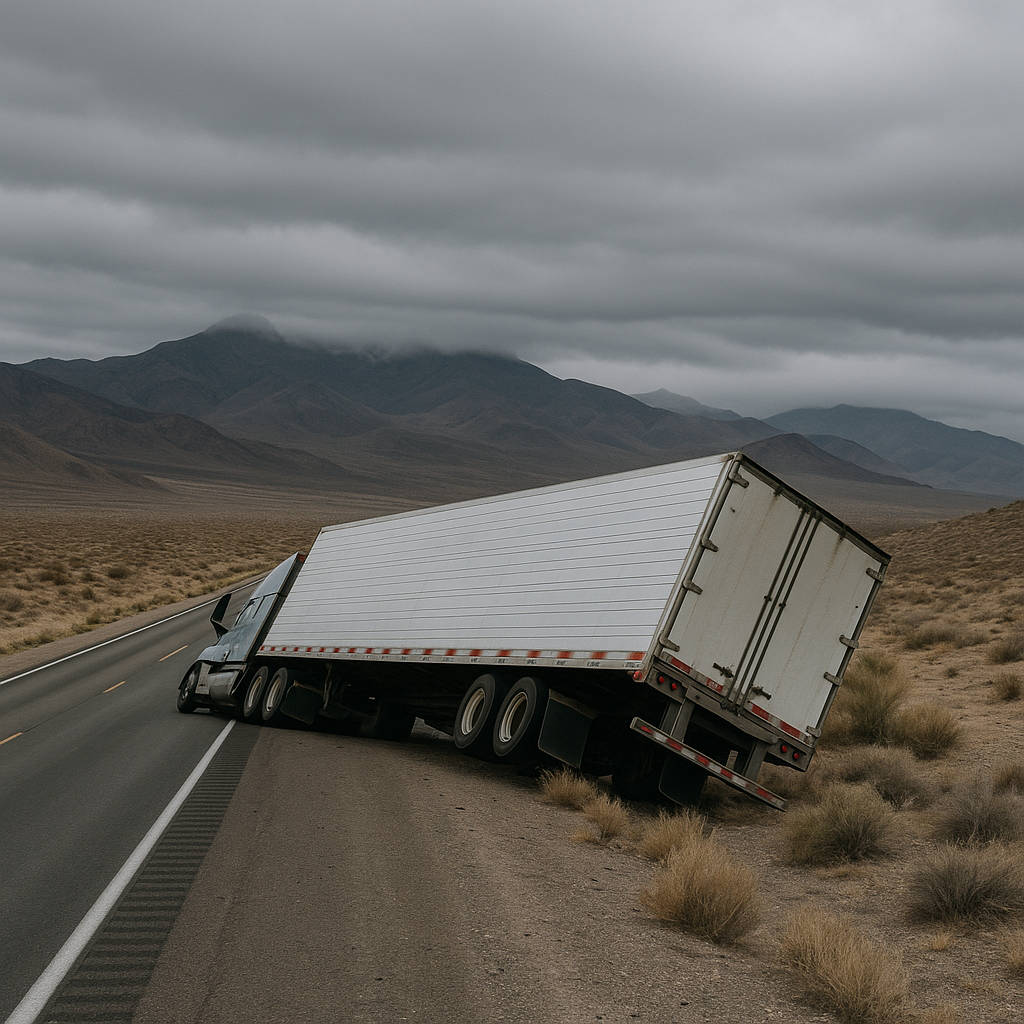
Why High Winds Cause Truck Accidents in Nevada
Overview of High Winds as a Nevada Road Hazard
Nevada’s vast, open landscapes are famous for scenic road trips and long-haul trucking routes. However, this very terrain, combined with the region’s unique climate, makes Nevada especially susceptible to high wind events. With frequent gusts sweeping across desert valleys, mountain passes, and highways, high winds cause truck accidents in Nevada more commonly than in many other states.
Unlike factors such as snow or ice, high winds often catch drivers off guard, striking suddenly and turning calm drives into dangerous situations. In Nevada, areas like the Washoe Valley near Reno and stretches of Interstate 15 and Interstate 80 are especially prone to these rapidly occurring winds. For truck drivers, even minor wind gusts can pose major risks, creating a hazardous environment for both themselves and other motorists sharing the road.
Understanding why high winds cause truck accidents in Nevada requires a closer look at the state’s weather patterns and geography, as well as how large commercial vehicles respond to these conditions differently than smaller cars.
How High Winds Affect Trucks Differently Than Cars
High winds don’t impact all vehicles equally. Trucks, particularly semi-trailers and other high-profile, large vehicles, are far more vulnerable. What sets them apart? Primarily, it’s their size, design, and weight distribution.
Surface Area and Profile
A fully loaded 18-wheeler can have a trailer reaching 13 to 14 feet high, presenting a much larger surface area for wind to push against. This “sail effect” means even moderate side winds can exert thousands of pounds of force on the trailer, especially if it’s empty or lightly loaded. The wind can cause swaying, lane drifting, or even complete rollovers.
Weight Distribution
While trucks are heavy, their cargo can be unevenly distributed or insufficient in weight, making them less stable. An empty trailer, or “deadhead,” is at a greater risk because it lacks the ballast to resist strong wind forces. Trucks with high centers of gravity, especially tanker trucks or those hauling double trailers, face increased instability in gusty conditions.
Steering and Handling Differences
Trucks are slower to react and harder to correct than passenger vehicles. When a gust hits, a trucker must anticipate and handle the wind force quickly. Even a very experienced driver can struggle if a wind gust comes suddenly or is much stronger than predicted. The larger turning radius and slower response time of big rigs amplify the risk, particularly when multiple wind gusts occur in quick succession or on curves and elevated roadways.
Vulnerability on Open Highways and Bridges
Nevada’s long, exposed stretches provide little to no windbreaks; the flat open desert or elevated bridges give wind few obstacles, increasing its velocity. Areas near canyons and mountain passes—common in Nevada’s topography—can funnel and intensify wind bursts, focusing their full energy on vehicles passing through.
Why Crashes Become Especially Severe Under High-Wind Conditions
When high winds cause truck accidents in Nevada, they tend to be especially severe for several reasons:
Rollover Crashes
Perhaps the most distinctive wind-related accident for trucks is the rollover. When a strong crosswind catches a tall, relatively light trailer, trucks can roll onto their sides. These rollovers are dangerous not only for the driver but for surrounding motorists, causing multi-lane blockages and chain-reaction crashes as cars collide with overturned rigs or swerve to avoid them.
Loss of Control and Jackknife Incidents
A sudden, powerful side gust can cause a truck to swerve, leading to jackknife accidents where the trailer swings around and forms an acute angle with the cab. Jackknifed trucks can block multiple lanes and cause pile-up crashes, especially on busy Nevada thoroughfares like I-15 near Las Vegas or I-80 crossing the northern part of the state.
Cargo Spills
When trucks are overturned or jackknifed, their loads can spill onto the roadway. Hazardous materials present added danger, but even non-hazardous cargo poses significant traffic hazards and can extend the duration of traffic disruptions.
Limited Visibility and Reaction Time
High winds in Nevada often kick up loose dust and debris, further reducing visibility. When drivers can’t see a swerving or rolling truck until it’s too late, collisions become harder to avoid, intensifying the severity of each crash.
Secondary Accidents
On fast-moving highways, a wind-induced truck crash can block travel lanes, causing abrupt stops and sudden traffic slowdowns. Following motorists may not have time to react, especially in low-visibility dust storms—leading to severe multi-vehicle accidents.
Common Seasonal Patterns in Nevada
High wind events in Nevada are closely tied to the state’s distinct seasonal weather patterns. While strong gusts can happen nearly any time of year, certain periods are particularly well known for dangerous conditions.
Spring Winds
Nevada’s most notorious winds typically strike in the spring, from March through early June. These “zephyr” winds are driven by changes in atmospheric pressure as cooler air from the mountains collides with warming desert air. Speeds of 40–60 mph are common, with higher gusts reported in mountain passes and along exposed east-west highway corridors.
Fall Gusts
The autumn months, especially October and November, can bring secondary wind seasons. As cold fronts arrive and high-pressure systems descend from the north, sudden bursts can again reach hazardous speeds. Truckers crossing the northern Nevada deserts or the wind corridors near the Sierra foothills need to remain vigilant.
Year-Round Microclimates
Because of Nevada’s diverse elevations and unique geography, surprise wind events can occur throughout the year. Narrow mountain passes, such as the area around the Donner Summit or through the Reese River Valley, can funnel winds at any time. Sudden wind events are sometimes linked to thunderstorms or the notorious “Mountain Wave” winds generated by airflow over the Sierra Nevada Range, which impacts areas like Reno and Carson City.
A Closer Look at Nevada’s Most Affected Routes
Certain highways in Nevada experience more frequent and dangerous wind events than others. For instance:
– Interstate 80: Stretching across north Nevada, this corridor is known for strong crosswinds, especially near Fernley and Winnemucca.
– Interstate 15: Connecting Las Vegas to Utah, the route passes through open desert with minimal barriers, making it prone to sudden wind gusts.
– US 395 and US 50: Running along the eastern Sierra and across central Nevada, these highways cut through windy valleys and exposed basins.
The Nevada Department of Transportation (NDOT) issues wind advisories for particularly dangerous stretches, recommending trucks reduce speeds or pull off when gusts reach critical levels.
Staying Prepared for High Winds on Nevada’s Roads
While high winds cause truck accidents in Nevada with regularity, understanding the factors involved can help drivers avoid or minimize risks. Truck drivers and fleet managers keep a close eye on weather alerts, and it’s common practice for them to check for NDOT wind advisories, especially before crossing known high-risk areas.
Extra precautions—such as reducing speed, carefully loading cargo, and pulling off the road during wind advisories—are part of safe driving practices in Nevada’s dynamic climate.
In summary, Nevada’s high winds are more than just a nuisance; they’re a genuine safety hazard for long-haul trucks. By understanding the seasonal patterns, vulnerable roadways, and unique risks trucks face compared to other vehicles, everyone on Nevada’s highways can approach driving with the awareness needed to navigate this challenging road hazard more safely.