
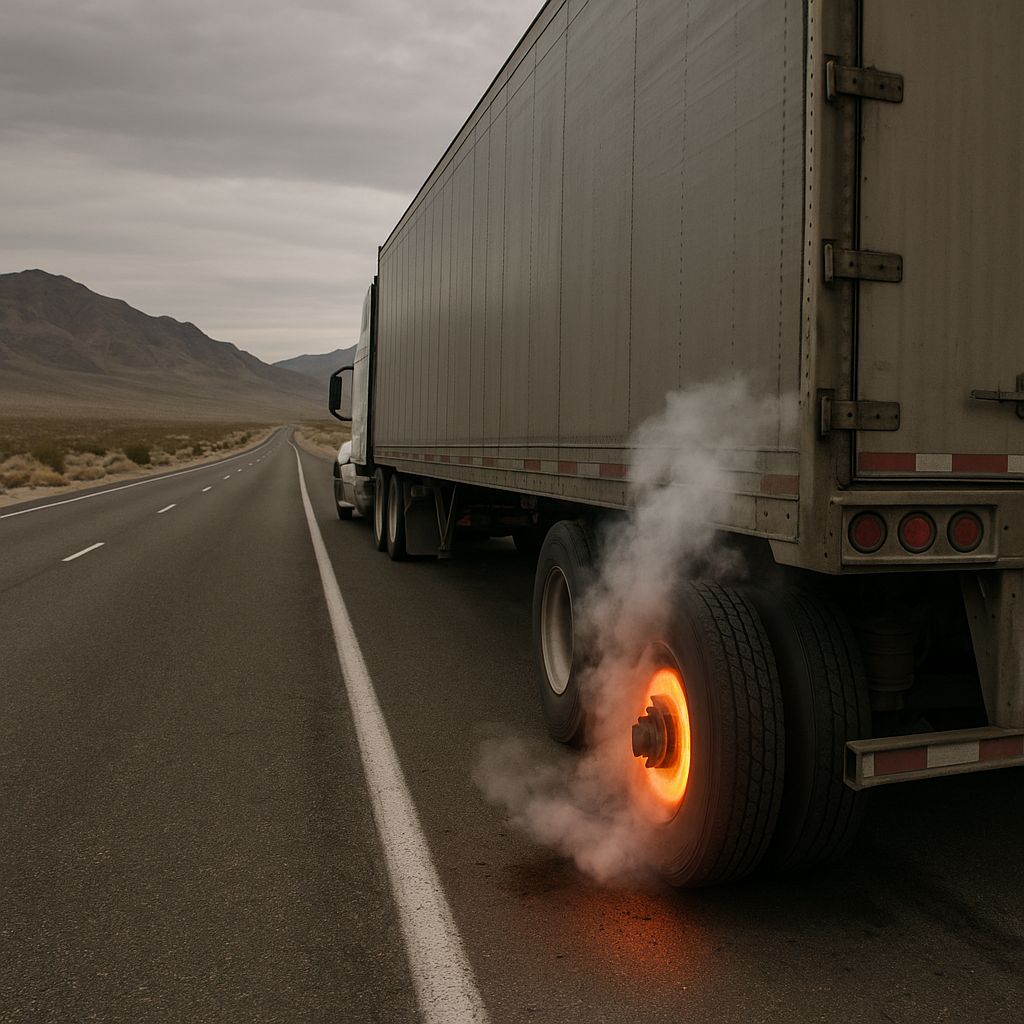
Heat Related Brake Failure Risk in Nevada Trucking
Overview of the Nevada Weather or Road Condition Factor
Nevada is infamous for its extreme temperatures and expansive stretches of open highway. From the arid heat of Las Vegas to the sun-scorched roadways stretching across the Mojave and Great Basin deserts, truckers operating in this state face unique environmental hazards—none more challenging than the risk of heat related brake failure. The convergence of triple-digit summer temperatures, long downhill grades, unpredictable mountain passes, and remote infrastructure creates a perfect storm that particularly impacts heavy commercial vehicles.
Unlike states with milder climates or denser population centers, Nevada’s vast terrain means truckers may drive for miles without a break, emergency stop, or service area. Asphalt surfaces can soar to well over 150 degrees Fahrenheit, radiating heat upwards and straining vehicle systems even further. In these intense conditions, braking systems on semis and other large trucks must work significantly harder to bring vehicles to a safe stop, elevating the risk of heat related brake failure across Nevada’s highways.
How This Condition Affects Trucks Differently Than Cars
While heat can cause brake problems in all types of vehicles, trucks face risks that are exponentially greater due to several critical factors:
1. Sheer Size and Weight
Trucks routinely weigh 20–30 times more than an average passenger car, especially when fully loaded. This weight creates tremendous kinetic energy, which must be dissipated through the braking system during deceleration. In high temperatures, this workload generates even more heat at the brake drums or discs.
2. Extended Downhill Braking
Nevada’s mountainous terrain frequently requires truckers to brake for long periods going down grades like those on U.S. Route 50 or the passes outside Reno. Continuous application of brakes on these descents causes friction linings to heat up rapidly.
3. Air Brake Design and Vulnerabilities
Most heavy trucks use air brake systems, which rely on compressed air to activate. Unlike hydraulic brakes common in cars, air brakes are more vulnerable to “brake fade”—a condition where overheated friction material loses its ability to grip, resulting in less effective braking, or, in severe cases, total loss of braking power.
4. Brake Component Material Limits
Brake pads and drums are made to withstand high temperatures, but constant exposure to Nevada’s climate can accelerate wear, dry out lubricants, and reduce the lifespan of seals and dust boots. This can lead to hot brake failure, where the lining material essentially boils or burns, causing the brakes to stop working altogether even while the truck is still moving.
5. Insufficient Cool-Down Opportunities
The remoteness of Nevada roads means few places to safely stop and allow brakes to cool. Unlike urban areas, there are long stretches without pullouts or rest areas, making proper brake management a logistical and operational challenge.
Why Crashes Can Become Severe Under These Conditions
Braking is arguably the most critical safety function for a heavy truck, and when brakes fail due to heat, the consequences can be dire on Nevada’s roads.
1. High Speeds on Open Highways
Many of Nevada’s highways allow for higher speed limits and have fewer curves or traffic slowdowns to naturally reduce trucking speeds. In the event of brake failure, a truck can travel much farther out of control before friction or terrain brings it to a halt.
2. Increased Stopping Distances
When brakes are overheated, they lose their friction, causing stopping distances to multiply. A truck that might normally stop in 300 feet could require 1,000 feet or more, which is frequently more than the visibility distance on hilly or winding stretches.
3. Steep Grades and “Runaway” Scenarios
Mountain passes like those in the Sierra Nevada or Spring Mountains are particularly hazardous. Without functioning brakes, trucks can accelerate uncontrollably down grades, leading to catastrophic high-speed collisions, rollovers, or jackknife incidents.
4. Multi-Vehicle Crash Risk
Heavy trucks traveling through Nevada often share the highway with RVs, passenger cars, and motorcyclists. A runaway truck can trigger pileups, especially near interchanges (like the Spaghetti Bowl in Las Vegas) or on congested transit corridors.
5. Remote Locations and Emergency Response Delays
Many stretches of Nevada’s highway network are hours from emergency medical services. Crashes resulting from heat related brake failure can therefore lead to more severe injuries or fatalities simply due to longer response times.
Common Seasonal Patterns in Nevada
Understanding the seasonal shifts in Nevada can help highlight peak risk periods for heat related brake failure in trucking:
Spring (March–May):
Spring brings rapidly rising temperatures, particularly in southern Nevada. As daytime highs climb, pavement temperatures can increase faster than expected, catching drivers off guard. Windstorms are also common, adding blowing dust to the mix, which can infiltrate brake systems and further increase heat buildup.
Summer (June–August):
Summer is the peak season for heat related brake failure in Nevada trucking. Daytime air temperatures often exceed 100 degrees F, while ground temperatures may approach 170. Mountain passes such as those along Interstate 80 or U.S. 93 can pose extreme danger during this time. Road surface friction is reduced due to overheated asphalt, compounding braking challenges. It’s also common for tire blowouts to accompany brake overheating, increasing the risk of truck instability.
Fall (September–November):
Temperatures remain elevated—especially in southern valleys—but nighttime cooling can provide some relief. However, with continued dry conditions and busy highway traffic patterns (as summer vacationers return home and freight increases for the holiday season), the risks of brake system stress remain high.
Winter (December–February):
While northern Nevada sees snow and ice, many southern and central regions still experience mild or warm winter days. This temperature variation, combined with the holiday freight rush, means that brake overheating risks, though reduced, do not entirely disappear. Systemic stress and wear sustained over warmer months may culminate in failures during the winter freight surge.
Neutral Closing Paragraph
Heat related brake failure is a serious concern for the trucking industry in Nevada. The state’s unique combination of high temperatures, challenging terrain, and expansive highways sets the stage for uniquely hazardous conditions for truckers—and highlights the importance of vigilant brake maintenance, smart driving practices, and an awareness of seasonal risks. As Nevada’s freight and transportation sector continues to grow, understanding these challenges will help everyone on the road stay safer, no matter what the thermometer reads.