
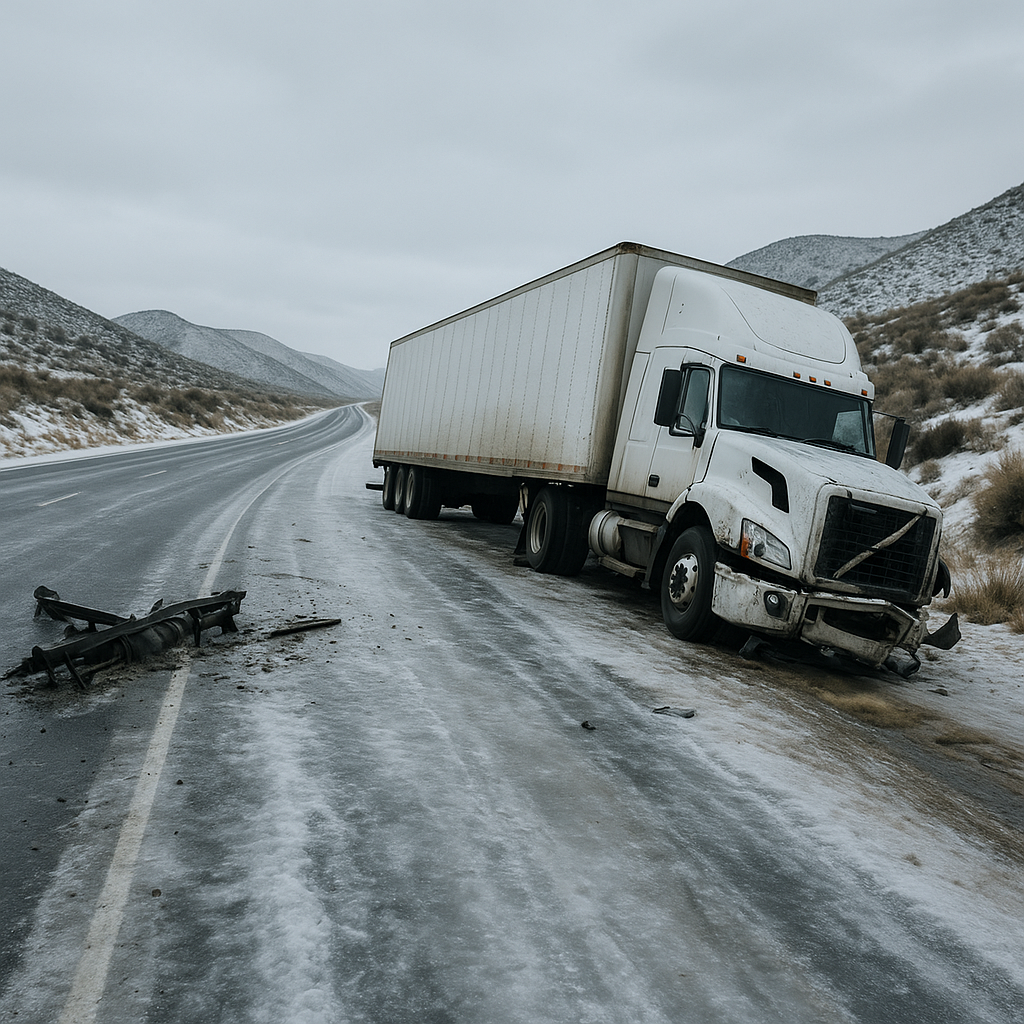
Ice Related Truck Crashes in Nevada
Overview of Ice and Weather-Related Road Risks in Nevada
When most people imagine Nevada, they tend to think of warm deserts, dazzling casinos, and endless sunshine. However, Nevada’s dramatic landscapes include not just sunbaked valleys but also mountain passes and high-elevation highways where winter weather can create hazardous conditions. Icy roads, particularly during the colder months, represent a significant safety concern—especially for commercial trucks traversing the diverse routes of the Silver State.
While Nevada doesn’t experience the same relentless winter weather as states further north, ice forms quickly when temperatures drop, especially at night or in shaded mountain corridors. Northern Nevada, including cities like Reno and Elko, and areas along the Sierra Nevada and Ruby Mountains, commonly experience winter storms that bring sleet, freezing rain, and snow. Even in southern Nevada, sudden overnight temperature drops can result in the formation of black ice, particularly on bridges and overpasses.
These weather events make understanding and preventing ice related truck crashes in Nevada a critical issue. Every year, ice-related incidents cause severe disruptions on major interstates such as I-80 and I-15. These crashes not only endanger lives but can also impede critical freight movement throughout the state and beyond.
How Icy Road Conditions Affect Trucks Differently Than Cars
The unique structure and operation of commercial trucks make them particularly vulnerable to icy road conditions. Trucks, including 18-wheelers and tractor-trailers, weigh upwards of 80,000 pounds when fully loaded—far more than the average passenger vehicle. This weight does not necessarily translate to better traction. In fact, it often means the opposite.
When a truck encounters ice, several specific challenges arise:
– Longer Stopping Distances: Even under ideal conditions, large trucks need much more distance to come to a complete stop. On ice, the required stopping distance can double or even triple compared to dry pavement.
– Decreased Control: Icy roads dramatically reduce tire grip, making it difficult for drivers to control or correct the direction of a heavy truck once it begins to slide.
– High Center of Gravity: Trucks are more prone to tipping over if they skid sideways or jackknife on ice due to their high center of gravity.
– Trailer Dynamics: The trailer, especially if not fully loaded, may react differently than the cab, leading to “jackknifing”—a dangerous situation where the trailer swings out to form an angle with the cab.
While smaller vehicles can also lose control on ice, the sheer size and handling complexities of trucks magnify the hazards, both for truck drivers and for everyone else on the road.
Why Crashes Can Become Severe Under These Conditions
Ice-related truck crashes in Nevada often result in severe outcomes for several reasons:
– Momentum and Force: The massive size of trucks translates to greater force in collisions, increasing the likelihood of severe vehicle damage, cargo spills, and injury.
– Chain Reaction Crashes: Trucks often travel on Nevada’s highways where speeds are high and traffic is consistent. An out-of-control truck may trigger multi-vehicle accidents, especially when visibility is reduced by ongoing snow or when other drivers are traveling too fast for conditions.
– Hazardous Materials Spills: Many trucks carry materials that can become dangerous in a crash, including fuels, chemicals, or even perishable foods, leading to environmental risks or hazardous road blockages.
– Limited Emergency Response Access: Ice storms can close passes and rural highways, delaying emergency medical and cleanup responses. This can increase the severity of injuries and complicate the restoration of normal traffic flow.
The severity of these collisions highlights the necessity for heightened caution and preparedness among all drivers, especially those operating large commercial vehicles.
Common Seasonal Patterns in Nevada
The risk of ice related truck crashes in Nevada isn’t uniform throughout the year—it follows predictable seasonal patterns tied to geographic and climatic factors.
Northern vs. Southern Nevada
– Northern Nevada: Cities like Reno, Elko, and Winnemucca, especially along I-80, see the most frequent ice risks. The combination of elevation, proximity to the Sierra Nevada, and open plains creates regular freeze-thaw cycles from late fall through early spring.
– Mountain Passes: Routes like the Donner Pass (near the California border) routinely see icy conditions from October through April, while other high passes in the central and eastern parts of the state, such as Lamoille Canyon, can remain icy even into early summer mornings.
– Southern Nevada: While Las Vegas and lower valleys receive significantly less winter precipitation, sudden cold snaps can cause black ice on roads, particularly over bridges and at higher elevations leading out of the city.
Time of Day and Microclimates
– Early Morning and Late Night: Ice is most likely to form during the coolest parts of the day, typically just before sunrise. For long-haul truckers on overnight schedules, this timing can be especially dangerous.
– Microclimates: Nevada’s sharply variable altitude means that a single trip may take drivers from dry desert through freezing mountains. Sudden shifts in weather can catch operators off guard—dry pavement may give way with little warning to patches of black ice, especially in canyon shadows or on wind-swept open roads.
Winter Storm Patterns
– Flash Freezing: After rain or wet snow, quickly dropping temperatures can lead to “flash freezes,” where standing water turns to ice across highways.
– Wind-driven Snow: High winds, especially in Nevada’s open basins, can blow snow across roadways, packing into slick surfaces or hiding sheets of ice beneath drifts.
Due to these seasonal and situational factors, truck drivers crossing Nevada’s interstates must be especially vigilant from November through March, with the highest risk found during major winter storms or in areas prone to temperature swings.
Conclusion
While Nevada may be more famous for its desert landscapes and sun, ice related truck crashes present a significant and often underestimated risk throughout the state’s colder months. The state’s unique mix of high-elevation mountain passes, unpredictable winter storms, and heavy truck traffic means icy conditions can develop with little warning, creating hazards not just for truck drivers but for everyone who shares Nevada’s busy highways. Awareness of where, when, and how ice forms—and how it uniquely affects large commercial vehicles—can play a critical role in improving safety, minimizing severe crashes, and keeping Nevada’s vital roadways open throughout the winter. Staying updated on weather forecasts, using proper winter driving techniques, and understanding the special challenges faced by trucks on icy roads can make a significant difference for everyone traveling the highways of the Silver State during the coldest part of the year.