
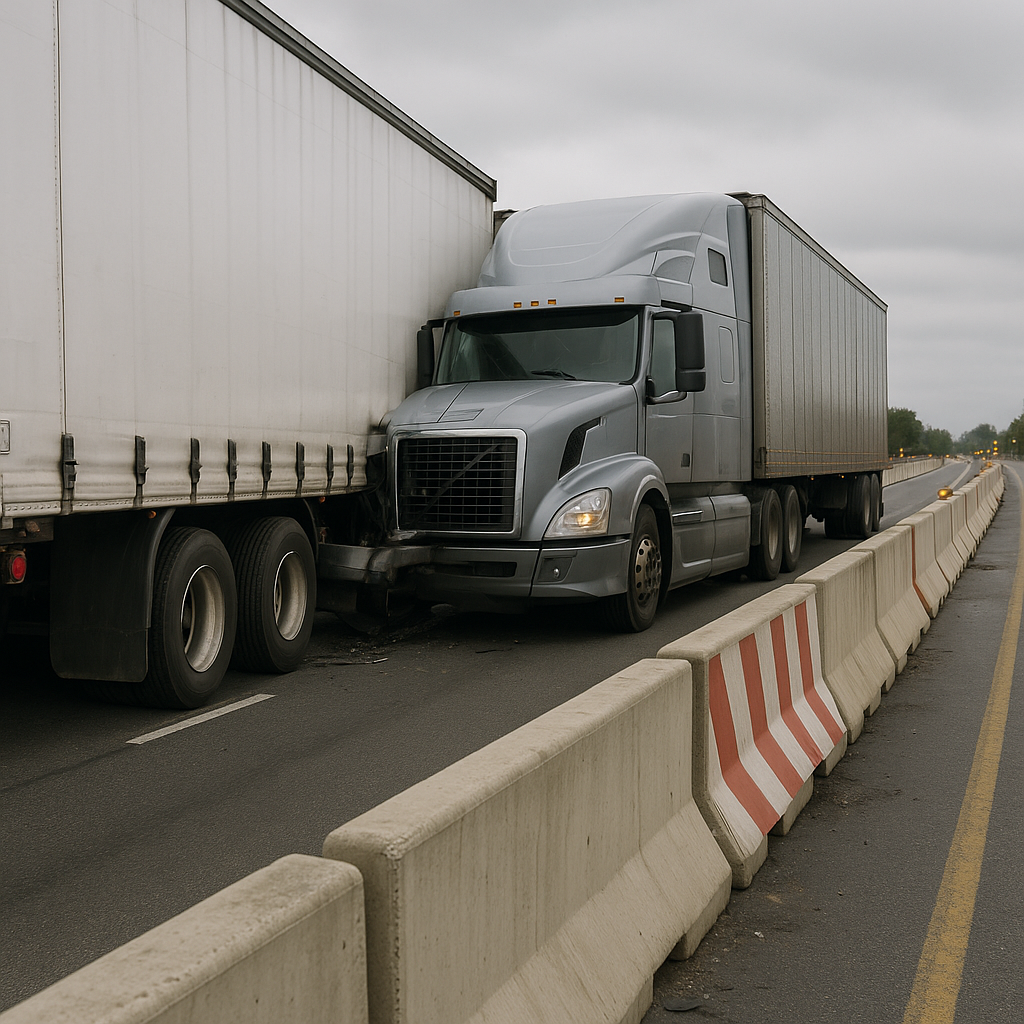
How Narrowed Lanes Increase Truck Collision Risk in Nevada
Nevada’s highways and urban streets see a constant flow of truck traffic, carrying goods through a landscape marked by seasonal extremes, swift weather changes, and a mix of urban and rural conditions. Among the numerous safety challenges, one often-overlooked risk has grown more prevalent: the use of narrowed lanes, particularly during construction projects or temporary diversions. Research and accident reports indicate that narrowed lanes increase truck collision risk—a danger heightened by Nevada’s unique weather and road patterns.
Nevada Road Conditions: Weather and Construction Factors
The Silver State is well known for its vast stretches of interstate highways, bustling routes like the I-15 and I-80, and busy traffic corridors in Reno, Las Vegas, and along the northern mining and rural routes. While much of Nevada’s landscape is desert, the state also experiences significant temperature swings, summer thunderstorms, winter snow in the north, and powerful wind events.
Roadway construction is common throughout the year, particularly in the warmer months when crews repair and expand roadways. This frequently calls for the temporary narrowing of traffic lanes, reducing their width well below the standard 12-foot design. Construction barriers, cones, and signage create “choke points,” with less lateral space for vehicles—a configuration that may be safe enough for most cars but presents major hazards for trucks and commercial vehicles.
Adding to the challenge, severe weather can quickly reduce visibility, traction, and roadway friction, often when drivers least expect it. Heavy spring rains in the south, winter snow in the north, and sudden sandstorms all impact driving conditions, sometimes making already narrow lanes even more treacherous.
How Such Conditions Affect Trucks Differently Than Cars
On Nevada highways, lane narrowing doesn’t impact all vehicles equally. Trucks—especially tractor-trailers, large freight vehicles, and oversized loads—are uniquely vulnerable:
1. Size and Maneuverability:
Trucks occupy more space by necessity. A standard semi-truck can be up to 8.5 feet wide (not counting mirrors), leaving very little room for lateral movement within a narrowed lane. Cars, often less than 6.5 feet wide, have more buffer, allowing for minor errors or sudden swerving.
2. Turning Radius:
Sharp curves, which sometimes appear alongside narrowed lanes during detours or construction, can prove difficult for trucks. They require wider arcs to remain stable, while standard vehicles can negotiate tighter turns with fewer issues.
3. Blind Spots:
Commercial trucks have larger blind spots—areas surrounding the vehicle where the driver cannot see other vehicles. In narrowed lanes, cars often run closer to a truck’s sides, increasing the likelihood that a trucker won’t see them and may inadvertently sideswipe or merge into another vehicle.
4. Braking and Reaction Time:
Heavy trucks need far more distance to come to a full stop. When confined to a tight lane amid sudden slowdowns—common in construction zones—their limited ability to maneuver can contribute to rear-end or side-impact collisions.
5. Impact of Weather:
Adverse weather further reduces a truck’s ability to navigate narrowed lanes safely. Water, ice, or wind can push or destabilize a truck with far greater effect than a passenger vehicle, especially if the truck must stay precisely centered.
Why Crashes Can Become Severe Under These Conditions
Narrowed lanes increase truck collision risk dramatically. Serious consequences follow when a large truck is involved in an accident, particularly in crowded or confined situations like those in Nevada’s work zones. Here’s why severity is often magnified:
1. Greater Force of Impact:
Trucks are far heavier than cars. A side-swipe, lane departure, or rear-end crash involving a truck in a constricted space often leads to catastrophic damage to other vehicles. Occupant injuries tend to be more serious as a result.
2. Chain-Reaction Potential:
Construction areas or narrowed lanes on busy highways mean vehicles travel tightly packed together. If a truck is involved in a collision, the risk of multi-vehicle pileups increases due to the limited space for evasive maneuvers—especially in Nevada’s high-speed travel corridors.
3. Hazardous Cargo:
Many trucks passing through Nevada carry hazardous or volatile cargo. An otherwise minor collision can escalate quickly if the load is damaged, creating risks of fire, chemical release, or even explosions, particularly in hot, dry conditions.
4. Limited Escape Routes:
Barriers, work crews, and tight lanes can trap vehicles in the crash zone, making it difficult for drivers and passengers to evacuate quickly. Emergency responders may face delays accessing the scene, especially amid Nevada’s long rural stretches.
5. Heightened Driver Stress:
Nevada’s extreme weather conditions can add pressure on drivers, especially those not accustomed to sudden storms, high winds, or blinding sunlight. Stress can lead to mistakes, further compounding the risk in already hazardous narrowed lanes.
Common Seasonal Patterns in Nevada
Nevada’s road construction and maintenance schedules are shaped by weather and seasonal needs:
Spring and Summer:
The warmest months, especially from April to September, bring most construction activity. Highways in and out of Las Vegas and Reno are commonly reduced to single lanes or narrower corridors, as crews repair winter damage or expand capacity. Afternoon thunderstorms—particularly in southern Nevada—can cause flash flooding, masking lane lines or pooling water in construction zones.
Autumn:
While the temperatures remain mild, late summer storms sometimes linger. Construction remains active, but schedules begin to wind down as cooler weather arrives in the northern parts of the state.
Winter:
Northern Nevada sees snow and ice from roughly November through March. Plow operations may take up a lane’s width, temporarily narrowing available space and pushing trucks closer to barriers or other vehicles. Slick roads intensify the danger, particularly for vehicles with wide profiles or heavy loads. In the southern deserts, sudden dips in temperature may create black ice on highways at night or early morning, adding invisibility to already constricted lanes.
Wind Events:
Nevada is notorious for its strong windstorms, particularly during transitions between seasons. High winds can push trucks, especially empty trailers, into adjacent lanes or off the road entirely. With little room for correction in narrowed lanes, wind-related incidents are more likely to become collisions.
Concluding Thoughts
It’s clear that narrowed lanes, while sometimes necessary for road improvements, increase truck collision risk—especially across Nevada’s diverse and often challenging roadways. The combination of tight spaces, heavy vehicles, unpredictable weather, and high-traffic corridors creates situations where safety margins shrink, and the risk of severe accidents grows.
Increasing awareness of these risks, practicing patience in construction zones, and keeping informed about Nevada’s roadway and weather patterns are all key steps for drivers and transportation professionals. By understanding the ways narrowed lanes intensify truck collision dangers, everyone can contribute to safer roads across the Silver State.