
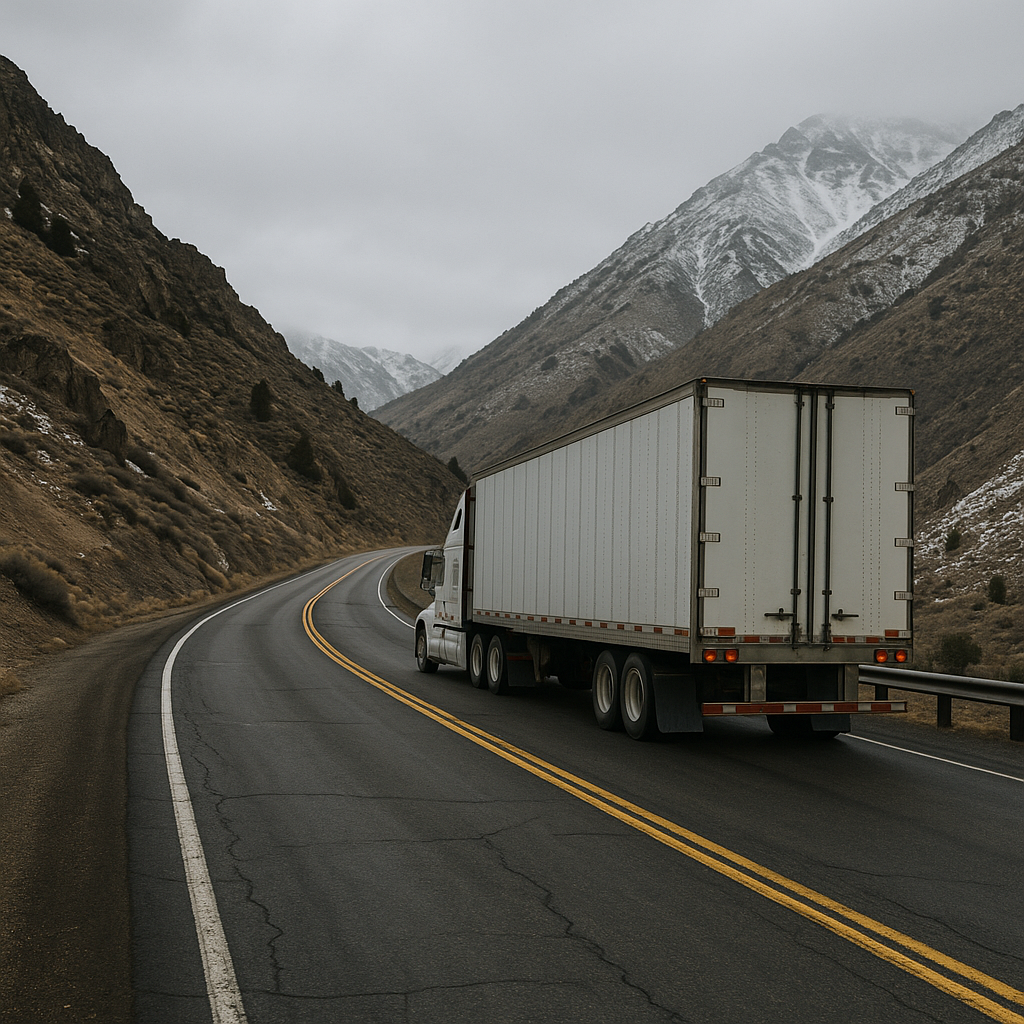
How Nevada Mountain Passes Affect Trucking Safety
Overview of the Nevada Weather or Road Condition Factor
Nevada is well known for its vast deserts, dramatic elevation changes, and extensive mountain ranges cutting across the state. From the rugged Ruby Mountains in the east to the Sierra Nevada on the state’s western edge, these geographic features create numerous mountain passes. Notable routes such as Donner Pass (bordering California) and Lamoille Canyon are integral to regional and interstate transportation. However, these high mountain corridors are more than just scenic shortcuts—they pose unique challenges for trucking, especially when combined with Nevada’s unpredictable weather. Whether it’s steep inclines, winding switchbacks, or sudden snow squalls, the conditions found on Nevada’s high mountain roads can have a significant impact on trucking safety.
Mountain passes in Nevada are often above 6,000 or 7,000 feet in elevation. Roads such as US-50 (The Loneliest Road in America), US-95, and I-80 traverse high elevations and can experience rapid changes in weather. Even well-known areas like Mt. Rose Highway near Reno can quickly transform from sunny and clear to icy and snow-covered. For truck drivers hauling freight across the Silver State, understanding how Nevada mountain passes affect trucking safety is essential for safe, efficient operations.
How This Condition Affects Trucks Differently Than Cars
Mountain passes place extra demands on all vehicles, but the challenges posed to commercial trucks are far more significant than those faced by passenger cars. Several unique aspects of trucks make Nevada mountain passes particularly risky:
1. Steep Grades and Heavy Loads
Nevada’s mountain passes often feature long, steep climbs and descents. While passenger vehicles can typically ascend and descend without much difficulty, trucks—with gross vehicle weights ranging from 33,000 to 80,000 pounds—require much more power to climb and vastly greater stopping distances to descend safely.
Downhill runs can rapidly heat truck brakes, leading to what’s known as “brake fade”—a dangerous reduction in braking power. This risk is compounded if a driver is unfamiliar with using lower gears to control speed rather than relying solely on brakes, a problem less common in cars.
2. Vehicle Handling and Stability
Long combination vehicles (semis, doubles, and triples) are vulnerable to rollovers on sharp turns and switchbacks. Mountain passes, such as those on US-93 or NV-431 (Mt. Rose Hwy), feature numerous curves with limited shoulder space. Wind gusts—quite common at high Nevada elevations—can further destabilize high-profile trucks, especially when empty or lightly loaded.
3. Reduced Traction and Larger Surface Area
Snow, ice, and even springtime mudslides drastically reduce traction. While four-wheel-drive cars may continue with moderate caution, tractor-trailers must be much more careful. Their length, weight, and relatively small contact patch per wheel expose them to jackknifing or sliding. Nevada requires chain controls during winter storms, but fitting chains is no small feat for a fully loaded 18-wheeler.
4. Limited Recovery and Escape Options
Unlike many cars that can maneuver around small obstructions or safely pull over, trucks have limited options on narrow, winding roads. Runaway truck ramps exist on some passes, but not everywhere. If a truck loses control, recovery is significantly more complex and carries increased risk for both the driver and other road users.
Why Crashes Can Become Severe Under These Conditions
Collisions and incidents involving trucks in mountain environments can quickly escalate in severity, often with outcomes that are more dramatic than those involving passenger vehicles alone. Several factors contribute to the heightened severity of crashes on Nevada’s mountain passes:
1. Speed and Momentum
On steep declines, a fully loaded truck can gain momentum much faster than its brakes can safely manage. Misjudging downhill speed or failing to shift early enough into lower gears can lead to “runaway” trucks. When these vehicles crash, the sheer mass often results in catastrophic impacts, blocking entire lanes or causing pileups.
2. Limited Visibility and Blind Corners
Mountain passes are notorious for sharp corners, sudden elevation changes, and limited sight lines due to rock walls or weather. If a truck loses control or must stop suddenly, following vehicles may have little to no warning—especially in foggy or snowy conditions, which are common at higher elevations in Nevada.
3. Chain Reaction Collisions
A single truck incident, such as jackknifing or tipping over, can obstruct narrow mountain roads, leading to chain reaction crashes. Both heavy trucks and following passenger cars may have insufficient distance to stop on the slick surface, resulting in multi-vehicle pileups.
4. Challenging Rescue Conditions
Remote mountain terrain often means that emergency response times are longer. Accessing crash sites can be complicated by snow drifts, rockslides, or even wildfires—another hazard in Nevada’s mountains. Injured parties may have to wait longer for medical assistance, and removing disabled trucks from narrow passes can take hours, prolonging risks for other travelers.
Common Seasonal Patterns in Nevada
The severity and frequency of mountain pass dangers fluctuate with Nevada’s seasons. Trucking companies and drivers operating in the state must be aware of these patterns to navigate safely.
Winter: Snow and Ice
From late October through April—sometimes longer at high elevations—snow and ice are common. Sturm wind events can create whiteout conditions, quickly covering roads in ice or drifts. Key passes like Mt. Rose, Spooner Summit, and the higher points along I-80 require regular chain controls for trucks. Black ice on shaded corners is a frequent culprit in winter crashes.
Spring: Flooding and Mudslides
Spring melt and “pineapple express” storms can lead to sudden flooding or mudslides, sometimes blocking entire passes. Slippery mud-softened shoulders and the possibility of rockfall increase the danger for heavy trucks, which may not be able to stop or maneuver quickly enough to avoid hazards.
Summer: Extreme Heat and Tire Blowouts
While snow and ice are less of a concern, summer temperatures on Nevada’s high-elevation highways can fluctuate wildly between day and night. Extreme heat stresses truck tires, increasing the likelihood of blowouts or brake failures during long descents. Afternoon thunderstorms can also cause sudden, localized flooding or slick roads.
Fall: Early Storms and Wind Gusts
Autumn often brings the first significant snowfalls to the passes and strong, erratic winds, especially along the eastern Nevada ranges. Sudden winds can push empty or lightly loaded trailers off course in exposed areas, and unexpected snowfalls can catch trucks without chains.
Navigating Nevada Mountain Passes: Staying Safe on the Road
Nevada’s mountain passes are beautiful, challenging, and a critical part of the state’s transportation network. For truck operators, these stretches demand more than just skill behind the wheel—safe navigation requires a thorough understanding of the unique road and weather risks in each season. Regular monitoring of road conditions, proper vehicle maintenance (especially brakes and tires), and adherence to posted chain controls can make a significant difference in safety outcomes.
While car drivers face their own challenges in the mountains, the risks for trucks are amplified by weight, size, and the physics involved on Nevada’s steep, winding passes. Increased severity in trucking incidents reinforces the need for ongoing vigilance, training, and preparation.
Whether you’re a seasoned driver, a fleet manager, or simply curious about highway safety in Nevada, understanding how Nevada mountain passes affect trucking safety can help everyone play a part in keeping the state’s roads safer year-round.