
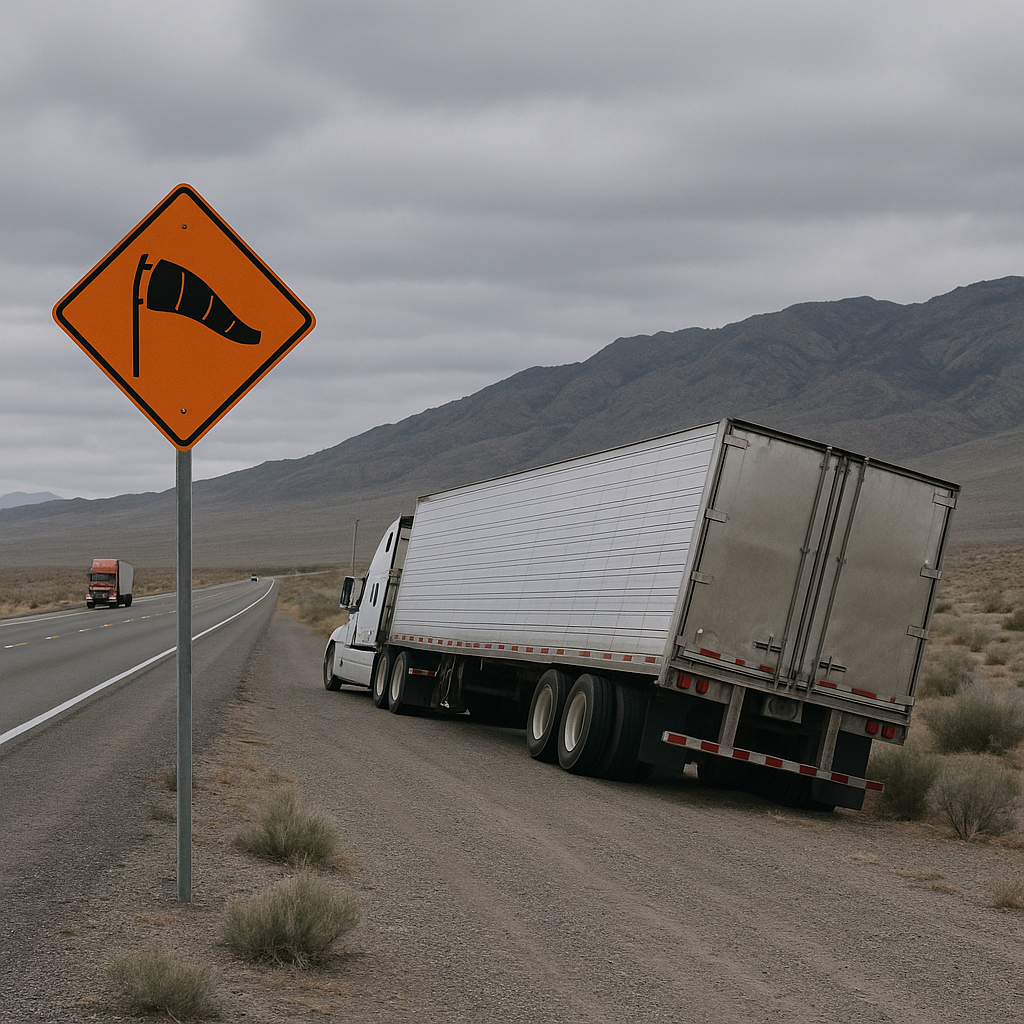
How Truck Drivers Should Respond to Nevada Wind Advisories
Overview of Nevada’s Windy Road Conditions
Nevada’s sprawling highways and arid landscapes are renowned among commercial drivers for their stark beauty and straightforward travel. However, the Silver State is equally known for its intense and unexpected wind events. Nevada’s open stretches, especially along interstates such as I-80, I-15, and US-95, frequently experience strong gusts due to the region’s unique topography and desert climate. These gusts aren’t limited to storms—“clear-air turbulence” can develop at any time, particularly in spring and fall.
Frequent wind advisories are issued by the National Weather Service or Nevada Department of Transportation (NDOT), warning drivers of conditions that can rapidly deteriorate travel safety—especially for those behind the wheel of large commercial vehicles. While every motorist must proceed with caution, truck drivers must respond to Nevada wind advisories with heightened awareness and proactive measures tailored to their vehicles’ vulnerabilities.
How Wind Affects Trucks Differently Than Cars
The physics of wind impact differ dramatically for trucks compared to passenger vehicles. Semi-trucks, with their tall trailers and large side surfaces, act almost like sails in a strong breeze. Even moderate gusts can cause noticeable sway, while high winds can push a trailer off its intended path or—in severe cases—tip it entirely.
Primary Truck Vulnerabilities:
– High Profile: Tractor-trailers, box trucks, and other high-profile vehicles present a much larger surface area than sedans or compact SUVs. This makes them far more susceptible to crosswinds, especially when traveling light or “bobtail” (without a loaded trailer).
– Weight Distribution: Unlike cars, a truck’s load weight and how it’s distributed can mean the difference between maintaining control and risking a rollover. An empty trailer or improperly balanced cargo amplifies wind risks.
– Stability: Whereas most cars have a low center of gravity, trucks have proportionally much higher centers, making tipping more likely in strong gusts.
Why Crashes Can Become Severe Under Windy Conditions
Strong winds can unexpectedly alter a truck’s direction and stability, leading to several types of serious or even catastrophic incidents:
Common Crash Scenarios Include:
– Rollover Accidents: Sudden gusts, particularly in open or elevated sections of highway, may cause a trailer to tip over. Rollovers are more likely when trailers are lightly loaded or empty.
– Jackknifing: Efforts to counteract wind sway through abrupt steering or braking may inadvertently cause a jackknife, especially when traction is otherwise reduced (for example, on sandy or wet pavement).
– Blown Off the Road: Powerful gusts can literally push a truck entirely off the highway, leading to collisions with barricades, embankments, or other vehicles.
– Debris Hazards: Nevada’s winds often pick up roadside debris, blowing objects into the path of vehicles and causing secondary accidents.
When crashes occur under high-wind warnings, they’re frequently more severe due to the combined mass and speed of a commercial truck. Even low-speed incidents can close lanes or highways for hours, and secondary crashes are common as drivers navigate unpredictable debris or blockages.
Common Seasonal Patterns in Nevada
Truck drivers crossing Nevada need to prepare for wind advisories year-round, but certain seasons present greater risks. Windy conditions are especially common in:
Spring
Nevada’s transition from winter to spring brings sharp temperature changes, creating pressure gradients and resulting in strong, sustained winds. These are especially prevalent in the northern and central parts of the state, across I-80 and State Route 50 (“The Loneliest Road in America”).
Fall
As the desert cools, cold fronts quickly sweep through, sometimes with little precipitation but with significant wind potential. Rural, open stretches susceptible to tumbleweed and dust storms become even more hazardous.
Summer
While wind advisories aren’t as frequent in mid-summer, afternoon thunderstorms can produce sudden gust fronts—short-lived but highly dangerous bursts of wind ahead of rain showers.
Winter
Though snow and ice make headlines, don’t overlook wind, especially in mountain passes (such as those surrounding Reno, Carson City, or Elko). Truckers in northern Nevada may encounter narrow canyons where winds become dangerously concentrated, magnifying their force.
Proactive Steps for Truck Drivers Responding to Nevada Wind Advisories
Understanding the risk is only the first step. Here are key actions truckers should consider when traversing Nevada’s windy corridors:
1. Monitor Real-Time Advisories
Before and during every trip, follow trusted sources such as NDOT’s road condition updates, the National Weather Service, and CB radio communication from fellow drivers. Wind advisories may change quickly, and knowing about a closure or warning in advance can help you re-route or plan safe stops.
2. Inspect and Secure Your Load
Double-check your load’s weight and distribution before departure. Heavier, well-balanced trailers provide greater resistance to wind. Ensure that all cargo is tightly secured to avoid dangerous shifts that could worsen instability.
3. Reduce Speed
Decreasing your speed provides more reaction time if your vehicle is pushed by a gust. Slower travel also minimizes the risk of rollover accidents.
4. Increase Following Distance
Wind makes handling unpredictable. Maintain extra distance between your truck and other vehicles, giving ample space should swerving or braking become necessary.
5. Avoid Overtaking on Exposed Sections
Many Nevada highways feature long, unprotected stretches between mountain ranges or across high desert plains. Avoid passing on bridges or open areas when wind speeds pick up—the force can shift dramatically in these spots.
6. Plan Stops at Sheltered Locations
If wind conditions worsen or a warning escalates, look for sheltered rest areas, truck stops, or behind natural windbreaks rather than parking in exposed highway shoulders.
7. Communicate
Stay in contact with dispatch, other truckers, and authorities. If winds reach dangerous speeds, it’s standard practice for drivers to voluntarily delay transit or for agencies to restrict high-profile vehicles from sections of road.
8. Stay Alert for Debris and Dust
Visibility can drop instantly as dust is whipped across the road, and debris may blow into your path. Slow down and be prepared for sudden stops.
Neutral Closing Paragraph
Nevada’s fierce and unpredictable winds are as much a part of the state’s driving landscape as its mountains and valleys. For truck drivers, responding appropriately to wind advisories can make all the difference in ensuring a safe journey across the Silver State’s highways. By understanding the unique challenges that wind poses to large vehicles and implementing effective safety strategies, truckers can continue to navigate Nevada’s open roads with confidence and attention to well-being.