
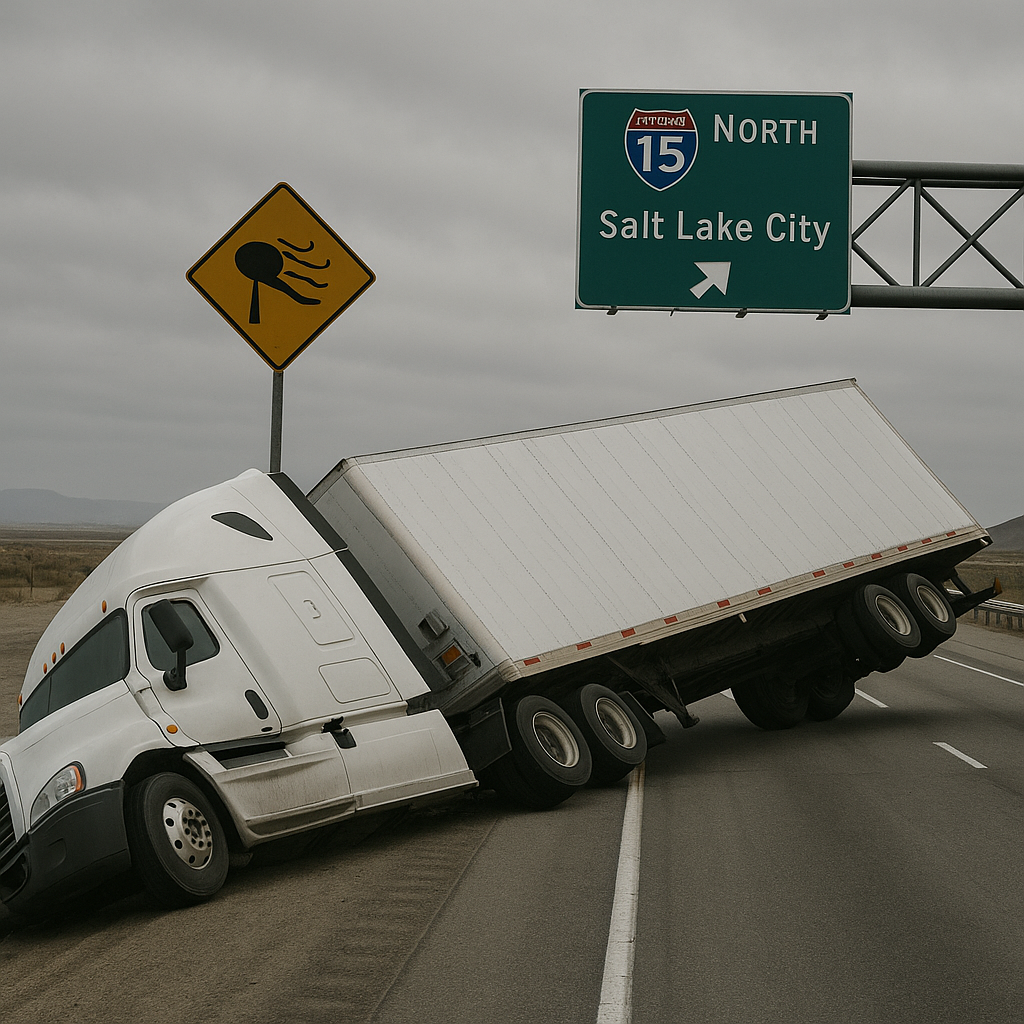
How Wind Affects I-15 Semi Truck Accident Risk
Overview of Nevada’s Wind Conditions on I-15
Nevada’s Interstate 15, stretching from Primm at the California border through Las Vegas and north to Mesquite, is one of the state’s busiest highways. Serving as a critical link for commerce among southern Nevada, southern California, and the rest of the American Southwest, this interstate consistently sees high volumes of semi-truck traffic. Yet, this corridor is not immune to Nevada’s distinct weather. Among all hazards, high winds—a regular phenomenon across the Mojave Desert—pose a surprisingly persistent and dangerous risk.
Northern Clark County and points south from Las Vegas towards the California line can see powerful wind events, especially during the transitional seasons of spring and fall. Wind gusts exceeding 40 to 60 miles per hour are not uncommon, and the flat, open desert terrain offers little protection for drivers. The combination of high-profile vehicles, variable loads, and sudden crosswinds makes I-15 a corridor where wind can drastically affect semi-truck accident risk.
How Wind Affects Trucks Differently Than Cars
Many people assume adverse weather is equally hazardous for all vehicles, but wind presents unique challenges for large commercial trucks compared to passenger cars. The enormous size and surface area of semi trucks, especially when pulling trailers, make them far more susceptible to the effects of crosswinds.
1. Increased Surface Area:
A loaded semi truck and trailer combination typically stands nearly 14 feet tall and can be more than 70 feet in length. Compared to a standard passenger vehicle, this presents much more surface for the wind to catch, acting almost like a sail. On I-15, this effect is magnified due to the openness of the desert, where little natural cover exists.
2. High Center of Gravity:
Because freight is loaded several feet off the ground, these vehicles have a significantly higher center of gravity than cars. This makes them more prone to tipping over or losing traction in strong gusts—particularly when empty or carrying lighter cargo. Sudden bursts of wind on elevated stretches, such as bridges or overpasses near Sloan, Jean, or Primm, can be especially hazardous.
3. Trailer Sway and Jackknifing:
Side winds can cause the trailer portion of a semi to sway independently from the cab. If the force is strong enough or the driver must overcorrect, there’s increased risk of a jackknife situation (where the cab and trailer swing into a sharp angle), leading to a total loss of control. In extreme winds, unloaded or lightly loaded trailers can even become airborne or flip, a sight unfortunately not unheard of on windy Nevada days.
4. Lower Responsive Control:
While cars can quickly correct small deviations in their path, the sheer mass and length of trucks mean it takes more time and space to respond to steering changes—especially in wind. This can result in unintended lane departures or difficulty maintaining lane position, posing a risk to other motorists.
Why Crashes Can Become Severe Under These Conditions
Wind affects I-15 semi truck accident risk not only in its likelihood to push trucks off course, but also in the nature of the accidents that occur. Several factors explain why wind-induced crashes involving semi trucks often lead to severe outcomes:
1. Increased Momentum and Mass:
A fully loaded semi can weigh as much as 80,000 pounds. When a truck loses control because of wind, the sheer force and mass make it more difficult to stop or redirect. Accidents involving semis on I-15 can thus cause multiple vehicle pile-ups, significant infrastructure damage, and major traffic disruptions.
2. Limited Recovery Options:
Once a semi is pushed off its lane, either partially or fully, recovery on a high-speed interstate can be difficult—if not impossible—without causing a crash. This is especially true if the road is crowded, which is common on I-15 near Las Vegas or state line points. Swift evasive action by other vehicles can also result in chain-reaction accidents.
3. Cargo Hazards:
Some trucks passing through Nevada on I-15 are transporting hazardous materials. In the event of a rollover or collision, there is the added threat of spills, fires, or other emergencies, complicating the accident scene and posing risks to other motorists and responders.
4. Visibility Issues:
During high-wind events, Nevada’s desert soil can become airborne, reducing visibility on the roadway. Dust storms (“haboobs”) contribute to driver confusion and slower reaction times, and may compound the risk for multi-vehicle accidents involving semi trucks.
5. Roadside Hazards:
After being pushed off course by the wind, a semi truck may collide with roadside barriers, signage, or even roll down embankments—situations that often result in far more severe injuries than a typical fender-bender.
Common Seasonal Patterns in Nevada
Wind affects I-15 semi truck accident risk throughout the year, but certain seasons and weather patterns in Nevada increase the likelihood of dangerous wind events:
Spring (March–May):
Spring is often the windiest season in southern Nevada. The changing temperatures and high-pressure systems frequently generate strong, sustained winds throughout Clark County and along I-15. Gust-fronts preceding cold fronts may be especially hazardous, catching drivers by surprise.
Fall (September–November):
As with spring, the transition from hot to cooler weather can cause seasonally gusty conditions. Fall winds are intensified by shift in atmospheric pressure as summer heat departs the region. During this period, wildfires in California can also spread smoke, which, when combined with strong winds, can further hinder visibility.
Winter (December–February):
Wind is less frequent in deep winter, but when storms move through the Sierra Nevada and Mojave, they can whip up strong winds in southern Nevada. The combination of wind, rain, and occasional icy spots can make driving especially hazardous.
Summer (June–August):
Summer generally sees calmer wind speeds, but the region is known for monsoon thunderstorms. These can create extremely localized wind events—downbursts or microbursts—which may catch even experienced truck drivers off guard with their intensity.
Microclimates on I-15:
Certain sections of I-15—such as the Highland Range near Sloan or the open expanses south of Jean—are particularly prone to funneling winds. Drivers may experience sudden changes in wind speed and direction with little warning between sheltered valleys and exposed stretches of highway.
Conclusion
Understanding how wind affects I-15 semi truck accident risk is crucial not only for commercial drivers, but for anyone traveling along this essential Nevada corridor. The geographical and climate realities of southern Nevada mean wind will remain a persistent safety concern, especially during seasonal peaks. Both professional truck drivers and those sharing the roadway can benefit from awareness of wind forecasts and a cautious approach during hazardous conditions. With increased understanding and preparation, all road users can help reduce the risk of serious wind-related accidents on Nevada’s I-15.