
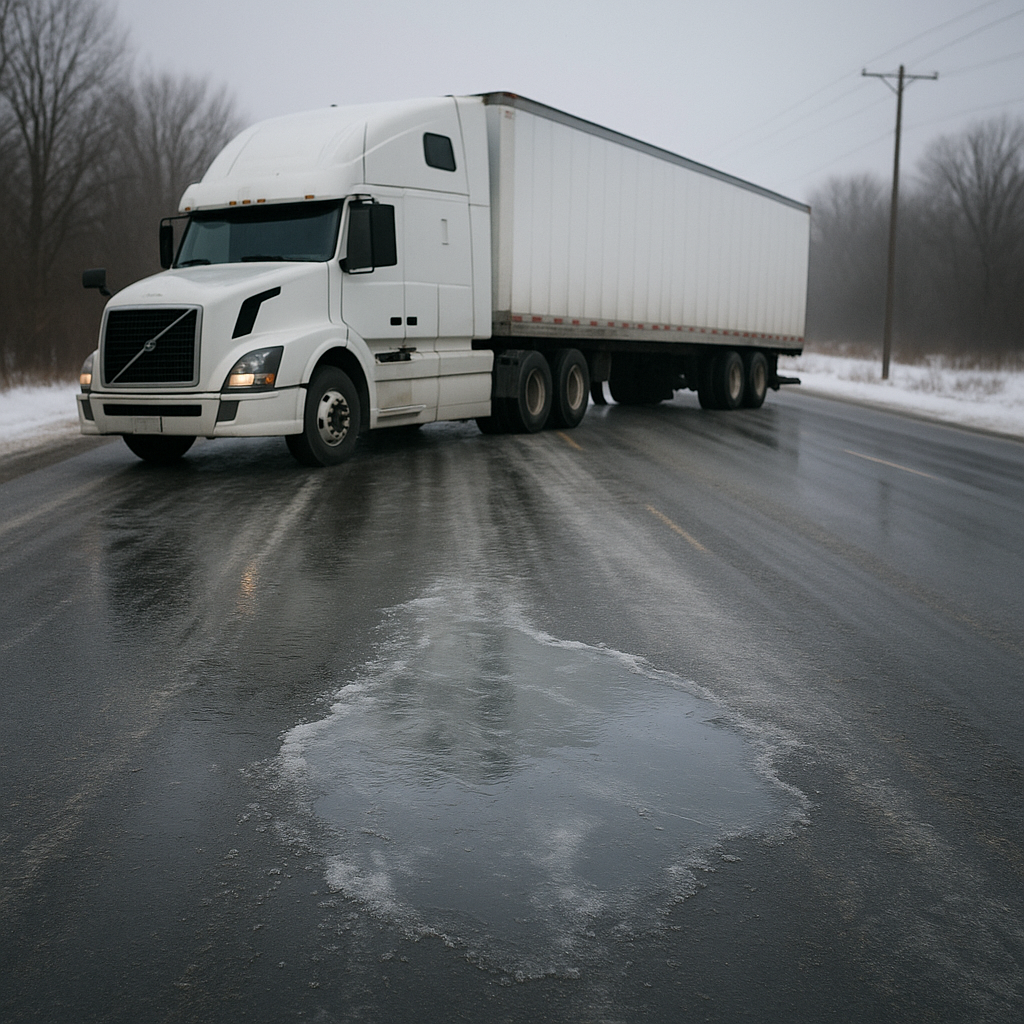
How Ice Patches Cause Loss of Control for Semi Trucks in Nevada
Overview of Nevada’s Ice Patch Challenge
While Nevada is widely known for its arid deserts and sizzling summer temperatures, many overlook the state’s diverse climate—especially its mountainous regions and high-elevation highways. In northern and central Nevada, winter brings freezing temperatures and occasional snowstorms. Even more treacherous than thick snow cover, however, are sudden ice patches that form invisibly on roadways. These slippery hazards can surprise the most experienced drivers, but for the operators of semi trucks, even one small patch can spell disaster.
Travelers and freight haulers on Nevada roads like I-80, US 50, and the Donner Pass know how quickly weather can turn. Within just a few miles on the same route, a trucker may go from dry, clear pavement to shaded curves glistening with hidden ice. Understanding the dynamics of “ice patches loss of control semi trucks” is critical for anyone using Nevada’s major corridors during the winter months.
How Ice Affects Semi Trucks Differently Than Cars
The interaction of a vehicle’s tires with an icy road is a matter of physics, weight, and momentum—but these factors don’t play out the same for compact cars as they do for massive tractor-trailers.
1. Vehicle Weight and Inertia:
A fully loaded semi truck can weigh up to 80,000 pounds, many times the mass of a typical passenger car. On dry pavement, that extra weight helps tires maintain traction. But when a semi’s many wheels encounter a patch of ice, the immense weight makes stopping or turning quickly almost impossible. The truck’s momentum wants to keep it moving in the same direction, so if the tires lose grip, the vehicle slides with considerable force.
2. Length and Articulation:
Unlike cars, semi trucks have two main parts—the tractor and the trailer—connected by a pivot point called a fifth wheel. On an ice patch, this articulation makes things riskier: if the tractor’s drive wheels lose traction, they can spin or swing sideways. The trailer, meanwhile, may “jackknife” (swerve at a sharp angle), creating an uncontrollable situation not possible with standard cars.
3. Braking Systems:
Modern trucks use air brakes and may be equipped with advanced anti-lock systems. But even these are limited on ice. Emergency or sudden braking can easily lock the wheels and send the entire rig skidding. The distribution of vehicle weight between tractor and trailer sometimes causes the trailer to lose traction before the cab does, making it possible for the trailer to swing out and lead the tractor—a particularly hazardous scenario.
4. Visibility and Roadway Positioning:
Because ice patches often form in shaded areas, under bridges, or less-traveled lanes, truckers must be keenly aware of subtle visual cues. But a high cab can sometimes make it harder to see those “almost invisible” ice sheets lying just ahead, giving less reaction time.
Why Crashes Become Severe Under These Conditions
When a semi truck loses traction on an ice patch in Nevada, the consequences can be far more dramatic than for smaller vehicles. Several key factors contribute to this heightened severity:
A. Size and Force:
A semi’s weight and speed mean greater inertia. If control is lost, the truck requires much more distance to stop—or may be unable to stop at all until it collides with an obstacle, another vehicle, or leaves the roadway entirely. The sheer mass can cause catastrophic chain reactions, blocking multiple lanes or colliding with several vehicles at once.
B. Reduced Recovery Options:
While a car may skid but still have room to recover within its lane, a jackknifed or sliding truck can rapidly block the entire highway, especially on Nevada’s mountain passes or narrow desert highways. Smaller vehicles nearby may find themselves boxed in, unable to swerve clear of the danger.
C. Hazardous Cargo and Environmental Risks:
Many trucks transport chemicals, fuels, or other hazardous materials. A loss of control incident on ice can lead to spills, fires, or long-term environmental damage—especially in Nevada’s sensitive basins and river corridors.
D. Emergency Response Challenges:
Remote stretches of Nevada highway mean that emergency response after a crash may be delayed. Adverse winter conditions that cause the accident can also hinder rescue efforts, increase exposure risk, and extend delays for all travelers.
Common Seasonal Patterns in Nevada
Understanding when and where ice patches form on Nevada’s roads is the first step to preparedness:
Winter and Early Spring:
From November through March, temperatures at higher elevations often dip below freezing overnight, allowing ice patches to form after light precipitation or even from simple roadway condensation.
Elevation Matters:
Routes crossing the Sierra Nevada, Ruby Mountains, and other ranges (such as I-80 over Donner Pass, US 93 near Ely, and US 50’s “Loneliest Road in America”) are most susceptible to sudden freezing. Even if valleys remain clear, higher elevations may have persistent icy spots beneath shady cuts or bridges.
Desert Surprises:
Because Nevada’s desert air is dry, drivers may not expect ice. However, after a rainstorm or snowmelt, night-time freezing can cause dangerous glazed spots—sometimes referred to as “black ice”—that are almost invisible against the dark asphalt.
Day-Night Temperature Swings:
Rapid temperature fluctuations, especially in the shoulder seasons, promote melting beneath the snowpack during the day and freezing at night. This cycle can create and maintain slippery ice patches even when weather seems otherwise mild.
Bridges and Overpasses:
Bridges cool faster than ground-level roadbeds and often hide ice long after surrounding surfaces have thawed. These areas deserve extra caution.
A Season of Caution and Preparation
For Nevada’s truckers and all who share the road with them, the hidden menace of ice patches underscores the importance of vigilance in winter driving. The state’s unique geography blends mountain weather, desert microclimates, and a mix of road surfaces—from heavily traveled interstate highways to isolated rural routes. Understanding how and where “ice patches loss of control semi trucks” events can happen encourages preparedness: adjusting speeds, increasing following distances, and equipping vehicles to handle the unexpected.
While Nevada may gleam under summer sun, the cold season brings its own trials. By respecting the conditions and learning from the challenges faced by semi truck operators, all drivers can contribute to a safer journey across the Silver State—no matter what the forecast may bring.