
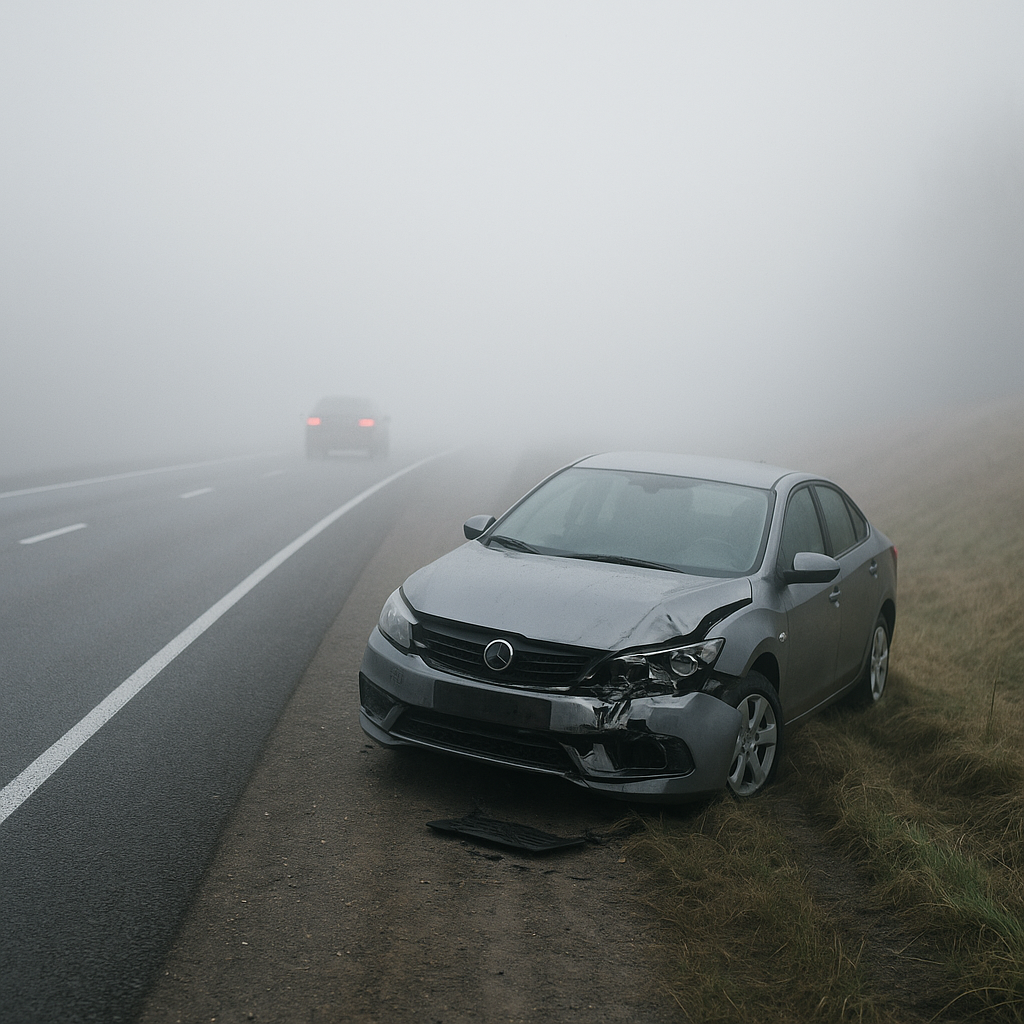
Why Low Visibility Increases Lane Departure Crashes in Nevada
Overview of the Nevada Weather or Road Condition Factor
Nevada’s unique landscape is renowned for its sprawling deserts, high mountain passes, and long stretches of highway. While the state’s climate is often characterized as arid with abundant sunshine, Nevada is also prone to sudden and sometimes severe weather shifts that can dramatically reduce road visibility. Factors like dust storms, fog, heavy rain, and occasional snowstorms, particularly in northern or elevated areas, can catch drivers off guard. Furthermore, nighttime driving across vast unlit highways significantly contributes to low visibility in the Silver State, complicating navigation and road safety.
Low visibility lane departure crashes are a significant concern for drivers navigating Nevada’s roads. Lane departure incidents occur when a vehicle unintentionally leaves its designated lane, either encroaching onto another lane or veering off the road entirely. When visibility is compromised, drivers may struggle to discern lane markings, road edges, and obstacles, making these crashes more likely—especially in areas outside of major cities where streets are less likely to be illuminated or regularly maintained.
How This Condition Affects Trucks Differently Than Cars
Navigating Nevada’s highways is especially challenging for large trucks during low visibility conditions. Commercial trucks are critical to Nevada’s economy, with routes like Interstate 80 and US-95 bustling with freight movement. However, the characteristics of these vehicles amplify the risks of lane departure crashes when visibility drops.
Size and Weight: Trucks are much larger and heavier than passenger vehicles. This means they require longer stopping distances and have less agility to quickly correct minor lane deviations during low-visibility events. A truck that begins to drift—even slightly—can cross into other lanes or off the highway before the driver recognizes the mistake.
Blind Spots: Trucks have substantial blind spots, often called “no-zones,” that reduce a driver’s ability to detect nearby vehicles. Low visibility makes it even more difficult to compensate for what can’t be seen in mirrors. When a truck driver loses sight of lane boundaries or other vehicles, the likelihood of lane departure increases, particularly on Nevada’s multi-lane freeways.
Lane Keeping Technology Limitations: Some modern trucks are equipped with lane departure warning systems, but these systems rely on visible lane markings. Dust, sand, or snow can obscure road paint, making these systems less effective in Nevada’s challenging weather.
Fatigue Factor: Long stretches of monotonous, poorly lit highway can contribute to drowsiness, particularly among truck drivers covering hundreds of miles. When combined with low visibility, the risk of inattentiveness and unintended lane drift goes up.
Cargo Shift: In challenging conditions, a sudden swerve or lane correction can cause a truck’s cargo to shift, potentially destabilizing the vehicle and leading to jackknife events or rollovers, especially if the driver over-corrects after an initial drift.
Why Crashes Can Become Severe Under These Conditions
Low-visibility lane departure crashes in Nevada can turn severe for several reasons:
Late Response Times: When drivers can’t see clearly, their reaction time is delayed. By the time a driver realizes the vehicle is drifting, it may already be partially off the road or in another lane, leaving less room and less time to correct the mistake safely.
High Speed on Open Highways: Nevada’s rural highways often have higher speed limits, and drivers—unaware of their proximity to lane boundaries—may be traveling fast when they veer out of their lane. High-speed departures can quickly become catastrophic, especially if the vehicle leaves the paved surface.
Limited Escape Paths: In desert areas, the shoulder may consist of loose gravel, dirt, or sand. Vehicles departing the lane in low visibility may lose control upon encountering these unstable surfaces, increasing the risk of rollovers.
Multi-Vehicle Collisions: When one driver departs their lane in low visibility, it can trigger chain-reaction crashes, particularly if other vehicles are nearby and unable to see or react quickly to unexpected obstacles.
Reduced Visibility for Emergency Responders: After a crash occurs, ongoing low-visibility conditions make it harder for responding vehicles to locate and safely reach the scene. This can delay critical medical care and contribute to secondary collisions, as other drivers may not recognize the upcoming hazard.
Common Seasonal Patterns in Nevada
Nevada’s low-visibility lane departure crash risks change with the seasons, influenced by its distinctive climate and geography.
Spring: With winter thawing, spring often brings strong winds that whip up dust—especially across dry lakebeds and open desert regions. Blowing dust can rapidly reduce visibility from clear to near zero within minutes. The infamous “Washoe Zephyr” winds near Reno are notorious for causing hazardous driving conditions on Interstate 80.
Summer: In southern Nevada, including the Las Vegas area, monsoon season runs from July through September. Sudden thunderstorms drop heavy rain, which can cause localized flooding and obscure lane markings. Fast-moving storm systems may also bring windblown dust.
Fall: Dust storms may continue as vegetation dries and land becomes more exposed. Early morning fog is more common in northern valleys, such as the Carson and Truckee river basins, creating pockets of dense, patchy visibility loss.
Winter: While the southern deserts generally remain snow-free, Nevada’s mountains and northern regions (including routes like US-395 and I-80 through the Humboldt-Toiyabe National Forest) regularly experience snowfall and black ice. Snowfall can quickly cover lane lines, and blowing snow can create whiteout conditions, rendering even major highways invisible.
Across all these seasons, reduced daylight in the evening and nighttime hours compounds visibility hazards, especially outside urban areas where streetlights are sparse.
Neutral Closing Paragraph
Low-visibility conditions present a significant challenge for travelers across Nevada, increasing the risk and severity of lane departure crashes. Whether caused by dust, fog, precipitation, or darkness, these conditions require heightened awareness and caution from all drivers, especially those behind the wheels of large trucks. As Nevada’s climate and geography continue to shape driving hazards statewide, staying informed about seasonal patterns and understanding the specific risks associated with low visibility is crucial for anyone using the state’s roadways. With careful attention and adaptive driving habits, drivers can reduce the chances of serious incidents and help keep Nevada’s highways safer for everyone.