
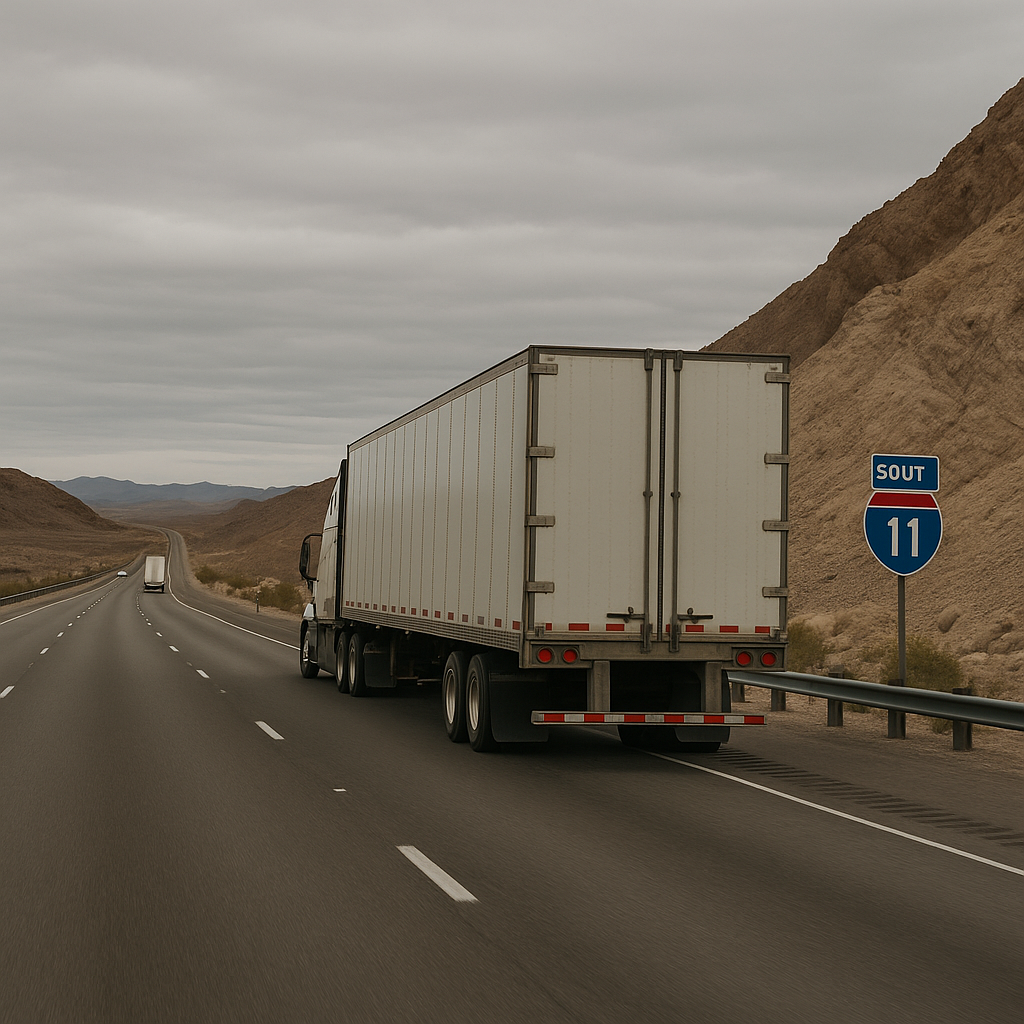
Navigating the I-11 Corridor: Freight Flow in Southern Nevada
The I-11 corridor has become a pivotal route for freight transportation through southern Nevada, connecting key economic hubs and facilitating the movement of goods throughout the region. As Nevada continues to grow as a booming logistics and distribution center, understanding the specifics of freight flow along the I-11 corridor is essential for planners, drivers, and businesses that rely on this critical infrastructure.
Overview of the Freight Corridor or Trucking Activity
The Interstate 11 (I-11) corridor in southern Nevada stretches from the Arizona border at Hoover Dam through Boulder City, skirting the southeastern edge of the Las Vegas Valley, and connecting to US-95. It is a relatively new addition to Nevada’s highway landscape, but it has already become a crucial link in the region’s freight network. I-11 is slated to eventually extend north to Reno and south to Phoenix, but for now, its southern Nevada segment serves as a gateway between Las Vegas, nearby southwestern states, and major long-haul routes.
The I-11 corridor’s importance is underscored by its strategic position. As the main north-south route connecting Phoenix and Las Vegas, it handles a steady flow of trucks transporting goods like consumer products, construction materials, and food supplies. Distribution centers clustered in the Las Vegas Valley rely on I-11’s relatively uncongested lanes to efficiently dispatch trucks headed throughout the Southwest.
Several truck stops, weigh stations, and rest areas punctuate the route, supporting high volumes of long-haul and regional trucking companies. The corridor also enables access to rail hubs and the McCarran International Airport freight terminals, squeezing maximum value out of Nevada’s intermodal freight connections.
Common Truck Types and Freight Activity in the Area
Freight activity along the I-11 corridor in southern Nevada showcases the diversity of the state’s logistics ecosystem. On any given day, travelers on I-11 will encounter an array of commercial vehicles:
– Dry Van Trucks: These are the most common type, used to transport a wide range of non-perishable goods such as electronics, clothing, and packaged foods. The Las Vegas metro area’s growing e-commerce and retail sectors depend heavily on dry van shipments.
– Refrigerated Trucks (“Reefers”): Reefer trucks carry perishable foods and pharmaceuticals, serving Nevada’s grocery stores, restaurants, and distribution centers, as well as the state’s major hospitality and casino industry.
– Flatbed Trucks: With southern Nevada’s ongoing construction and solar energy developments, flatbeds are frequently seen hauling building materials, heavy machinery, and renewable energy components, especially to and from project sites in Las Vegas and Boulder City.
– Tanker Trucks: These transport fuel, chemicals, and water, reflecting the region’s industrial and service needs. Tankers entering Nevada often bring fuel products from refineries in California and Arizona.
– Intermodal and Container Trucks: Containers moved to or from regional rail hubs, particularly those serving the Las Vegas area, add another layer to corridor activity. These trucks extend global supply chains directly onto Nevada roads.
Much of the freight flow originates or terminates at major industrial and distribution centers along the Las Vegas Beltway (I-215) and I-15, with I-11 providing fast, direct access to and from the region. The corridor also supports freight bound for rural Nevada, supporting mining operations and agriculture in the southern part of the state.
How Congestion or Merging Creates Risk
Despite being designed for high speeds and heavy gross vehicle weights, the I-11 corridor is not immune to congestion-related challenges or merging risks. Areas where I-11 joins with other highways, such as the transition to US-95 or through Boulder City, can see heightened truck and passenger vehicle density. Here are some key risk factors:
– Merging Traffic: As with many highways, on-ramps and lane reductions along I-11 can create sudden merges. Trucks, due to their size and weight, have longer stopping distances and larger blind spots. In areas of heavy merging, especially where ramps feed in from tourist destinations or residential communities, the risk for sideswipes and rear-end collisions increases.
– Congestion Hot Spots: Although southern Nevada is less congested than some urban areas, localized slowdowns—such as at the Boulder City Bypass or during special events in Las Vegas—can cause traffic to back up unexpectedly. Varied speed differentials between trucks and passenger vehicles lead to heightened crash potential.
– Short Weave Distances: Where drivers must cross multiple lanes in a short stretch, both freight and non-commercial drivers may make abrupt lane changes. This dynamic creates additional risk for large trucks, which may not maneuver quickly.
– High Winds and Weather: The open desert terrain along I-11 can amplify wind gusts, making it difficult for high-profile vehicles (like empty trailers or loaded flatbeds) to maintain stability, especially when merging or changing lanes in crowded conditions.
Efforts to enhance safety include clear merging signage, dedicated truck lanes in certain stretches, and expanded shoulders. However, the mixture of heavy freight traffic with regional commuter and tourist traffic means truckers must remain vigilant.
Time-of-Day and Seasonal Traffic Trends
Freight flow on the I-11 corridor in southern Nevada is influenced by both the clock and the calendar, affecting how traffic builds and ebbs.
Time-of-Day Trends
– Morning and Evening Peaks: Most heavy truck activity begins in the early morning hours (around 4–7 a.m.), as carriers seek to avoid daytime heat and local commuter traffic. Commuter volume increases between 6 a.m. and 9 a.m., sharing the corridor with freight.
– Mid-Day Lulls: After the morning rush, from about 9 a.m. through early afternoon, truck traffic dominates. This is the optimal time for long-haul movements, with less interference from local or tourist traffic.
– Afternoon Congestion: As casino and hospitality shifts change and schools let out, another pulse of passenger vehicles mixes with freight around 3–6 p.m., particularly near the Las Vegas metro fringe.
Seasonal Trends
– Winter and Spring: These seasons are relatively steady for freight flow, with mild weather providing ideal driving conditions and little interruption.
– Summer Heat: High summer temperatures can impact trucking schedules, as both trucks and cargo (especially perishables) may require specific handling. Some companies adjust schedules to avoid the hottest afternoon hours, and there may be increased traffic due to Las Vegas tourism peaks.
– Holiday Peaks: During major holidays and special events—such as New Year’s, CES, and big conventions—night and weekend truck moves may spike to avoid peak visitor congestion.
– Weather Events: Monsoonal storms in late summer bring sudden downpours and flash flooding risks, sometimes forcing traffic slowdowns or detours.
Understanding these trends allows shippers and carriers to better plan routes and schedules for maximum efficiency, helping to minimize risk and avoid predictable bottlenecks.
Building a Smarter Corridor for Southern Nevada’s Future
Freight flow on the I-11 corridor is vital to southern Nevada’s economy, supporting everything from retail and hospitality to major infrastructure projects. As southern Nevada continues to grow and the I-11 corridor extends, its role as a freight gateway will only increase in importance. Continued investment in infrastructure, technology, and smart traffic management will be key to ensuring safe, efficient travel for all vehicles.
Careful planning, coupled with awareness of traffic and seasonal trends, can help Nevada businesses and logistics professionals maintain the corridor’s reliability and safety for the long haul. As the region evolves, the I-11 corridor will remain a lifeline—linking Nevada to the broader southwest while fueling local economic success.