
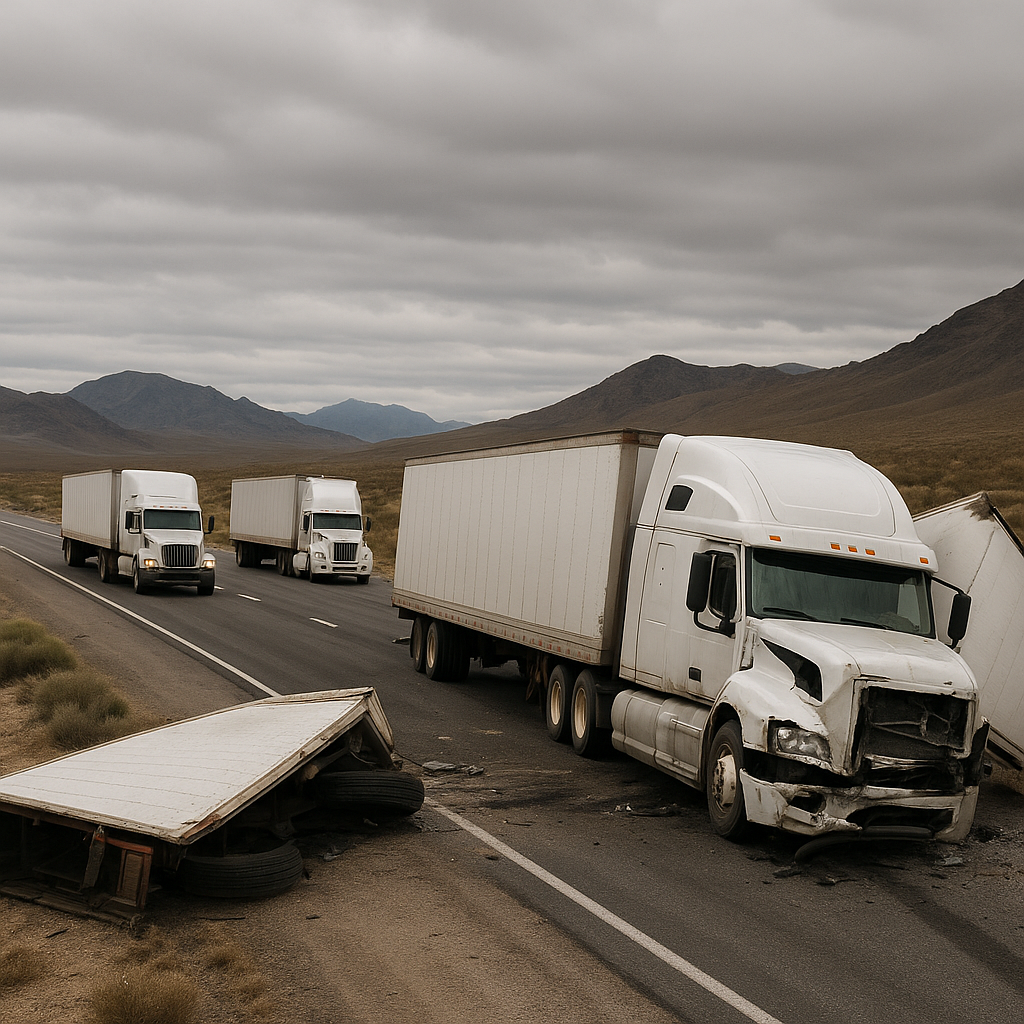
How Convoy Driving Affects Nevada Truck Crash Risk
The open highways and expansive landscapes of Nevada make it a crucial crossroads for freight moving across the American West. With the increasing use of convoy driving techniques—where two or more trucks travel closely together in coordinated groups—both the risks and efficiencies for commercial truck drivers are changing. Understanding how convoy driving impacts Nevada truck crash risk is essential for anyone interested in highway safety, logistics, or the state’s vital freight industry.
Overview of the Nevada Freight Corridor and Trucking Activity
Nevada sits at the heart of several major trucking routes that connect the West Coast to the rest of the United States. Interstate 80 (I-80) stretches east-west through northern Nevada, funneling cargo between California and points eastward. Meanwhile, Interstate 15 (I-15) runs along the southern edge of the state, serving as a major conduit between Los Angeles, Las Vegas, and Salt Lake City. U.S. Highway 95 and 93 also see significant truck traffic, especially as they support the mining, agricultural, and manufacturing sectors that drive much of Nevada’s economy.
Because of this strategic location, tens of thousands of trucks traverse Nevada’s highways daily, transporting commodities ranging from electronics and clothing to precious minerals and construction materials. The state’s vast networks of highways are designed for high speeds and efficient transport—a landscape where convoy driving is increasingly popular.
Convoy driving, sometimes called “platooning,” is a coordinated method where trucks travel in tight formation using advanced communication technologies, like adaptive cruise control and vehicle-to-vehicle (V2V) connectivity. The benefits are clear: reduced fuel consumption by minimizing aerodynamic drag, streamlined traffic flow, and improved scheduling for carriers. However, grouping several large tractor-trailers together presents unique safety challenges, particularly in the context of Nevada’s highways and variable road conditions.
Common Truck Types and Freight Activity in the Area
Most of the commercial convoys in Nevada consist of large class 8 tractor-trailers—commonly known as 18-wheelers. These trucks are often seen carrying:
– Consumer goods: Electronics, clothing, appliances
– Bulk minerals: Gold, silver, copper, and rare earth elements from Nevada mines
– Construction materials: Cement, steel, lumber
– Agricultural products: Produce, livestock, fertilizers
– Hazardous materials: Chemicals, fuels, and waste generated or consumed by Nevada’s industries
It’s not uncommon to see convoys of three to five trucks following one another, either as an organized fleet from a single company or as an informal grouping of drivers with similar routes. In some cases, technology-assisted platooning systems maintain minimal gaps—sometimes as little as 30 to 50 feet—between large, heavy vehicles. This proximity can make Nevada highways particularly daunting for smaller vehicles or less experienced drivers.
The state’s geography also poses distinctive challenges: mountain passes like those on I-80 near Donner Summit, sudden desert wind gusts, and long stretches of isolated highway with limited services add to the complexity of safe convoy movement. The diversity of freight, each with its own handling requirements, further underscores the need for robust risk management.
How Congestion or Merging Creates Risk
While convoy driving offers efficiency, it can raise crash risk—especially in regions where traffic conditions are unpredictable. In Nevada, this is most evident in and around urban centers like Las Vegas, Reno, and Carson City, as well as at highway interchanges and on-ramps.
Congestion Issues:
When several trucks move together through busy urban corridors, their sheer size can create “rolling roadblocks” that slow the movement of other vehicles, particularly during rush hour. This encourages risky driving behavior among smaller vehicles, such as abrupt lane changes or attempts to weave between convoy trucks—a maneuver that can lead to collisions, especially since trucks have large blind spots and require long stopping distances.
Merging Hazards:
Convoys pose a special risk at on-ramps and highway merges. A tightly packed group of trucks can act like an elongated barrier, forcing merging vehicles to either accelerate aggressively or slow down excessively. In Nevada, where highways like I-15 see a mix of high-speed interstate traffic and local vehicles entering or exiting, this dynamic is particularly hazardous. Distracted drivers or out-of-town motorists unfamiliar with convoy behavior may underestimate the challenge of merging, leading to rear-end collisions or dangerous cut-offs.
Emergency Response and Lane Drops:
Sandstorms, tire blowouts, and the need for sudden evasive action—common risks on Nevada highways—are harder to manage in a convoy. If one truck encounters a hazard, the closely following trucks must react quickly. The domino effect can escalate into multi-vehicle crashes, with significant consequences given the combined weight and speed of convoyed trucks.
Time-of-Day and Seasonal Traffic Trends
Nevada’s truck traffic ebbs and flows with the time of day, season, and the demands of various industries:
Time-of-Day Variations:
Most long-haul truck traffic through Nevada occurs during the late-night and early-morning hours. Truckers aim to bypass urban congestion and take advantage of cooler temperatures, especially during the summer. Convoys are more likely to be seen at these times, when drivers can coordinate schedules to maximize efficiency and meet delivery windows. However, nighttime driving presents its own risks, including reduced visibility, driver fatigue, and a higher likelihood of encountering wildlife on rural stretches of highway.
Rush Hour and Urban Bottlenecks:
Daylight hours and shift changes in city centers like Las Vegas and Reno cause traffic surges. Convoyed trucks navigating these periods may find it difficult to maintain formation, which can lead to sudden speed adjustments. The need to maneuver around slowdowns or stalled vehicles can catch drivers off-guard, increasing crash risk in heavy traffic.
Seasonal Trends:
Winter storms are a major factor in northern Nevada, especially on I-80 through the Sierra Nevada. Ice, snow, and limited visibility create hazardous convoy conditions, amplifying the difficulty of coordinating multiple heavy trucks. In contrast, summer’s extreme heat can cause tire blowouts and mechanical failure, while monsoonal thunderstorms and flash flooding in southern Nevada can also disrupt traffic flow unpredictably.
Special Event Traffic:
Major events, such as Las Vegas conventions or the annual Burning Man festival, add thousands of extra vehicles to certain corridors. When convoys coincide with such surges, the result can be severe slowdowns and heightened crash risk, as both truck drivers and motorists jostle for limited space.
Neutral Closing Paragraph
Convoy driving is transforming the way freight moves through Nevada, offering new efficiencies while posing distinct safety challenges. As trucking technology and freight activity continue to evolve, so too must the strategies for managing congestion, merging, and the unique conditions found along Nevada’s highways. By understanding the interplay between convoy driving and Nevada truck crash risk, stakeholders can work toward safer roads for everyone who travels through the Silver State.