
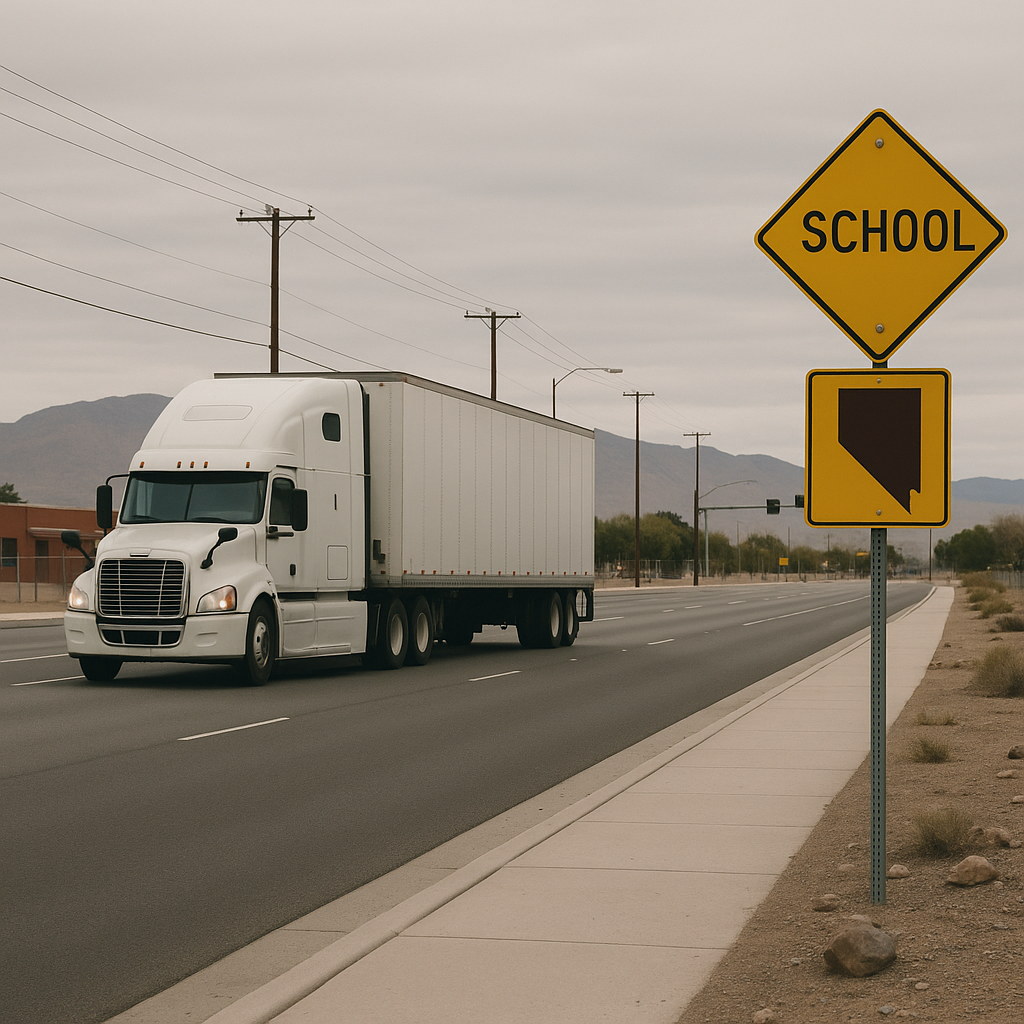
Freight Corridor Safety Around School Zones in Nevada
Safe travel and efficient freight movements are vital for Nevada’s thriving communities and growing economy. Yet, as trucks navigate key freight corridors throughout the state, they often pass near active school zones full of children, parents, and teachers. Balancing bustling freight activity with the need for safety in and around these sensitive areas is an ongoing challenge for transportation officials, logistics companies, and the communities they serve. This article examines freight corridor safety around school zones in Nevada, looking at the specific risks, trends, and considerations that shape this important issue.
—
Overview of Freight Corridor and Trucking Activity
Nevada serves as a critical hub for goods movement in the west, with major transportation routes traversing urban, suburban, and rural areas. Interstate 15 and Interstate 80 form the state’s backbone for cross-country freight, while highways like U.S. 95 and Nevada State Route 160 connect regional and local communities. Significant urban freight activity occurs in population centers such as Las Vegas, Reno, and Sparks, where schools are often situated close to arterial roads and highways.
These freight corridors exist not only as lifelines for commerce but also pass directly through neighborhoods filled with schools—from elementary to high school and beyond. Particularly in cities, school campuses often border major roads because of urban development patterns. Morning arrivals and afternoon dismissals overlap with peak delivery hours for many trucking operations, creating periods of heightened interaction between freight vehicles and school zone traffic.
Recent assessments from the Nevada Department of Transportation (NDOT) have highlighted the importance of monitoring how trucks and school zone traffic interact. These observations focus on locations near warehouse districts, retail distribution hubs, and manufacturing zones—areas with both heavy truck volumes and nearby educational facilities.
—
Common Truck Types and Freight Activity in the Area
Truck traffic in Nevada is diverse, reflecting the state’s broad economic base. The most frequent types of trucks seen around school-adjacent freight corridors include:
– 53-foot semi-trailer trucks: These long-haul vehicles are a common sight on interstates and major highways, delivering goods from distant suppliers to urban distribution centers.
– Box trucks and delivery vans: Used for local and regional deliveries, these vehicles transport parcels, food supplies, and retail inventory—including shipments to school cafeterias or bookstores.
– Flatbeds and tankers: Hauling construction materials, fuel, and other specialized cargo, these trucks often use city streets connecting to project sites and utility hubs.
– School district trucks: While not part of the over-the-road freight network, maintenance and supply trucks for school districts add to the mix, particularly during school hours.
In Las Vegas and Reno, warehousing and logistics facilities often cluster near residential neighborhoods. This proximity means that truck drivers, many on tight delivery schedules, must navigate environments that are not only busy with vehicular traffic but also bustling with pedestrian students and school bus activity.
—
How Congestion or Merging Creates Risk
Congestion is a hallmark of freight corridors around schools, especially during arrival and dismissal periods. The convergence of freight vehicles, school buses, family cars, pedestrians, and bicyclists in areas with limited road capacity increases the potential for incidents. Safety risks are amplified by several factors:
– Limited Visibility: Large trucks have significant blind spots. Small children crossing hidden between parked vehicles can be difficult for truck drivers to see.
– Frequent Stopping: School zones often require frequent and unpredictable stops for pedestrians and buses, which can surprise truck drivers unaccustomed to sudden traffic changes.
– Merging and Turning Conflicts: Many Nevada schools are located near intersections or freeway ramps. Trucks turning onto local streets or merging back onto main roads must account for slow-moving or unpredictable school zone traffic, requiring greater stopping distances than passenger vehicles.
– Speed Transitions: Freight corridors are built for higher speed traffic, while posted speeds in school zones can drop dramatically during pickup and drop-off times. Adjusting to lower posted limits requires heightened driver awareness, especially for non-local or out-of-state drivers unfamiliar with Nevada’s enforcement of school zone rules.
– Pedestrian Unpredictability: Young children may dart into traffic unpredictably or cross mid-block, posing a particular risk in congested truck corridors.
Data from NDOT and local law enforcement agencies indicate that the most common incident types involve side-swipes during merging, rear-end collisions resulting from sudden stops, and right-turn conflicts between trucks and crossing pedestrians.
—
Time-of-Day and Seasonal Traffic Trends
Understanding the nuances of freight corridor safety around school zones in Nevada means recognizing how risk fluctuates throughout the year and during different times of day.
Morning and Afternoon Peaks:
– Freight delivery schedules often see a large volume of trucks on the road between 6:00 AM and 9:00 AM—overlapping with school start times.
– A second surge may occur from 2:00 PM to 4:00 PM as classes end and afterschool programs dismiss students.
– School buses, family vehicles, and walking students are all near the curb at these times, leading to significant congestion in school-adjacent corridors.
Midday Lulls and Nighttime Deliveries:
– Between 9:30 AM and 1:30 PM, school and truck traffic both decrease. Some freight companies schedule local deliveries to avoid the school rush.
– Night deliveries, more common for longer-haul routes, generally pose less risk to school zones as pedestrian and school bus activity is minimal.
Seasonal Fluctuations:
– During the summer, school-related traffic drops considerably, temporarily reducing freight corridor conflict points near campuses.
– Conversely, late summer and early autumn often see increased construction activity on or around campuses, leading to a higher presence of contractor vehicles and work trucks intermingling with regular freight and community traffic.
– Special event days—such as major athletic events or school festivals—can temporarily increase both pedestrian and car traffic in school zones, which may not always be anticipated by regular freight operators.
Weather-Related Trends:
– Nevada experiences occasional rain, but more often deals with heat, dust storms, and, in northern areas, snow and ice during the winter. Inclement conditions can reduce visibility, increase stopping distances, and make navigation in busy school zones more challenging for trucks.
—
Conclusion: Supporting Safe Corridors in Nevada’s School Zones
Freight corridor safety around school zones in Nevada is a shared responsibility. As one of the nation’s key freight gateways, the state must continually balance the efficient movement of goods with the well-being of its youngest citizens. Understanding the dynamics of heavy truck traffic, peak school commuting periods, and the unique challenges presented by Nevada’s landscape and climate is essential for everyone involved—from logistics companies and drivers to school administrators, local officials, and parents.
Through collaboration, education, and ongoing monitoring of traffic patterns, Nevada communities can support both economic growth and the safety of their school zones. While there is no one-size-fits-all solution, a focus on awareness, careful scheduling, and respect for school zone regulations can go a long way toward making Nevada’s freight corridors safer for all who use them.