
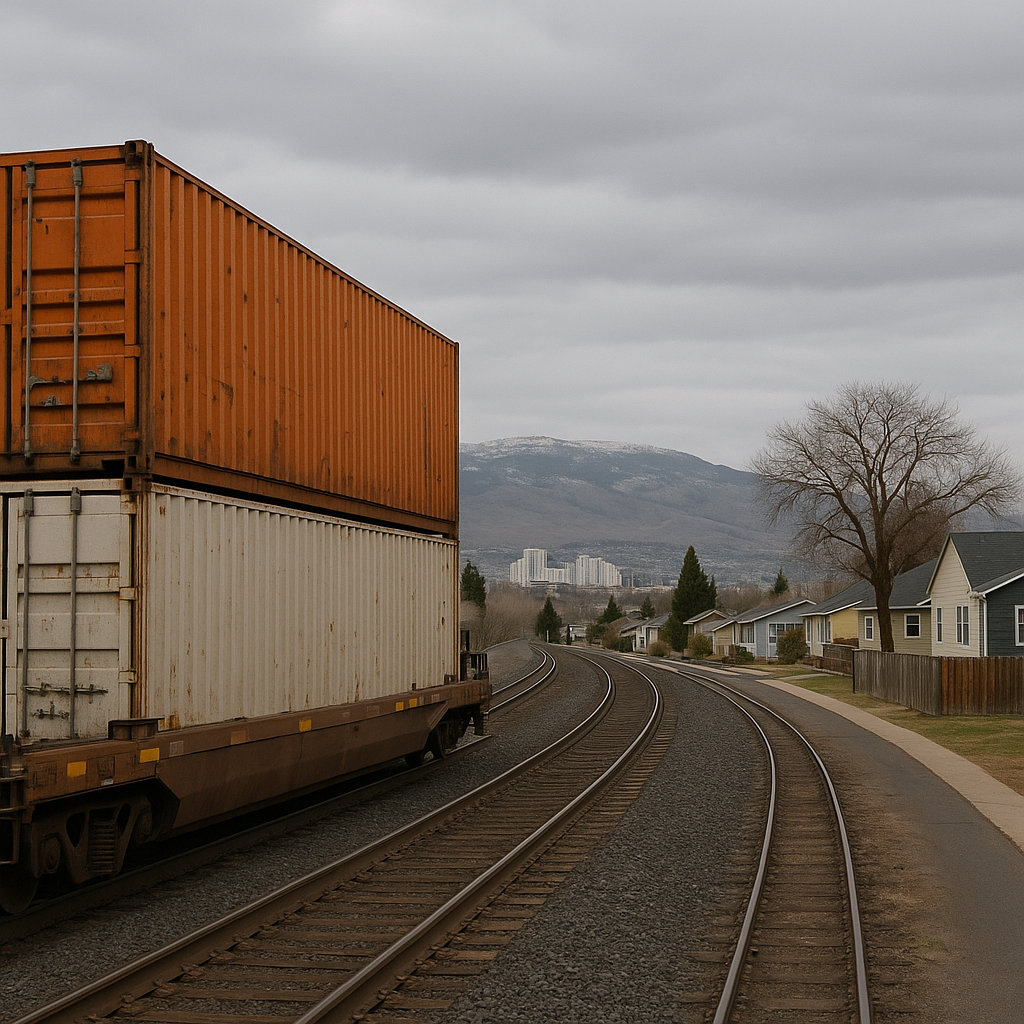
Freight Routes Near Residential Areas in Reno
Freight movement is a vital part of Reno’s economy, serving northern Nevada as a critical crossroads for goods passing westward and north toward the Pacific Northwest. However, as residential development expands and industrial activities remain strong, freight routes near residential areas in Reno increasingly affect daily life, neighborhood safety, and local traffic patterns. Understanding how trucking corridors intersect with homes, schools, and community amenities provides insight for Reno residents, city planners, and businesses alike.
Overview of the Freight Corridor or Trucking Activity
Reno’s position along the I-80 corridor and proximity to US-395/US-580 has long made it an essential freight hub in Nevada. The city’s unique geography—sitting between the Sierra Nevada mountains to the west and the high desert to the east—means most major goods movement is funneled through select corridors. These include:
– Interstate 80 (I-80): Serving as the primary east-west trucking artery, connecting trucking hubs from Oakland, CA, straight through to Salt Lake City and beyond.
– US-395/US-580: Facilitating north-south movement, this route links industrial growth areas like Stead and Lemmon Valley with the rest of Reno and Carson City.
– Local arterial roads: As freight traffic leaves highways, trucks disperse onto collectors like McCarran Boulevard, Mill Street, and Longley Lane, often passing by or through residential neighborhoods, especially in south and east Reno.
Growth in logistics centers—including the Tahoe Reno Industrial Center (TRIC), the Stead Airport area, and facilities near the airport—means heavy trucks regularly traverse roads bordering residential developments. For local residents, freight routes near residential areas in Reno have become an everyday concern, especially along connectors that serve both housing and business parks.
Common Truck Types and Freight Activity in the Area
Reno’s logistics and freight activity bring a variety of truck types into the area, each tailored to specific industry needs:
– Class 8 tractor-trailers: These are the familiar 53-foot semis, moving everything from retail goods to construction materials. They are most often seen heading to distribution centers or regional warehouses.
– Local delivery straight trucks: Smaller box trucks and delivery vans are used for last-mile distribution, with increased traffic due to e-commerce activity.
– Refrigerated freight: Reno’s role as a food distribution hub means significant cold-chain activity, involving temperature-controlled semi-trailers.
– Specialty heavy haulers: Oversized loads, including machinery for regional mining or construction, periodically utilize the same arterial roads.
Freight activity tends to spike during weekdays, particularly in the morning (6–9 a.m.) and late afternoon as deliveries are made to businesses and retail locations. The presence of schools, neighborhood parks, and residential driveways along these active routes occasionally creates points of friction where heavy freight activity abuts daily residential life.
How Congestion or Merging Creates Risk
The mix of heavy trucks and residential traffic, particularly where freight routes near residential areas in Reno intersect local streets, introduces several risks:
1. Merging and lane changes: Trucks require significantly more space and time to merge or change lanes safely. On roads like McCarran Boulevard, where trucks mix with passenger vehicles entering or exiting residential neighborhoods, these maneuvers can be challenging, especially during peak periods.
2. Blind spots and visibility issues: Trucks have large blind spots, often called “no-zones.” Cars entering or leaving neighborhoods or making left turns across freight-dominant lanes may not be visible to a truck driver.
3. Increased stopping distance: Heavily-laden trucks take longer to stop than cars. When residential drivers unexpectedly slow, stop, or make quick turns, the risk of rear-end collisions increases.
4. Turn radii: Large trucks need extra room for right or left turns. Neighborhood corners or business driveways not designed for truck traffic can lead to awkward turning movements or trucks encroaching on sidewalks and curbs.
5. Congestion during peak hours: Increased truck traffic during rush hour can dramatically slow movement, causing frustration for residents and heightening the possibility of risky maneuvers as drivers seek to avoid delays.
Community feedback in Reno commonly raises concerns about noise, vibration, and even air quality along these routes. While city planners strive to separate major freight activity from family-centric areas, geography and economic development occasionally require that these corridors coexist.
Time-of-Day and Seasonal Traffic Trends
Freight traffic in Reno follows distinct time-of-day and seasonal patterns, shaped by both logistics industry needs and regional economic cycles.
Time-of-Day Trends:
– Mornings (6 a.m. – 9 a.m.): This is typically the busiest window for inbound deliveries to commercial centers and outbound loads departing industrial zones.
– Midday (11 a.m. – 2 p.m.): A relative lull, as businesses manage inventory and residential traffic is lighter.
– Afternoons (3 p.m. – 5 p.m.): A second peak as trucks aim to complete deliveries before evening and residents return home from work or school.
Many distribution centers, like those near Stead or the airport, operate multiple shifts—meaning some freight activity continues well into the evening, although volumes generally taper off after 7 p.m.
Seasonal Considerations:
– Construction season (spring and summer): Expect additional heavy vehicle movement for hauling materials and equipment, particularly near new housing developments on the city’s fringes.
– Holiday season (October–December): Increased e-commerce boosts daily delivery truck volumes, especially on collector roads like Longley Lane and McCarran Boulevard bordering neighborhood shopping centers.
– Winter (December–February): Storms and hazardous road conditions on mountain passes can reroute out-of-area truck traffic through Reno, increasing local activity as truckers avoid chain controls or accidents on I-80 West.
Roadwork, school schedules, and local events (such as the Reno Rodeo or Hot August Nights) also temporarily affect freight flows and local congestion.
Neutral Closing Paragraph
Freight routes near residential areas in Reno reflect the challenges of balancing a growing region’s economic vitality with quality of life for neighborhoods. As Reno evolves, local stakeholders—residents, city planners, freight operators, and businesses—will continue working together to support both safe, efficient truck movement and vibrant, livable communities. Monitoring traffic patterns and considering community input will be essential as Reno navigates the complex relationship between freight corridors and residential development in the years ahead.