
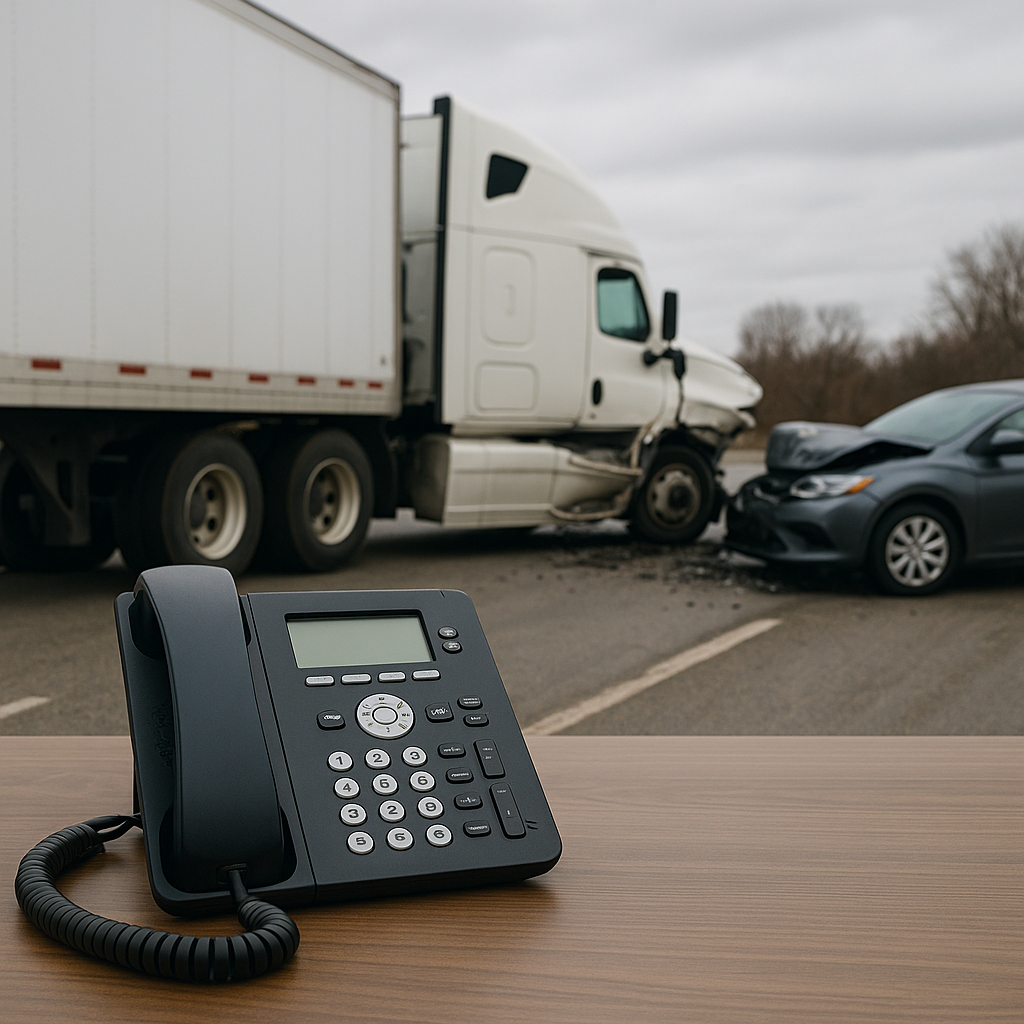
What Information Dispatchers Ask After Truck Accidents
Truck accidents are high-stress events that can cause significant harm, traffic disruptions, and immediate confusion. In Nevada, when such incidents occur, dispatchers play a vital role as the first point of contact, gathering essential information to initiate the appropriate response and ensure public safety. Understanding the typical dispatcher questions after a truck accident can help drivers, witnesses, and others involved know what to expect and why these details matter.
Overview of Crash Response and Reporting Systems in Nevada
Nevada’s emergency response system operates through a coordinated network of dispatch centers, law enforcement agencies, and emergency medical services. Once a truck accident is reported, dispatchers use specialized protocols to assess the situation, communicate with responding units, and facilitate a swift intervention.
When someone dials 911 or a non-emergency police line after a truck collision, trained dispatchers act as the initial link in the chain of response. Their job is to triage calls, assess the urgency, and relay pertinent data to the nearest available units—be it police, fire, paramedics, or hazardous materials teams. In Nevada, dispatchers are trained to efficiently extract accurate information despite the inherent chaos of a collision scene.
Common Agencies and Reporting Steps
Truck accidents in Nevada often prompt response from various agencies. Nevada Highway Patrol, local police departments, county sheriff’s offices, and fire/rescue departments may all be notified, depending on the accident’s location and severity. Additionally, specialized hazmat teams can be engaged if hazardous materials are suspected.
At the heart of this process is the emergency dispatcher, whose thorough information intake sets the tone for the entire response. Knowing about the agencies commonly involved and understanding the reporting steps gives perspective on why dispatcher questions are systematic and detailed.
Some typical stages in reporting include:
– Call Intake: The dispatcher answers the emergency call and starts a structured questioning process.
– Assessment: Quick assessment concerning the number of vehicles, potential injuries, and immediate hazards.
– Resource Dispatch: Information provided by the caller helps determine what resources—ambulances, fire trucks, police, or tow vehicles—are needed.
– Coordination: Dispatchers coordinate with various agencies, ensuring efficient routing and updates as the situation develops.
Dispatcher questions in truck accident scenarios are tailored to ascertain the scope, urgency, and any public safety risks. Information requested is crucial not only for timely help, but also for protecting accident victims, managing traffic, and preventing further incidents along Nevada’s highways and city roads.
Documentation Typically Involved
Information gathered by dispatchers forms part of an official record. The documentation process usually involves:
– Location Details: Exact address or highway markers, intersection names, or GPS coordinates where the crash occurred.
– Time of Incident: When the accident happened, which is vital for creating accurate reports and timelines.
– Vehicle and Driver Description: Make, model, color of the truck and any other vehicles involved. Nevada dispatchers often ask about trailer types and whether hazardous materials or large loads are present.
– Extent of Damage: Observations about visible damage, vehicle positions, and any risk of fire or leaks.
– Injury Reports: Details regarding the number and condition of people injured, trapped, or in need of medical attention.
– Hazards and Spillages: Whether there are fuel leaks, chemical spills, or cargo scattered on the roadway—vital in Nevada, where many trucks carry hazardous materials.
– Obstructions: Information about blocked lanes, roadway debris, and hazards that may require immediate closure or rerouting of traffic.
– Witnesses and Other Parties: Whether there are bystanders, other involved vehicles, or witnesses who can provide additional details.
All these details are documented to aid emergency response units on arrival, facilitate incident investigation, and support later reporting to agencies like the Nevada Department of Public Safety or Federal Motor Carrier Safety Administration.
Common Reporting Misunderstandings
Despite best intentions, misunderstandings can arise during the reporting of truck accidents. Some common misconceptions in Nevada include:
– Assumptions About Dispatcher Roles: Callers sometimes expect dispatchers to offer immediate on-site solutions or legal advice. In practice, dispatchers cannot provide legal interpretations; their focus is on gathering information and coordinating emergency response.
– Uncertainty About Required Details: Many people mistakenly think vague descriptions are enough, such as “there’s been an accident on the highway.” For effective response, dispatchers need specific location details, vehicle descriptions, and observable risks.
– Downplaying Hazards: In some cases, callers may not recognize the urgency of a fuel leak or cargo spill. Dispatchers are trained to probe for these critical details, but initial callers might overlook them, believing only collision damage matters.
– Overlapping Reports: Multiple callers may report the same accident, sometimes providing conflicting information. Dispatchers reconcile these reports through verification questions and experience.
– Fear of Involvement: Witnesses or involved parties may hesitate to share information, thinking they will become legally embroiled. Dispatchers gather facts strictly for immediate response purposes, not to assign blame or gather legal evidence during the call.
Understanding these misunderstandings helps foster better communication and ensures Nevada’s emergency responders receive the information they need to act effectively.
Neutral Closing Paragraph
Dispatcher questions after a truck accident are rooted in proven protocols designed to maximize the safety and efficiency of Nevada’s crash response system. Accurate, timely information from callers forms the foundation for effective emergency management, roadway safety, and proper documentation. By being aware of the types of questions dispatchers typically ask, and the purpose behind them, drivers and witnesses can contribute to smoother, more effective response efforts during high-stress situations on Nevada’s roads.