How Rescue Crews Handle Rollovers Involving Semis in Nevada
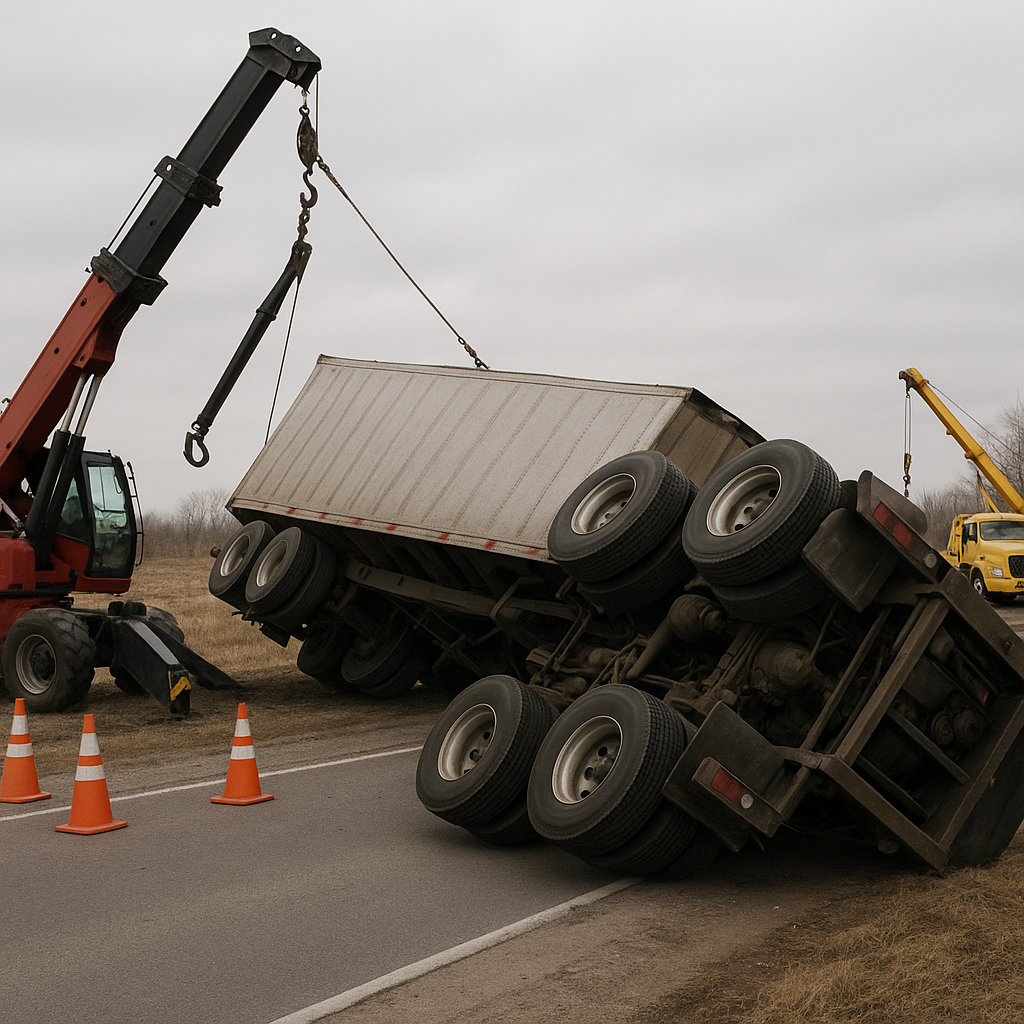
When a semi-truck rolls over on a Nevada highway, the consequences can be severe—road closures, hazardous materials spills, and risks to drivers and rescue crews alike. Understanding how rescue crews handle semi rollovers in Nevada highlights the careful planning, unique challenges, and coordinated response needed to manage such emergencies safely and efficiently.
Overview of Crash Response and Reporting Systems in Nevada
Nevada’s major highways, including the busy I-15 and I-80 corridors, see significant semi-truck traffic every day. Rollovers, while not everyday events, are a high-priority concern for first responders due to the size of the vehicles and the potential for cargo hazards or fuel leaks.
The Nevada Department of Public Safety (DPS), which encompasses the Nevada Highway Patrol (NHP), is central to responding to semi-truck rollovers. The state’s comprehensive crash response protocol is designed to minimize injuries, secure the area, protect the environment, and restore traffic flow as safely and quickly as possible.
Emergency dispatch centers across the state coordinate with first responders via the 911 reporting system. When a rollover is reported, emergency communications operators quickly relay critical details—including location, number of vehicles involved, and possible injuries—to responding agencies. Rollovers involving semis often require specialized rescue crews trained in extrication and hazardous materials (hazmat) response, depending on the truck’s cargo.
Nevada’s expansive geography, with miles of remote desert highways, makes timely reporting and clear communication essential. Dispatchers and on-scene officers use advanced mapping and traffic management tools, sometimes partnering with agencies like the Nevada Department of Transportation (NDOT) for rerouting and road closure notifications.
Common Agencies and Reporting Steps
In the aftermath of a semi-truck rollover, several agencies are almost always involved, each bringing a unique set of resources and expertise to the emergency scene.
Police and Highway Patrol
The Nevada Highway Patrol is generally the lead agency on state highways. Officers secure the area, conduct preliminary investigations, and redirect traffic. Local law enforcement may assist in urban areas or when local roads are involved.
Fire Departments and Rescue Teams
Local fire departments, particularly in urban centers like Las Vegas or Reno, have specialized rescue crews trained for large vehicle extrications. These teams bring equipment designed for heavy rescues, such as hydraulic spreaders and stabilizing struts, which are critical for safely accessing cab areas or freeing trapped occupants in semis.
Emergency Medical Services (EMS)
EMS arrives ready to treat injuries, prioritizing casualties using triage protocols. Given the potential for serious trauma in semi rollovers, paramedics often coordinate with air ambulance services if hospitals are some distance away.
Hazardous Materials Response
If a semi’s cargo involves hazardous substances—fuel, chemicals, or other dangerous goods—dedicated hazmat teams are called. Nevada’s first responders undergo rigorous hazmat training, with agencies maintaining detailed cargo manifests, placarding, and response playbooks to identify and contain spills.
Additional Agencies
For incidents that disrupt highways for extended periods, the Nevada Department of Transportation (NDOT) plays a supporting role. NDOT handles roadway cleanup, temporary repairs, and implements detours to manage traffic congestion.
Reporting Steps
The response unfolds in a coordinated sequence, beginning with 911 calls from witnesses or truck drivers. Dispatchers alert relevant agencies based on the initial report details. On arrival, the primary agency on scene establishes an incident command structure, sharing updates and resource requests with all involved entities. Information flows from on-scene responders to central dispatch and, where required, to supporting agencies.
Documentation Typically Involved
Each agency participates in compiling a detailed record of the entire incident—from the first emergency call to the resolution of the rollover scene. This documentation serves several key functions: It helps with insurance filings, regulatory compliance, crash analysis, and public safety improvement.
Police Reports provide an official record of the crash, including diagrams of the accident scene, witness statements, weather and road conditions, and initial assessments of cause or contributing factors. These reports often incorporate digital photographs and measurements to reconstruct events, especially for investigations involving commercial vehicles.
Fire and Rescue Documentation details the rescue timeline, actions taken for vehicle stabilization or extrication, equipment used, and any observed hazards—such as leaking fluids or shifting cargo.
Medical Reports are compiled for any injured parties and shared with receiving medical facilities. EMS teams document treatments given on scene and during transport, which can inform future medical care and accident statistics.
Hazmat and Environmental Reports are generated when hazardous materials are involved, noting which substances were present, containment activities, and remediation measures.
Finally, cleanup records and logs maintained by NDOT or contracted towing services document the removal of debris and the timing of roadway reopening, providing valuable information for ongoing highway management and incident tracking.
Common Reporting Misunderstandings
Despite well-established reporting protocols, several misunderstandings can arise during or after a semi rollover incident:
Assumption of Automatic Jurisdiction:
Some believe that a single agency—usually the one closest or first on the scene—will take over all aspects of response and reporting. In reality, these incidents require interagency cooperation, with each group responsible for their specialized aspects.
Underestimating Documentation Requirements:
It’s a common misconception that only a short statement or basic accident report is needed. In practice, the documentation is multi-layered and detailed, especially if injuries, hazardous materials, or significant property damage are involved.
Incorrect Cargo Information:
Truck manifests and placards are vital for hazmat response, but errors occasionally occur when the cargo is incorrectly identified or reported. This can delay or complicate the safe handling of the incident.
Misunderstanding the Reporting Timeline:
Some expect immediate access to completed reports or assume all documentation is publicly available right away. In reality, response documentation can take days or even weeks to finalize, depending on the complexity of the incident and involvement of regulatory review.
Overlooking the Importance of Witness Information:
Witnesses sometimes assume their observations are unimportant or that others have already reported what they saw. However, differing perspectives can be crucial for reconstructing the event and clarifying the chain of events.
Closing Thoughts
Nevada’s rescue crews handle semi rollovers with professionalism, expertise, and attention to both public safety and diligent reporting. While the process involves an intricate web of agencies, reports, and technical considerations, each piece serves the larger purpose of learning from incidents and improving future response. Understanding these procedures enhances public awareness and appreciation for the skilled teamwork behind every crash scene, ensuring highways remain as safe as possible for all who travel Nevada’s expansive roadways.