
Crash Reconstruction Methods Used in Nevada Truck Crashes
Nevada’s busy highways and vibrant logistics industry see an abundance of commercial truck traffic every day. Unfortunately, when crashes involving large trucks occur, the consequences for everyone involved can be severe. Accurately understanding and analyzing these incidents is crucial for improving roadway safety and supporting subsequent investigations. This is where crash reconstruction steps in—a blend of science, engineering, and law enforcement expertise. This article explores how crash reconstruction methods are applied to Nevada truck crashes, along with an overview of public agencies’ response frameworks, documentation practices, and common misunderstandings about reporting.
Overview of Crash Response and Reporting Systems in Nevada
After a truck crash in Nevada, a well-defined process begins that brings together emergency response teams, various state agencies, and, when necessary, crash reconstruction specialists. The chain of response and the systems in place are designed to manage immediate hazards, gather necessary evidence, and establish a comprehensive record of the incident.
When a truck accident occurs, local law enforcement—be it city police, county sheriffs, or the Nevada Highway Patrol (NHP)—are typically among the first to arrive at the scene. Their initial role is to secure the area, provide assistance to anyone who is injured, and protect evidence from being inadvertently disturbed. Depending on the scale of the collision and the potential for serious injury or fatality, specialized units may be called upon to perform detailed crash reconstructions.
The process that follows is not only about identifying what happened but also why the incident occurred. This involves a combination of on-site observations, physical evidence collection, and, critically, crash reconstruction techniques. The findings of these efforts form the basis for official reports, future roadway improvement considerations, and, at times, legal proceedings.
Common Agencies and Reporting Steps
Multiple public agencies and officials are involved in truck crash investigations in Nevada. Among the most commonly involved are:
– Nevada Highway Patrol (NHP): Tasked with enforcing safety regulations and investigating crashes on interstates and state highways.
– Local Police Departments: Handle crashes inside city limits.
– County Sheriff’s Offices: Have jurisdiction in unincorporated areas.
– Nevada Department of Transportation (NDOT): Sometimes assists with data and infrastructure evaluations.
Once on site, officers begin gathering preliminary data. This includes interviewing involved parties and witnesses, conducting field sobriety evaluations if warranted, and observing the condition of the vehicles and surrounding environment. In the case of serious truck crashes, reconstruction specialists—often trained law enforcement officers or external experts—may be brought in to apply scientific methodologies.
Crash reconstruction relies on a variety of established techniques and tools. Some of the most widely used methods in Nevada include:
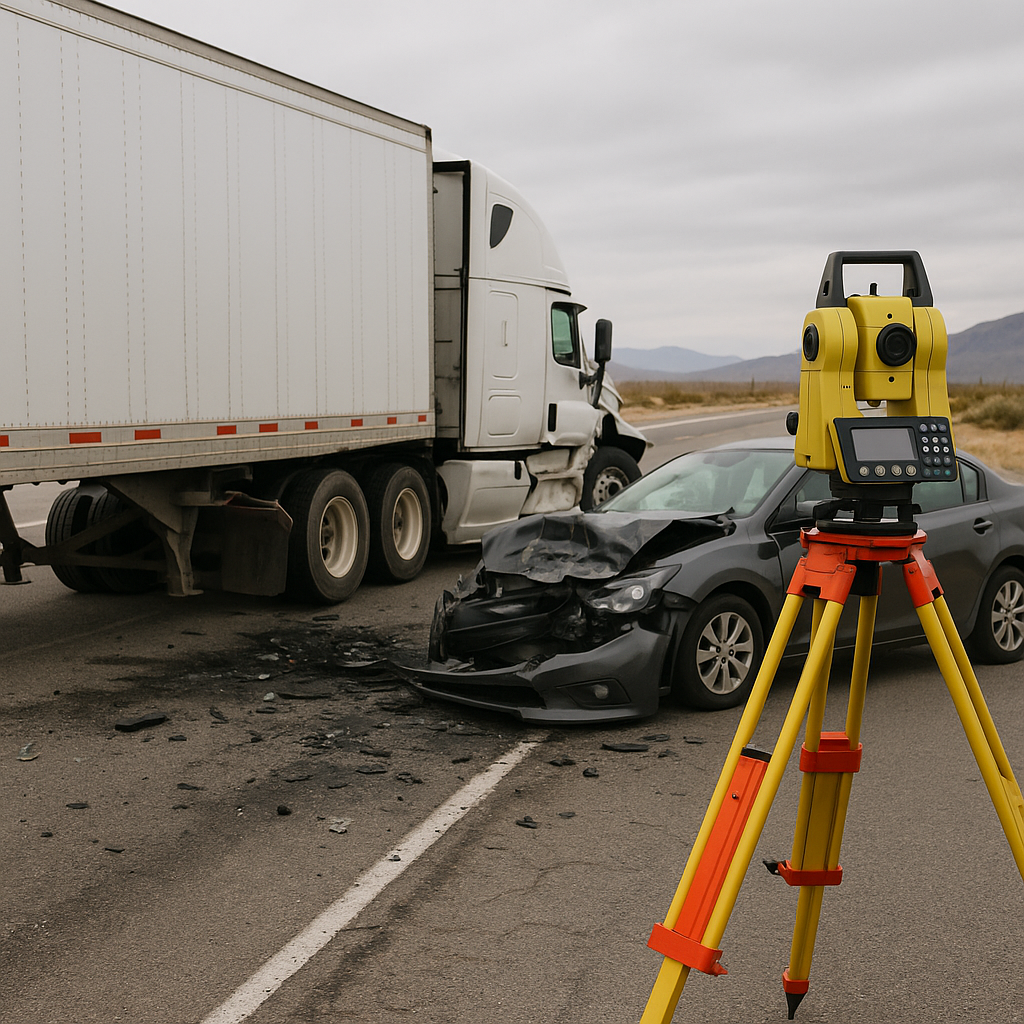
– Scene Measurements and Mapping: Investigators use electronic total stations, drones, or GPS units to precisely record roadways, skid marks, final vehicle positions, and debris locations.
– Photographic and Video Evidence: High-resolution cameras and, increasingly, 3D laser scanners, are used to capture real-time, detailed images of the scene.
– Event Data Recorders (EDRs): Commonly called “black boxes,” these devices in many modern trucks store data such as speed, braking, and acceleration just before a crash.
– Damage Analysis: By examining the extent and type of damage to vehicles and objects involved, reconstructionists can estimate the angle of impact and collision forces.
– Time-Distance Calculations: These calculations help determine how fast vehicles were traveling and how much time drivers had to react.
– Simulation Software: Specialized computer programs allow reconstructionists to create digital models of the crash dynamics based on the physical data collected.
These tools and methods enable investigators to piece together what transpired, even when no clear eyewitnesses are available. The combination of physical science, technology, and investigative skill is essential, especially in Nevada truck crashes where the stakes—and the complexity—are often higher than in standard vehicle collisions.
Documentation Typically Involved
The documentation stemming from a truck crash in Nevada is extensive and meticulous. At the core is the official police report, which serves as the foundational record. This document may include:
– Diagrams of the scene and vehicle positions
– Narrative descriptions from officers and involved parties
– Weather and road conditions at the time of the crash
– Photographs and electronic mapping outputs
– Preliminary findings on potential causes and contributing factors
For more serious crashes, especially those with fatalities or multiple vehicles, a formal crash reconstruction report may be generated. These reports are highly technical and might include:
– Results from EDR downloads
– Detailed calculations (e.g., speeds, force of impact, trajectory reconstructions)
– Laboratory analysis of vehicle or environmental evidence
– 3D scene layouts and computer simulations
– Reference to applicable engineering and physics principles
Reliable documentation is vital, not just for enforcement and legal purposes, but also for improving transportation safety policies and infrastructure planning.
Common Reporting Misunderstandings
Despite the rigorous procedures in place, misunderstandings about reporting and reconstruction processes are not uncommon. One frequent misconception among commercial drivers and the public is that the police report alone determines fault. In reality, fault can be influenced by further analysis, crash reconstruction findings, and sometimes, judicial review.
Another misunderstanding is related to the permanence of conclusions in reconstruction reports. These scientific investigations are based on the physical evidence available, but subsequent discovery of new information—such as additional surveillance footage or more complete electronic data—can change the reconstruction’s outcome.
A third common belief is that all truck crashes receive the same level of investigative attention. In practice, the scope of the investigation and the complexity of the reconstruction methods used in Nevada truck crashes depend on the crash’s severity, the value of the vehicles or cargo involved, and the likelihood of future civil or criminal proceedings.
It is also worth noting that the terminology and details used in reports can be highly technical. Readers without a background in crash investigation may find it challenging to interpret these findings without the guidance of a subject matter expert.
Neutral Closing Paragraph
Nevada’s robust approach to investigating truck crashes is built upon a foundation of advanced crash reconstruction methods, collaborative agency response, and comprehensive documentation. These practices serve not only to clarify the circumstances of individual incidents but also to contribute to improved roadway safety for all. As technology continues to evolve, so too will the tools and techniques available to investigators, ensuring that the pursuit of accuracy and safety remains at the forefront of Nevada’s transportation system.