How Commercial Vehicle Data Is Collected After Crashes in Nevada
In the aftermath of a truck or commercial vehicle accident, the effort to understand what happened begins almost immediately. Nevada, like other states, has established procedures and partnerships for gathering and analyzing data from commercial vehicle crashes. This data not only helps inform legal and insurance outcomes but also supports broader efforts to improve road safety. Understanding how commercial vehicle data is collected after a crash helps clarify why the process is both thorough and multi-faceted.
Overview of Crash Response and Reporting Systems in Nevada
When a commercial vehicle is involved in a crash in Nevada, a series of coordinated responses is triggered. First and foremost, law enforcement agencies—often the Nevada Highway Patrol (NHP) or local police departments—arrive at the scene to ensure safety and begin their investigations. Their primary focus is to stabilize the area, assist those involved, and secure the site to preserve potential evidence.
Nevada’s crash response and reporting are guided by protocols set forth by the Nevada Department of Public Safety and Department of Motor Vehicles (DMV), along with federal regulations enforced by the Federal Motor Carrier Safety Administration (FMCSA). Data collected from these incidents feeds both state and national databases, informing everything from local traffic safety initiatives to federal oversight of trucking companies and commercial drivers.
After securing the scene, investigators must determine what happened and why. This process depends heavily on the systematic collection and documentation of evidence—much of which centers around gathering data from multiple sources, both human and technological.
Common Agencies and Reporting Steps
A number of agencies may be involved in documenting and reporting a commercial vehicle crash in Nevada. The primary participants include:
– Nevada Highway Patrol (NHP): Frequently oversees crash response and conducts investigations, especially on interstates and highways.
– Local Police Departments: Handle crashes within city limits or where state jurisdiction does not apply.
– County Sheriff’s Offices: Sometimes involved in rural or unincorporated areas.
– Nevada DMV: Maintains crash data at the state level and issues relevant forms and records.
– Federal Motor Carrier Safety Administration (FMCSA): Oversees interstate commercial vehicle safety and data collection.
Each agency approaches the incident with specific procedures. Once the scene is secure, officers will typically speak with involved parties and witnesses to gather initial accounts. However, in the case of commercial vehicles, the investigation extends much further. Officers may look into driver qualifications, hours-of-service compliance, vehicle maintenance records, and other factors that are regulated by both state and federal law.
Crash investigators often work in partnership with specialized reconstruction teams, who use technology and measurements to recreate the series of events leading up to the accident. This can involve examining skid marks, vehicle positions, and environmental conditions, all of which are meticulously documented.
Documentation Typically Involved
The data collected after a commercial vehicle crash in Nevada is wide-ranging. Key documentation and information sources include:
– Crash Reports: Law enforcement completes detailed crash reports according to state and federal requirements. These forms capture everything from location, time, and vehicle data to narratives and contributing factors identified by the investigators.
– Driver and Witness Statements: Statements from all involved drivers—including the commercial vehicle operator—are collected. Witness interviews provide additional context and independent perspectives.
– Electronic Logging Device (ELD) Data: Federal law requires most commercial drivers to use ELDs, which record hours of service and vehicle movement. These records are reviewed to assess compliance with rest and driving time regulations.
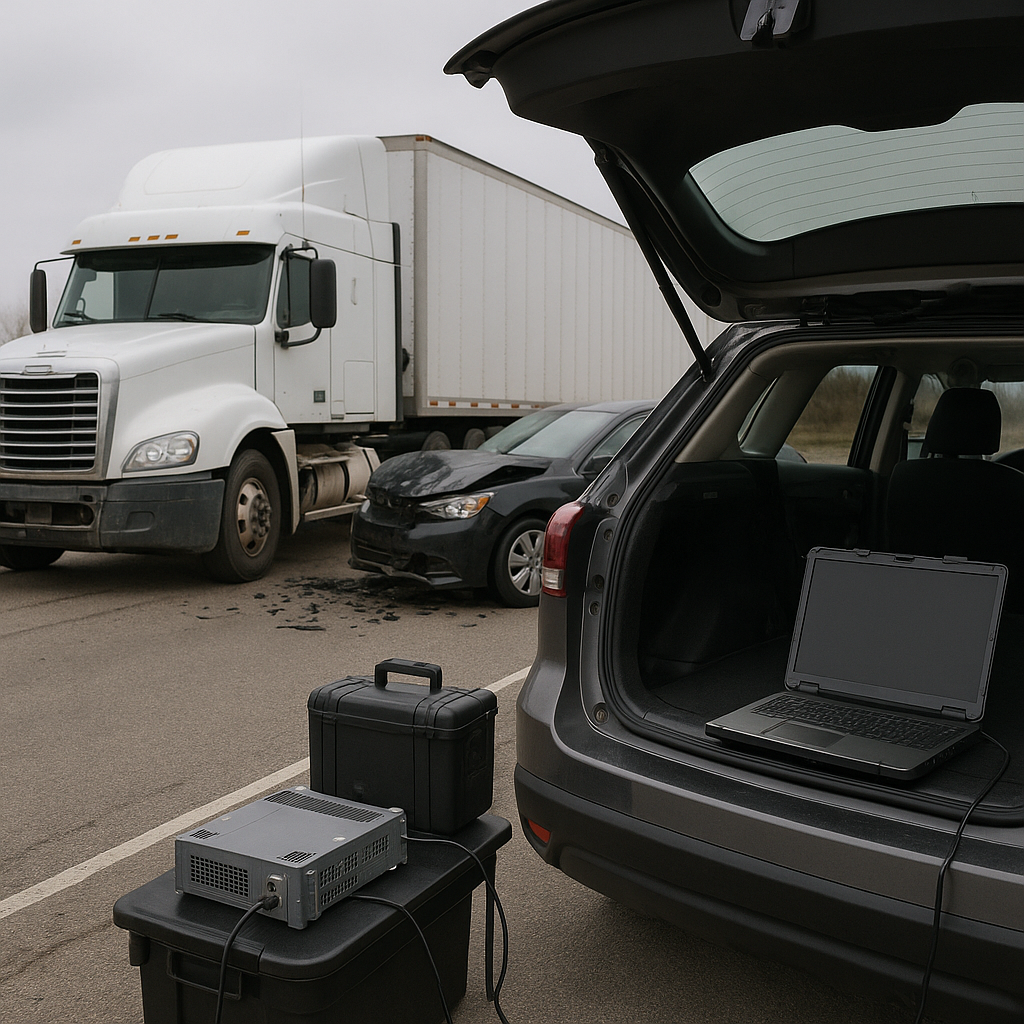
– Vehicle Data Recorders (“Black Boxes”): Many commercial trucks feature event data recorders (EDRs) or “black boxes” that log critical performance data leading up to and during a crash. Investigators extract this data when possible to analyze speed, brake use, and more.
– Inspection and Maintenance Records: Commercial vehicle operators are required to keep detailed records about vehicle inspections and repairs. Investigators review these to ensure the vehicle was properly maintained.
– Cargo and Load Information: The nature of the cargo, how it was loaded, and the paperwork documenting it are also evaluated, as shifting or improperly secured loads contribute to some crashes.
– Photographs and Scene Documentation: Officers and crash reconstruction teams take photographs, measurements, and sometimes video at the crash site. This visual and spatial data is used to create diagrams and models for analysis.
– Toxicology Reports: If impairment is suspected, testing is conducted according to prescribed legal and regulatory protocols.
This multidimensional data is compiled into official files and databases, accessible to authorized agencies and, under controlled circumstances, to other stakeholders such as insurance representatives and regulatory bodies.
Common Reporting Misunderstandings
Given the complexity of crash investigations—especially those involving commercial vehicles—it’s not uncommon for misunderstandings to arise about Nevada’s process for collecting and reporting crash data.
One widespread misconception is that all crash data is immediately available to the public. In reality, access is often restricted as investigations proceed, and sensitive information may be protected by privacy or ongoing-enforcement concerns.
Another common misunderstanding involves the assumption that the truck driver or commercial operator’s organization solely controls the records following a crash. While operators must maintain and provide certain records, law enforcement and regulatory bodies have independent authority to access and retain key data, including ELD information and maintenance logs.
It’s also frequently assumed that a single agency gathers all the material needed. In fact, data collection is a collaborative, multi-agency process, sometimes involving state and federal authorities with overlapping but distinct roles. This networked approach is designed to cross-verify information and ensure objectivity, but it can make the process appear opaque to those unfamiliar with the system.
Finally, the role of technology in crash data gathering is occasionally misinterpreted. While ELDs and data recorders provide valuable insights, they are just one part of a comprehensive investigation. Physical evidence, human testimony, and historical records remain essential to reconstructing what happened.
Conclusion
Understanding how commercial vehicle data is collected after a crash in Nevada reveals a methodical and comprehensive process. Multiple agencies and forms of documentation come together to build an accurate record of each crash, supporting both accountability and ongoing efforts to enhance roadway safety. While the process can seem complex, its thoroughness is designed to ensure that every crash involving a commercial vehicle is carefully investigated and accurately documented. This approach helps Nevada and its partners advance safer roads and informed commercial transportation policy for everyone.