
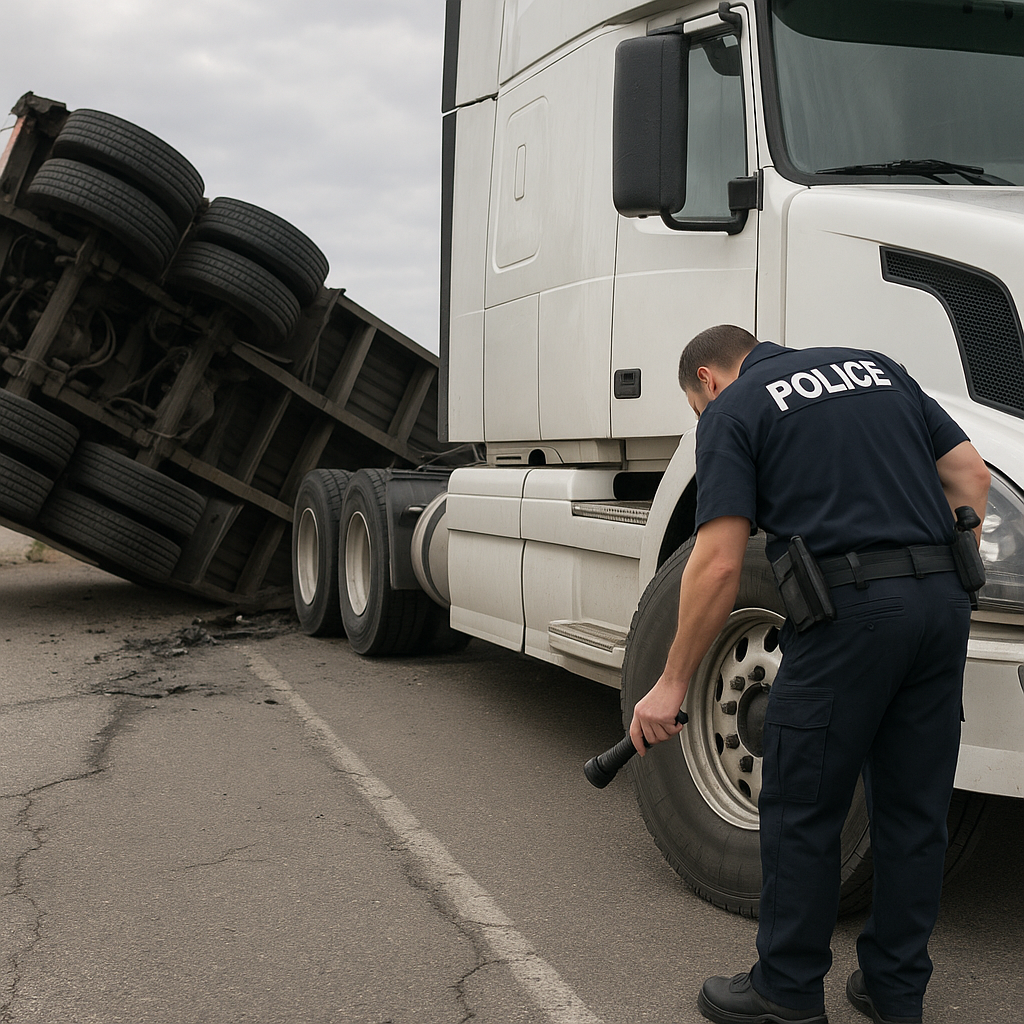
How Police Check Tire Conditions After Semi Truck Accidents in Nevada
Overview of Crash Response and Reporting Systems in Nevada
Semi truck accidents can be complex incidents with significant consequences on Nevada’s highways and roads. Understanding the procedures behind police checks—especially regarding tire conditions—can clarify how investigations unfold after a crash. When a semi truck accident occurs in Nevada, police officers play a central role in determining contributing factors and documenting evidence. Because tires are crucial for safe trucking, inspecting their condition is a standard practice for law enforcement investigating such collisions.
The state of Nevada maintains a robust crash response and reporting system designed to ensure that evidence is properly collected, contributing factors are thoroughly analyzed, and the findings are shared with relevant agencies. Law enforcement officers, typically from the Nevada Highway Patrol (NHP) or local police departments, respond rapidly, prioritizing public safety while assessing the scene. Their goal is not only to manage the immediate aftermath—such as redirecting traffic and assisting the injured—but also to preserve crucial evidence for later review.
Tire inspection is a key aspect of this process, as tire condition can provide insights into why a crash occurred. Officers conducting these checks must follow protocols and best practices aligned with state and federal guidelines. Their findings help to clarify whether tire failure, poor maintenance, or other related factors may have contributed to the accident.
Common Agencies and Reporting Steps
In Nevada, several agencies and personnel can play a part in police checks of tire conditions after a semi truck accident. The initial response is often handled by:
– Nevada Highway Patrol (NHP): Covers major highways and works closely with commercial vehicle enforcement teams.
– Local City or County Police Departments: Respond to accidents within their jurisdiction.
– Nevada Department of Public Safety (DPS): May participate, especially when hazardous materials or larger incidents are involved.
– Nevada Department of Transportation (NDOT): Occasionally assists with hazardous roadway conditions or traffic rerouting.
Once on the scene, officers assess the overall circumstances, including potential hazards, vehicle positions, weather, and road conditions. When it comes to tire inspections, specialized officers from commercial vehicle enforcement units or trained crash investigators may take a closer look. Their expertise allows them to evaluate the technical aspects of semi truck tire wear, tread depth, inflation, visible damage, and potential evidence of blowouts or other failures.
The reporting process includes:
– Collecting physical evidence: Such as debris from the roadway, tire fragments, and the involved semi truck’s tires themselves.
– Visual inspections: Looking for signs of excessive wear, improper inflation, flat spots, sidewall damage, or mismatched tires.
– Measurement tools: Officers may use tread depth gauges and other equipment to check compliance with safety standards.
– Photographic documentation: Detailed photos capture the tire condition at the scene.
– Noting manufacturer and DOT information: Officers document tire brand, size, model, and Department of Transportation identification codes, which can reveal recall history or manufacturing dates.
Findings from these inspections are integrated into official crash reports. These documents contribute to a comprehensive record that may be used by insurance carriers, trucking companies, regulatory agencies, and, if applicable, legal proceedings.
Documentation Typically Involved
Accurate and thorough documentation is a cornerstone of any police investigation following a semi truck accident in Nevada. The police check tire conditions in the context of a broader fact-finding effort, and here are typical documents and data points involved:
– Nevada Statewide Crash Report (Form SR-1): The primary official report where officers note tire conditions, visible damage, and other evidence.
– Supplemental inspection forms: These may be used by commercial vehicle inspectors to provide detailed notes on tire tread depth and compliance with regulations.
– Photographs and diagrams: Visual representation of the scene, tire locations, and any observable issues are attached to the police record.
– Statements and observations: Officers record driver and witness accounts regarding the pre-crash handling of the truck, any unusual noises, or visible tire problems.
– Chain of custody documentation: If tires or fragments are removed for further lab analysis (such as in catastrophic blowouts), officers log the transfer and secure physical evidence to maintain its integrity.
– Inspection checklists: Especially with commercial vehicles, law enforcement may use checklists that comply with Nevada and federal Department of Transportation inspection criteria.
These documents form an essential part of the investigation, supporting both the immediate safety assessment and any subsequent reviews by insurance companies, regulatory agencies, or legal representatives.
Common Reporting Misunderstandings
While Nevada’s crash investigation and reporting systems are comprehensive, misunderstandings can sometimes arise—especially regarding police checks on tire conditions in semi truck accidents.
1. Tire Checks Are Not Always Immediate or Obvious:
Some drivers and onlookers assume tire inspections are always performed at the scene. In practice, not every accident requires an exhaustive on-site inspection. If no apparent evidence points to a tire issue, police may conduct a more generalized assessment, saving detailed checks for accidents with signs of tire failure.
2. Expecting Legal Fault to Be Determined:
Officers document tire conditions as part of their objective investigation. However, their findings do not equate to a final legal determination of fault. Many people mistakenly think that if police check tire conditions and find defects, the trucking company is immediately liable. In reality, liability is assessed later, often by insurance adjusters or legal professionals who consider many factors alongside the police report.
3. Confusion Over Tire Inspection Standards:
Commercial trucking is governed by both Nevada and federal Department of Transportation standards. Some stakeholders may not realize that officers must balance multiple regulations and may prioritize different aspects depending on the nature of the crash, the vehicle’s cargo, or hazardous materials.
4. Overlooking the Role of Documentation:
Parties sometimes misunderstand the importance of detailed paperwork. The initial police check is only one part of the process—photos, tire codes, and later lab analysis can continue well after the accident. Without comprehensive documentation, potential safety issues or contributing factors might go unaddressed.
5. Believing Everything is Covered in the Crash Report:
Crash reports are important but do not always cover every detail of the tire inspection. Follow-up documentation, laboratory analysis, and regulatory reviews may all provide additional insight well after the officer leaves the scene.
Neutral Closing Paragraph
Understanding how police check tire conditions after a semi truck accident in Nevada can help clarify a crucial aspect of crash investigations. Police agencies in the state follow established protocols to document tire conditions as part of a broader effort to determine all potential contributing factors. While tire inspections can provide important information, they are just one part of a multifaceted process involving multiple agencies, detailed documentation, and a thorough investigation. As Nevada continues to prioritize roadway safety, these inspections play an ongoing role in supporting safer highways for all travelers.