
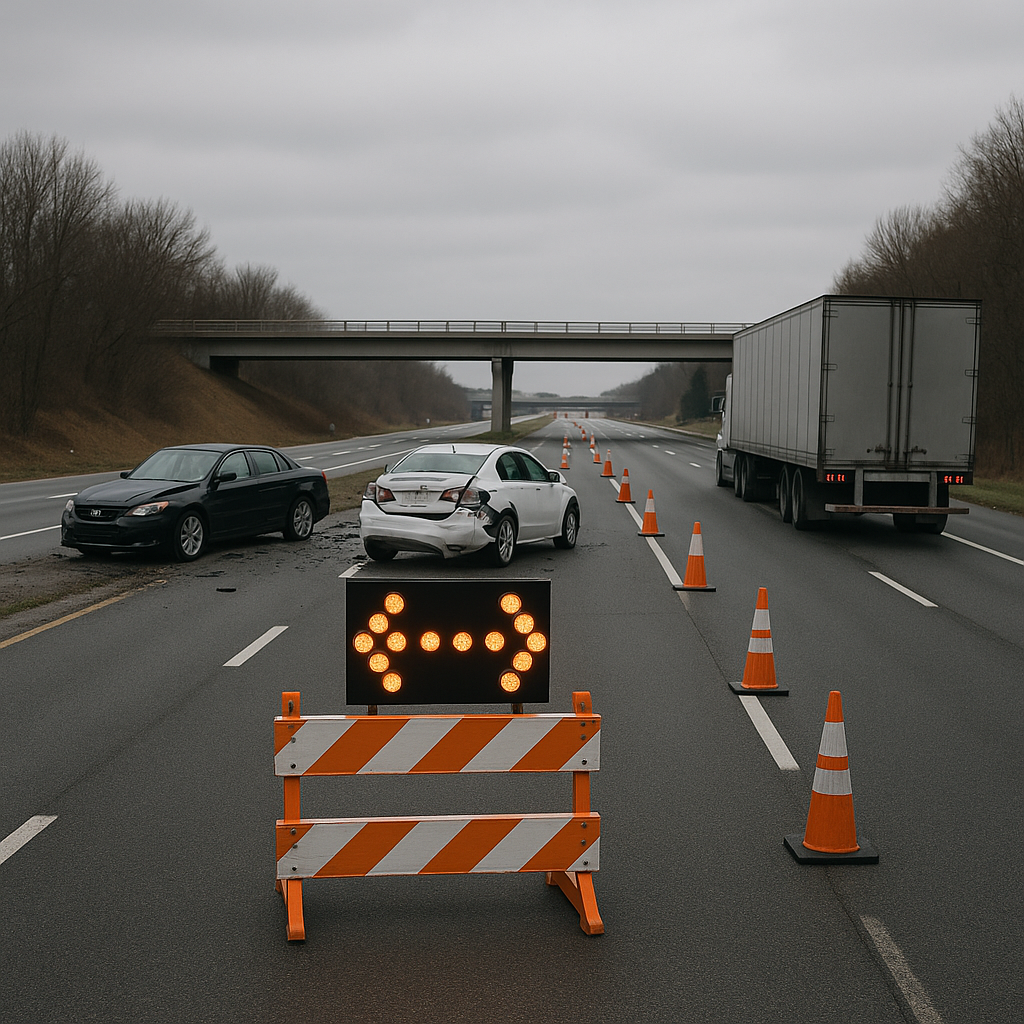
How Lane Reopening Decisions Are Made After Crashes in Nevada
When a crash occurs on Nevada’s highways or city roads, the event disrupts not only those directly involved but also thousands of commuters relying on open, safe lanes to reach their destinations. Lane reopening decisions after crashes are complex, balancing swift traffic restoration with public safety and thorough investigation. Nevada’s well-coordinated response frameworks make these decisions behind the scenes, ensuring that each step considers the needs of motorists, first responders, and the integrity of crucial evidence.
Overview of Crash Response and Reporting Systems in Nevada
Lane reopening decisions after crashes do not happen in a vacuum. Instead, Nevada’s traffic management landscape revolves around precise, collaborative systems to manage incidents and streamline the return to normalcy. The Nevada Department of Transportation (NDOT), Nevada Highway Patrol (NHP), local law enforcement, and fire-rescue teams are pivotal agencies working together through well-established protocols.
Upon notification of a crash—whether it’s a minor fender-bender or a major multi-vehicle collision—first responders are dispatched to assess the scene. Simultaneously, regional Traffic Management Centers (TMCs), such as those in Las Vegas and Reno, activate monitoring and communication procedures. TMC operators use a network of traffic cameras, sensors, and public reports to track the incident, deploy resources, and update variable message signs along affected corridors. This approach aims to prevent secondary accidents and alleviate gridlock across urban and rural Nevada.
In the background, specialized teams—sometimes including hazardous materials units, emergency medical services, or commercial vehicle inspectors—may be called in based on the crash’s severity and type of vehicles involved. The integrated response ensures that all necessary expertise is present before any decision is made regarding lane reopening.
Common Agencies and Reporting Steps (Educational)
Many agencies play unique roles in the aftermath of a Nevada crash. The Nevada Highway Patrol often leads responses on Interstates and state highways, handling incident command and traffic control duties. For urban crashes, local police departments (like Las Vegas Metropolitan Police Department or Reno Police) generally take command, often in coordination with city or county fire departments.
Reporting starts with an emergency call—often through 911 or dedicated traffic hotlines, such as NDOT’s NVRoads service. When officers arrive, they evaluate the scene for immediate dangers, such as fuel leaks, fire risks, or critically injured occupants. Fire and rescue teams manage triage, medical aid, or stabilization tasks. Traffic management staff begin to analyze vehicle positions, debris fields, and damage to infrastructure, working to determine whether traffic can be safely diverted or limited lanes partially reopened.
Coordination is further enhanced by incident command systems (ICS), ensuring assigns specific jobs—such as safety officer, liaison, or public information officer—to improve communication and ensure nothing is overlooked. Law enforcement also communicates with NDOT and local public works to bring in necessary equipment, like tow trucks for vehicle removal or sand trucks to absorb spilled fluids.
Documentation Typically Involved
Before any final lane reopening decisions after crashes can be reached, documentation plays a key role. Officers must thoroughly record the crash scene, which typically involves photographs, videos, measurements, and, occasionally, laser mapping for particularly complex or fatal accidents. Accident reconstruction specialists may be brought in if criminal charges are possible or when public safety failures (such as hazardous road conditions or equipment malfunction) are suspected.
Paperwork includes crash reports, witness statements, vehicle and driver identification, and detailed narratives of the incident. Sometimes, specialized forms are required for commercial vehicle accidents or spills. These documents form the official record for insurance, transportation agencies, and future crash analysis aimed at improving safety.
Such thorough record-keeping ensures that crash evidence is preserved, allowing for legal, insurance, and safety reviews after lanes are reopened. Only after all required documentation is complete—especially in cases of injury, fatality, or complex circumstances—do decision-makers consider clearing and reopening lanes.
Common Reporting Misunderstandings
With multiple agencies, technical documentation, and safety priorities at play, misunderstandings about lane reopening decisions after crashes are not uncommon. For instance, some drivers may believe that officers or crews could simply clear vehicles to the shoulder and allow traffic to resume as soon as possible. In reality, the process must balance public safety, the need to preserve potential evidence, and the avoidance of further incidents.
Another misconception is that every crash, regardless of scale, is documented and cleared in the same way. In fact, Nevada’s response varies based on crash type, location, and severity. Minor, non-injury incidents may allow for partial lane openings much sooner, while crashes involving injuries, deaths, or hazardous cargo require lengthier closure for detailed investigation and cleanup.
Additionally, some motorists assume that tow trucks and first responders can always immediately remove damaged vehicles. However, tow operations may require specialized equipment—especially for large commercial trucks or vehicles involved in serious collisions—prolonging the lane closure. Further, some roads (particularly those in rural Nevada) present additional logistical challenges, as resources may need to be dispatched over long distances.
Finally, the introduction of new technology, such as incident detection sensors and automated reporting systems, has helped speed up response and reopening times—but not every aspect of crash handling can be automated. Human decision-making, based on training, judgment, and real-time assessment, remains essential for complex or high-stakes incidents.
Neutral Closing Paragraph
The process guiding lane reopening decisions after crashes in Nevada exemplifies a careful blend of urgency, safety, and procedural rigor. While the primary aim is to restore traffic flow efficiently, authorities must also ensure that every crash is properly investigated and documented. By understanding the roles of various agencies, the steps involved, and the importance of thorough crash documentation, Nevadans can appreciate the factors influencing when and how their roadways are made safe and accessible once again. Ultimately, these thoughtful procedures are designed to protect both the immediate and long-term interests of all who share Nevada’s highways and byways.