
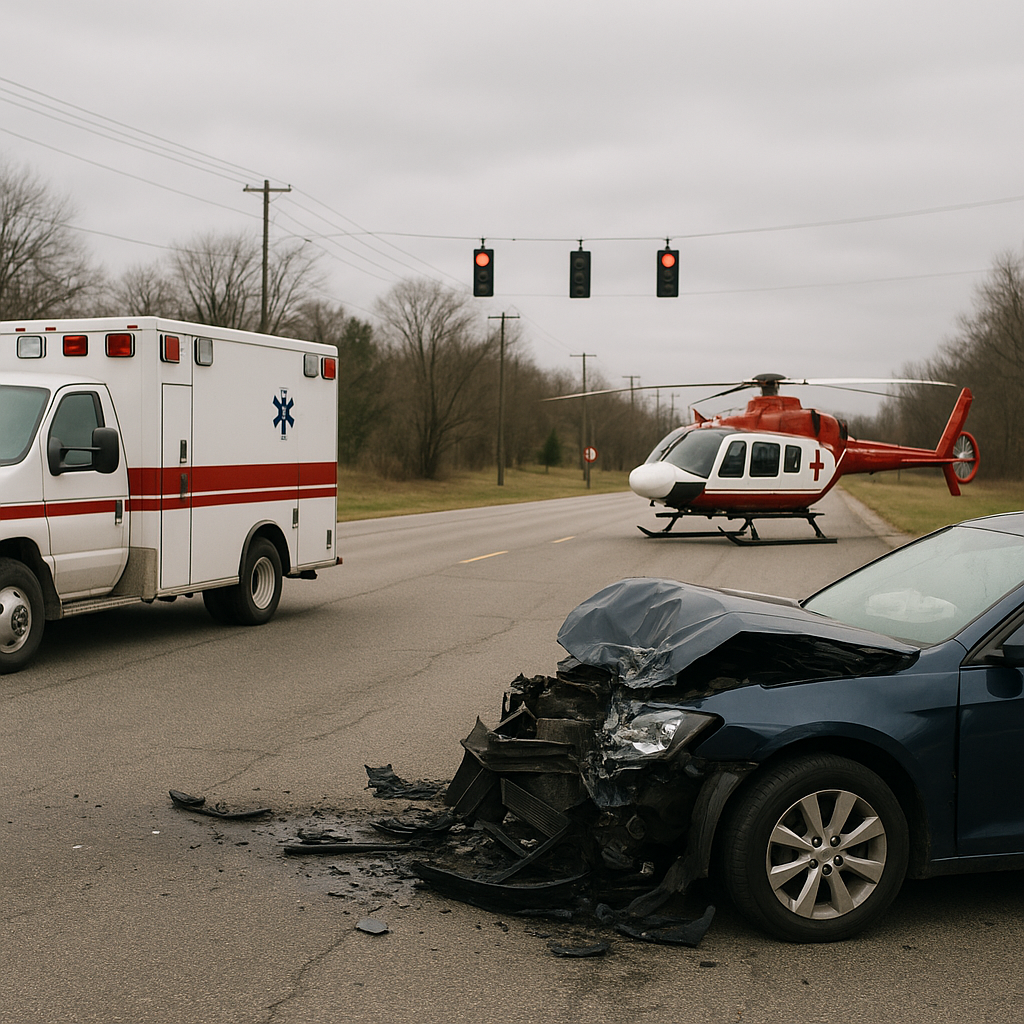
How Medical Transport Decisions Are Made After Crashes in Nevada
When a crash occurs on Nevada’s busy roads and highways, the aftermath can often feel chaotic and overwhelming. Behind the scenes, however, emergency response teams follow well-established procedures to ensure all involved receive the best care possible. One critical aspect of this process involves determining the necessity, method, and timing of medical transport for those injured in the crash. Understanding how medical transport decisions are made after crashes provides insight into the priorities and systems that serve to protect public health and safety throughout Nevada.
Overview of Crash Response and Reporting Systems in Nevada
Nevada’s crash response and reporting system is a collaborative network designed to respond efficiently to collisions and other roadway incidents. When a crash is reported—whether on the bustling interstates of Las Vegas or the rural highways near Elko—multiple agencies are alerted, coordinated efforts are initiated, and a series of evaluations begin almost immediately.
The process starts with a call to emergency dispatch, often through 911. This initial report triggers a response not just from law enforcement, but also from fire departments, emergency medical services (EMS), and, as needed, air medical transport operators. These agencies work in tandem to assess the situation and to determine the right course of action for all involved, especially those who may require urgent medical care.
Paramedics, EMTs, law enforcement officers, and fire personnel all have protocols to follow to ensure casualties are stabilized quickly and transported to the appropriate facilities. The central goal is to make medical transport decisions after crashes based on medically sound criteria, situational urgency, proximity to treatment centers, and available resources.
Common Agencies and Reporting Steps
Accurate and timely reporting is essential for making informed medical transport decisions. Several key agencies are typically involved in these scenarios:
Emergency Communication Centers (Dispatch)
Responsible for fielding 911 calls, dispatch centers are the linchpin for coordinating the appropriate response. Dispatchers use location data, caller information, and checklists to deploy law enforcement, fire, and EMS crews. The information provided at this stage critically shapes the initial approach and resource allocation.
Nevada Highway Patrol and Local Police Departments
These law enforcement bodies are often first to arrive at crash scenes on public roadways. Their duties include securing the area, facilitating traffic control, and supporting rescue operations. They serve as a point of contact for EMS teams and assist in relaying updates to dispatch.
Fire Departments and Emergency Medical Services (EMS)
Firefighters and paramedics work together to perform rapid assessments of injuries, triage victims, and determine the severity of medical needs. In Nevada’s urban centers—such as Las Vegas or Reno—well-equipped EMS teams are ready to respond to vehicular incidents, assisted by fire rescue units. In rural areas, volunteer EMS and contracted services play a crucial role.
Air Medical Transport Providers
If ground transportation cannot meet the urgent medical needs of a patient—either due to time constraints, distance, or severity of injury—air ambulance services may be called in. Air medical teams have standards developed in conjunction with state and national guidelines for when and how air transport is activated.
Documentation Typically Involved
Detailed documentation is an integral part of managing crash scenes and making medical transport decisions. Proper records allow responders to track patient status, overview resource use, and provide a legal and operational record of what occurred. Some common types of documentation include:
– Patient Care Reports (PCRs): Created by EMS staff, PCRs capture vital signs, observed injuries, treatments administered, and the rationale for choosing a transport method. These are essential for continuity of care when a patient arrives at the hospital.
– Crash Reports: Nevada law enforcement agencies complete standardized crash report forms that describe the conditions, apparent causes, vehicle information, and injuries involved.
– Dispatch Logs: Dispatch centers maintain chronological records of calls for service, units sent, and subsequent communications.
– Scene Assessment Forms: For significant events, such as multiple-vehicle collisions or those involving hazardous materials, additional assessment documentation may be required by fire or EMS leaders.
– Hospital Communication Records: In critical cases where trauma centers are alerted ahead of arrival, communication details are recorded to prepare hospital staff for intake and immediate care.
Each piece of documentation is reviewed as part of post-incident analysis and may contribute to systemwide improvements for future crash responses.
Common Reporting Misunderstandings
Misconceptions about crash response and medical transport are not uncommon. Some of the most prevalent misunderstandings include:
– Belief That All Crash Victims Are Automatically Transported: Not every person involved in a collision requires hospital transport. Trained EMS professionals use established triage protocols to evaluate injuries and base transport decisions on medical necessity.
– Assumption That Nearest Hospital Is Always the Destination: Patients with specific needs may be directed to particular facilities, such as trauma centers or burn units, even if they are farther away.
– Misunderstanding Insurance Impacts on Transport: Insurance is not typically a factor in the immediate decision to transport a patient; care decisions are made based on urgency and need. Payment or billing questions are addressed as a secondary matter.
– Confusion About Air vs. Ground Ambulance Use: Air transport is only utilized when ground transport cannot provide timely access to critical care. Factors such as weather, landing availability, and patient stability all influence this high-level decision.
– Expectation of Detailed Crash Information at the Scene: Responders prioritize stabilization and care over relaying information. Full details are documented later and may be obtained from official reports, not necessarily from scene personnel.
Neutral Closing Paragraph
The process of making medical transport decisions after crashes in Nevada is carefully designed to prioritize patient health and public safety. Through the coordinated efforts of dispatchers, law enforcement, fire departments, EMS, and air medical providers, each step is planned to match the urgency of injuries with the right resources and transport methods. While nuances and exceptions exist, the underlying goal remains the swift, effective care of individuals involved in crashes, supported by detailed documentation and ongoing system reviews. Understanding this process helps demystify post-crash experiences and reassures Nevadans that a thoughtful, well-trained team stands ready to assist when the unexpected occurs.