
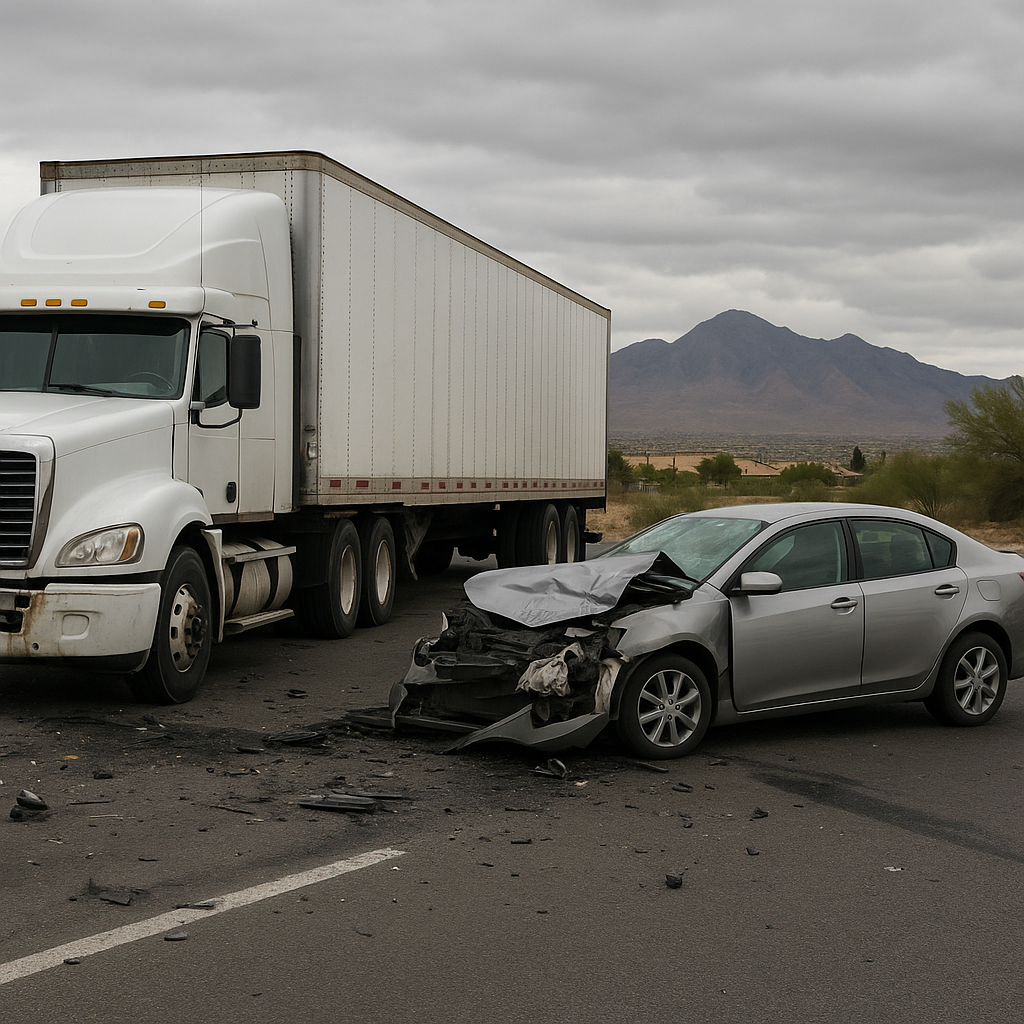
Truck Crash Trends Near Centennial Hills: What You Need to Know
Overview of the Trend or Pattern
Centennial Hills, located in the northwest region of Las Vegas, Nevada, has experienced a noticeable increase in truck-related traffic incidents over recent years. Understanding truck crash trends near Centennial Hills is essential not only for residents but also for drivers passing through this rapidly growing area. As Centennial Hills continues to develop with new residential neighborhoods, commercial centers, and transportation routes, the volume and type of traffic have evolved, impacting safety dynamics on local roads and highways.
Truck crashes in this area frequently involve a range of commercial vehicles, from delivery vans and semi-trucks to construction haulers. These incidents often occur on major arteries such as U.S. Route 95 and the nearby sections of the Interstate 215 Beltway, both critical corridors that facilitate freight movement in and out of Las Vegas. With the area serving as a gateway between northern Nevada and larger metropolitan regions, freight traffic has intensified, elevating risks associated with truck and passenger vehicle interactions.
The rise in truck crashes near Centennial Hills is influenced by several interconnected factors, such as increased commercial activity, roadway infrastructure, and driver behavior. It is crucial for community members, local authorities, and transport companies to recognize these patterns and adapt safety measures accordingly.
Common Factors Behind the Pattern
Several core factors contribute to the truck crash trends near Centennial Hills:
Increased Freight Traffic and Commercial Activity
Centennial Hills’ growth has spurred economic activity, increasing demands on logistics and delivery services. Commercial trucks now regularly navigate local streets that were originally designed for lighter traffic. The surge in e-commerce, regional distribution centers, and construction projects has further intensified commercial vehicle presence.
Roadway Design and Traffic Volume
Certain road configurations in Centennial Hills, such as multi-lane highways intersecting with residential streets, present challenges for truck maneuverability. U.S. Route 95, for example, handles a mix of high-speed through traffic and local vehicles entering and exiting the highway. This complexity sometimes leads to conflicts, especially in interchanges and merging zones.
Driver Fatigue and Inexperience
Many trucking jobs involve long hours and tight delivery schedules, contributing to driver fatigue, which is a known risk factor for accidents. Additionally, some driver turnover in the trucking industry results in less experienced operators behind the wheel, particularly in urban settings with high traffic complexity.
Weather and Environmental Conditions
Nevada’s desert climate means hot temperatures, which can affect driver alertness and vehicle operation. Dust storms occasionally reduce visibility, complicating driving conditions for all road users, including truck drivers who command larger vehicles and longer stopping distances.
Traffic Congestion and Peak Hour Pressures
Peak traffic periods in Centennial Hills, particularly during morning and evening commutes, create dense traffic conditions. Trucks, due to their size and limited acceleration capabilities, may have difficulties responding quickly to traffic variances, increasing crash risk.
Why Severity May Be Higher in Nevada Conditions
Accidents involving trucks tend to have higher severity due to the sheer size and weight of these vehicles compared to passenger cars. In Nevada, several unique elements contribute to the heightened impact of such crashes:
High Speeds on Freeway Corridors
Nevada’s highways, including those near Centennial Hills, often have higher speed limits than urban areas in other states—commonly 70 mph or more. Higher speeds translate to increased kinetic energy during collisions, escalating the potential for severe injuries or fatal outcomes in truck crashes.
Harsh Desert Environment
The arid region causes heat-related challenges for drivers and vehicle systems. Trucks can experience tire blowouts or mechanical failures more frequently under extreme heat conditions, leading to accidents. Also, drivers may be compromised by dehydration or heat stress, reducing their reaction time.
Long Distances Between Emergency Services
Apart from the urban core, some roads near Centennial Hills extend into less densely populated desert areas, where emergency services may take longer to arrive. This delay can impact the quick treatment of injuries sustained in crashes, potentially increasing the severity of consequences.
Traffic Mix and Behavioral Adjustments
In Nevada, the mix of locals familiar with driving on highways and tourists or truckers less adapted to the area’s driving norms can cause unpredictable maneuvers, such as sudden lane changes or misjudgments in speed. Larger vehicles require longer stopping distances, making collisions more catastrophic in close-quarters traffic situations.
How Patterns Change Over Time
Truck crash trends near Centennial Hills are not static and can vary with several factors:
Urban Development and Infrastructure Improvements
As Centennial Hills continues to develop, the introduction of new roads, traffic signals, and highway expansions can alter crash frequencies and types. Improved infrastructure designed with commercial traffic in mind—such as dedicated truck lanes or better signage—may reduce incidents over time.
Changes in Freight Movement and Regulation
Fluctuations in the regional economy, supply chain demands, and transportation policies directly impact trucking patterns. For example, heightened enforcement of driver hours-of-service regulations or advances in vehicle safety technology can influence crash trends significantly.
Shifts in Traffic Behavior and Technology Use
More widespread adoption of in-cab safety systems, such as collision avoidance, lane departure warnings, and automatic braking, may mitigate crash risk. Additionally, increased public awareness campaigns and driver education targeted at sharing the road with trucks help modify driver behavior, potentially reducing accidents.
Seasonal Variations and External Events
Certain times of year may see increased traffic from seasonal tourism or special events in Las Vegas, introducing more variability in truck crash trends. Weather cycles, like monsoon seasons or rare dust storms, also affect how crashes occur and fluctuate.
Neutral Closing Paragraph
Understanding truck crash trends near Centennial Hills offers valuable insight into the evolving dynamics of road safety in this fast-growing part of Las Vegas. While several factors drive these patterns—from increased commercial activity to unique local conditions—ongoing monitoring, community awareness, and infrastructure improvements all play a role in addressing risks on the roadways. Staying informed about these trends helps drivers—whether in deeply familiar neighborhoods or passing through—navigate safely and contribute to a shared commitment to reducing accidents in the Centennial Hills area.