
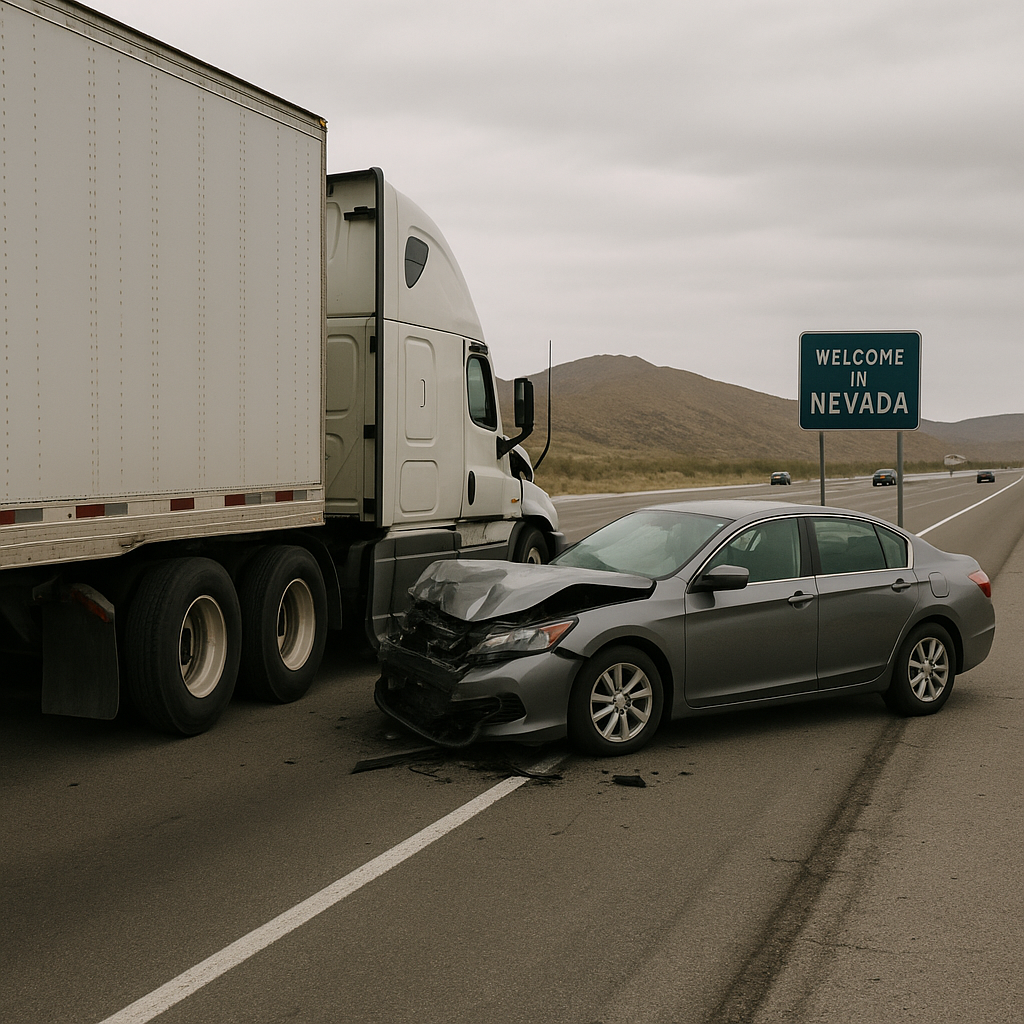
Nevada Truck Accident Patterns Involving Merging Crashes: Key Insights and Safety Tips
Overview of the Trend or Pattern
Truck accidents remain a significant concern on Nevada’s busy roadways, where commercial vehicles and passenger cars share often crowded or fast-paced driving environments. Among the various types of collisions, merging crashes involving trucks have emerged as a notable pattern in Nevada’s traffic safety landscape. These incidents commonly occur when trucks are entering, exiting, or changing lanes on highways, freeways, and urban thoroughfares.
Merging crashes generally happen in locations where two or more lanes of traffic converge, such as highway on-ramps, off-ramps, construction zones, and areas with sudden lane reductions. Due to the size and weight differences between commercial trucks and passenger vehicles, crashes involving trucks in merging scenarios can be particularly dangerous and complex.
This article explores key insights on Nevada truck accident patterns merging crashes, delves into common factors contributing to these collisions, examines why severity might escalate under Nevada’s unique driving conditions, and discusses how these patterns have evolved over time. Finally, practical safety tips are provided to help reduce risk on the road.
Common Factors Behind the Pattern
Several underlying causes contribute to the frequency of merging-related truck crashes in Nevada. Understanding these factors can provide valuable context for drivers, transportation planners, and safety advocates.
1. Limited Visibility and Large Blind Spots
Commercial trucks have much larger blind spots than most passenger vehicles—often called “no-zones.” When merging, especially in high-traffic areas or fast-moving lanes, truck drivers may have difficulty seeing smaller vehicles traveling alongside them. This increases the risk of side-swipe collisions or trucks misjudging a safe gap for lane changes.
2. High Traffic Volumes on Nevada’s Major Corridors
Nevada’s key corridors such as Interstate 15 (I-15), Interstate 80 (I-80), and U.S. Route 95 handle a large volume of freight trucks alongside daily commuters and tourists. Traffic congestion during peak hours, combined with rapid lane changes to access exits or bypass delays, creates volatile merging conditions.
3. Speed Differentials
Trucks often accelerate more slowly than passenger vehicles, and merging zones rarely provide extended distance for trucks to reach highway speeds smoothly. Additionally, vehicles merging from ramps rarely synchronize speeds effectively, increasing opportunities for sudden braking or evasive maneuvers that may lead to accidents.
4. Driver Fatigue and Distraction
Truck drivers may experience fatigue from long hours on the road or distractions caused by navigation, communication devices, or road conditions. Fatigue and inattention reduce reaction time and decision-making precision during critical merging maneuvers.
5. Road Design and Construction Zones
Nevada’s dynamic road infrastructure, subject to ongoing expansions and repairs, frequently features temporary lane shifts, narrow merging areas, and unclear signage. These conditions challenge both truck and passenger vehicle drivers to anticipate and execute safe merges properly.
Why Severity May Be Higher in Nevada Conditions
Merging crashes involving trucks are inherently dangerous due to the mass and momentum of large commercial vehicles. However, several Nevada-specific aspects may increase the severity of these collisions:
1. Harsh Desert Climate and Road Surface Conditions
Nevada’s dry, desert environment can produce glare from the sun, impairing visibility when merging during daylight hours. Conversely, dusty winds may reduce air clarity, and temperatures during summer months can affect tire traction and vehicle performance, influencing merging safety.
2. Long Distances Between Emergency Services
Parts of Nevada consist of vast rural stretches and mountainous terrain where emergency response times may be longer compared to urban areas. Severity of injuries or damage from merging collisions can be compounded when medical or rescue assistance is delayed.
3. Heavy Freight Loads Through Mountain Passes
Nevada’s I-15 and I-80 corridors pass through mountainous regions where trucks often carry heavy loads uphill or downhill. Managing merging maneuvers on graded slopes demands greater skill and can heighten crash risk and impact forces if vehicles lose control or fail to merge safely.
4. Tourist Traffic and Unfamiliar Drivers
Nevada’s tourism draws for places like Las Vegas and Lake Tahoe bring many out-of-state drivers who may be less familiar with local roadways and merging behavior. Their unpredictability can complicate traffic flow and contribute to merging conflicts with trucks.
How Patterns Change Over Time
The landscape of truck-related merging accidents in Nevada is influenced by evolving traffic volumes, infrastructure improvements, regulatory changes, and vehicle technology advancements.
Increasing Freight Traffic
With Nevada’s continued growth as a logistical hub connecting California and the Intermountain West, freight truck traffic has risen steadily. More trucks on the road naturally increases the exposure risk to merging-related incidents.
Infrastructure Upgrades and New Safety Measures
Nevada Department of Transportation (NDOT) has invested in ramp expansions, improved signage, and intelligent traffic systems designed to facilitate smoother merging. These efforts, when fully implemented, can reduce crash frequency but often experience lag periods during construction.
Advancements in Vehicle Safety Technology
Modern trucks equipped with collision avoidance systems, blind-spot monitoring, and lane departure warnings provide greater protection against merging crashes. Increasing adoption of these technologies gradually changes the types and outcomes of merging collisions.
Changing Driver Demographics and Training
Ongoing training initiatives focused on commercial driver awareness of merging challenges, as well as public education campaigns for passenger vehicle drivers, aim to improve merging safety over time. However, enforcement of speed and traffic rules during merging, particularly in construction zones, also remains crucial.
Neutral Closing Paragraph
Understanding Nevada truck accident patterns merging crashes reveals the complexities behind this specific collision type and highlights why merging maneuvers demand heightened attention from all road users. While factors such as vehicle size disparities, traffic congestion, and challenging environmental conditions contribute to merging crash risks, improvements in infrastructure, technology, and driver education hold promise for enhancing safety. Ultimately, increased awareness and cautious driving behaviors among both commercial drivers and passenger vehicle operators can help reduce merging-related accidents and promote safer Nevada roadways for everyone.