
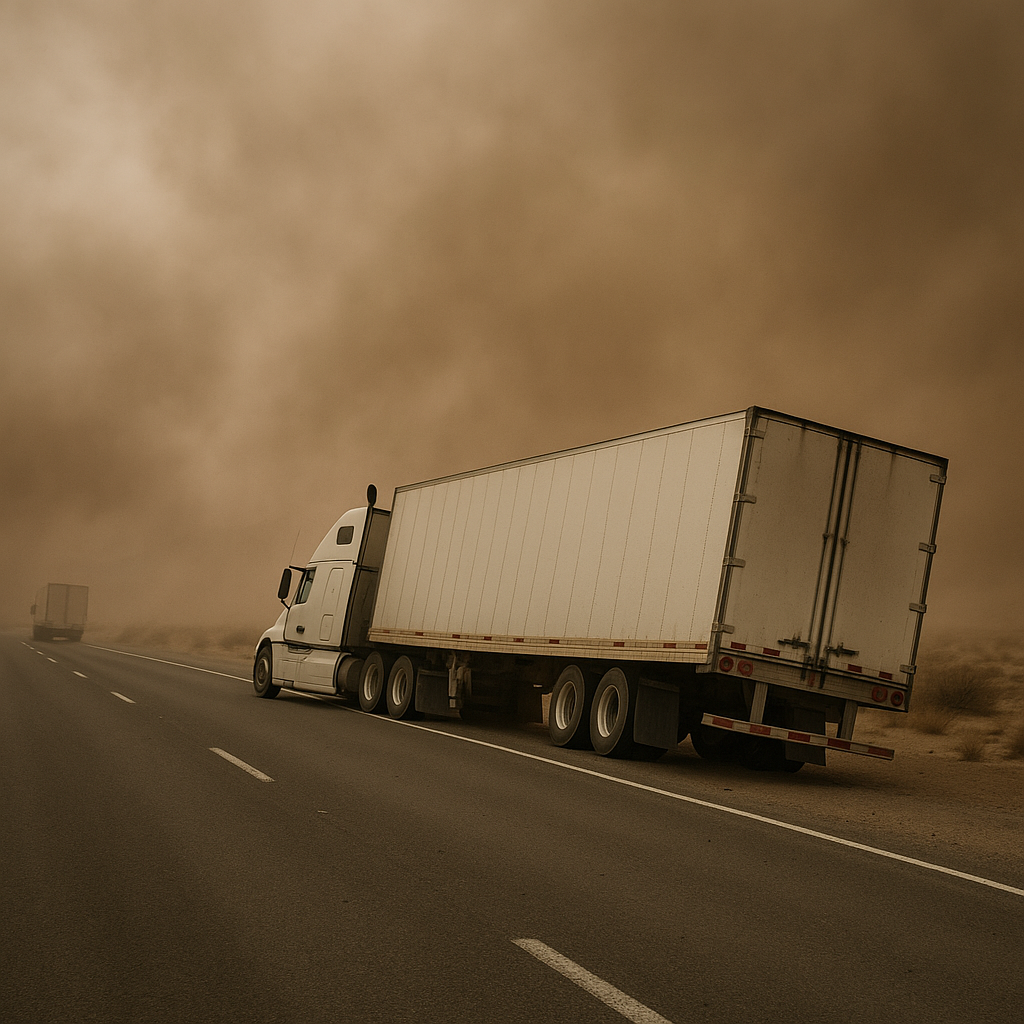
Do Dust Storms Cause Semi Truck Accidents in Nevada?
Why Nevada Drivers Ask This Question
Nevada’s highways are major corridors for commercial trucks, serving as critical routes between the West Coast and the interior United States. Professional drivers and residents alike are well aware of the state’s unique climate and landscape. But the question on many minds—do dust storms cause semi truck accidents in Nevada?—is particularly relevant for those traveling through rural and desert regions. The combination of high winds, dry soil, and vast open areas can create sudden and intense dust storms, known locally as haboobs, that challenge even the most experienced truck drivers. Understanding these dangers is essential for anyone sharing Nevada’s roads with semi trucks.
Clear Explanation with Nevada Context
Dust storms are a well-documented hazard on Nevada’s rural highways, especially in areas like the I-80 corridor, US-95, and highways near Fallon, Tonopah, and the state’s southern desert regions. These storms often arise with little warning when strong winds lift loose topsoil and sand, reducing visibility to near zero in a matter of seconds.
When dust storms hit, semi trucks are particularly vulnerable for several reasons:
– Reduced Visibility: Semi trucks require a longer distance to stop than most passenger vehicles. Dust storms can blindside even alert truckers, making it nearly impossible to see the road or vehicles ahead.
– Strong Crosswinds: High winds can push on the large, flat sides of trailers, increasing the risk of rollovers or jackknifing—particularly when a truck is lightly loaded.
– Chain-reaction Collisions: Nevada’s rural stretches often see high-speed travel. Low visibility and sudden braking increase the risk of multi-vehicle pileups involving semis, especially when other drivers fail to slow down in time.
The Nevada Department of Transportation (NDOT) and Nevada Highway Patrol routinely issue warnings about dust storms and urge caution on state highways. According to traffic safety reports, several notable highway closures and pileup accidents in the past decade were linked directly to sudden dust storms crossing major trucking routes. While dust storms are not the most common cause of semi truck accidents in Nevada, they are among the most hazardous weather-related contributors, particularly during late spring and early summer when wind storms are frequent.
Helpful Background Information
Nevada’s climate and geography contribute directly to the risk of dust storms. The state’s arid climate means soil dries quickly, and much of the landscape is sparsely vegetated, making the top layer of earth easy to disturb. Long drought periods and overgrazing can exacerbate these conditions, leaving fields and open spaces even more prone to wind erosion.
Truck drivers operating in Nevada often participate in training that covers dust storm protocols. These protocols emphasize the importance of reducing speed, using hazard lights, and—if visibility drops to near zero—pulling entirely off the roadway (preferably at a truck stop or rest area) rather than stopping on the shoulder, which can be extremely dangerous if other vehicles cannot see the truck.
The National Weather Service (NWS) issues dust storm warnings for Nevada counties and provides real-time updates through road signs and weather apps. When a warning is issued, it’s not uncommon for truck traffic to slow significantly or, in extreme cases, for the Nevada Highway Patrol to temporarily close sections of highways known for dust storm activity.
Common Misconceptions
There are several misconceptions about the connection between dust storms and semi truck accidents in Nevada:
– Misconception 1: Dust storms are a rare occurrence in Nevada. In reality, central and southern Nevada see several dust storms each year, particularly during windy months. They are common enough to be a recognized risk factor for truckers and other motorists.
– Misconception 2: Only inexperienced drivers are at risk. Even the most seasoned truckers can struggle in severe dust storms. Rapidly changing visibility makes it difficult to anticipate and avoid hazards, and high winds can challenge drivers’ ability to control their vehicles.
– Misconception 3: Passenger cars are at higher risk than semi trucks. While dust storms are a danger to all vehicles, semi trucks are especially vulnerable to high winds and limited maneuverability. Their size means crashes can have more severe consequences.
– Misconception 4: Dust storms only happen during the day. While daytime dust storms can be more dramatic due to visibility of the wall of dust, these events can also occur at night, compounding the dangers of limited sight and reaction time.
Conclusion
So—do dust storms cause semi truck accidents in Nevada? The evidence and experience of Nevada drivers suggest they do. While not the leading cause of accidents, dust storms present a significant hazard on the state’s highways, especially in rural, wind-prone areas. Reduced visibility, powerful crosswinds, and the potential for multi-vehicle collisions make dust storms a particular concern for semi truck safety.
For anyone driving in Nevada, it’s important to stay alert to dust storm warnings, prepare to slow down or stop if conditions warrant, and always prioritize safety over speed. Awareness, preparation, and quick response can help minimize the risks when Nevada’s infamous dust storms strike.