
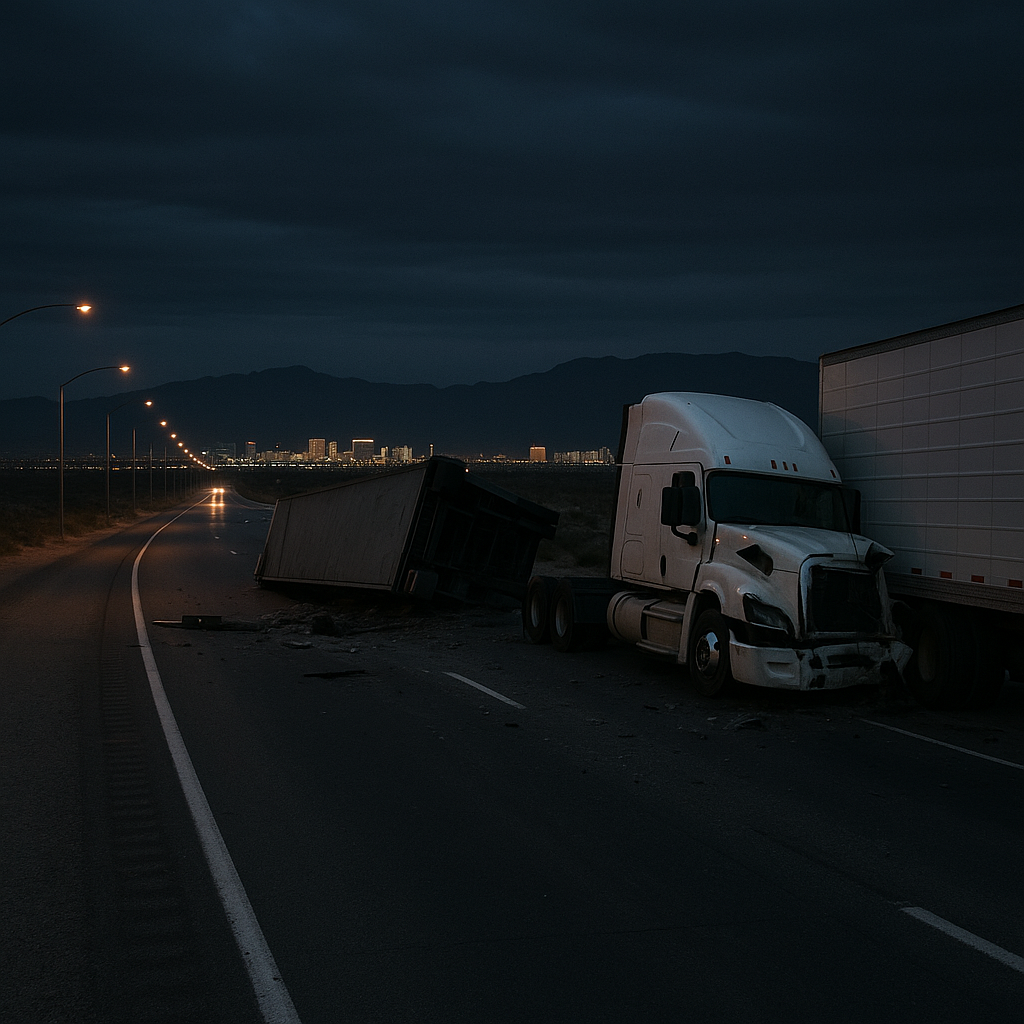
Are Truck Accidents More Common at Night in Nevada?
Why Nevada Drivers Ask This Question
For anyone who travels Nevada’s extensive highways or lives near logistics corridors such as I-80 or I-15, the sight of large trucks rumbling across the landscape is part of daily life. Trucking is central to Nevada’s economy: moving goods through never-sleeping cities like Las Vegas and across long, rural stretches. But with that comes a natural concern—especially among regular motorists and commuters—about safety. Silver State residents often wonder, are truck accidents more common at night in Nevada? Is nighttime on the road particularly dangerous, and if so, why? These questions are especially important given Nevada’s mix of urban intensity and vast, sparsely populated rural roads.
Clear Explanation with Nevada Context
So, are truck accidents at night more frequent in Nevada? Data from the Nevada Department of Public Safety and various traffic studies offer insight: While truck accidents do occur at all hours, nighttime seems to carry certain heightened risks. These risks pertain not only to the time of day but also to Nevada’s unique geography, climate, and travel patterns.
Many factors combine after sunset: reduced visibility, driver fatigue, and sometimes increased speeds on emptier roads. Long-haul truckers, in particular, may drive through the night to meet tight delivery schedules or avoid daytime congestion around cities like Las Vegas, Reno, or Henderson. In Nevada, where stretches of highway can be lonely for miles, the combination of isolation and darkness amplifies hazards.
According to the Federal Motor Carrier Safety Administration’s (FMCSA) and Nevada Department of Transportation (NDOT) annual reports, a significant proportion of truck accidents statewide happen between 6 p.m. and 6 a.m. Although daytime traffic volume is often higher, accidents involving trucks at night tend to result in more severe outcomes due to higher speeds and delayed reaction times caused by fatigue.
Helpful Background Information
Nevada’s topography and climate play a significant role in the occurrence of nighttime truck accidents. The state is home to both highly urbanized zones and expansive deserts. Many long-haul shipping routes cut through remote areas characterized by minimal lighting, unpredictable wildlife crossings, and sometimes extreme weather (including sudden dust storms or icy temperatures at higher elevations).
These rural stretches present unique challenges at night:
– Lower Lighting: In vast areas between cities or towns, lighting is limited or absent, making hazards harder to spot.
– Driver Fatigue: Night travel, especially for professional drivers who often operate during these hours, increases the risk of fatigue—a leading factor in many truck accidents.
– Desolate Roads: With fewer vehicles on the roads, it’s common for both truckers and passenger vehicle drivers to become less attentive or to speed, believing that the empty highway is less risky.
– Wildlife Activity: Deer, elk, and other animals often cross highways at night, leading to sudden and sometimes devastating collisions.
– Weather Variability: Sudden shifts in weather, such as high winds, dust, or freezing temperatures, can catch drivers off-guard, particularly when visibility is already low.
Urban areas like Las Vegas pose their own nighttime challenges: construction zones, heavy traffic in tourism districts, late-night events, and impaired driving. While more lighting is available in cities, congestion and erratic driving patterns often increase risk during nighttime hours.
Common Misconceptions
There is a popular belief that truck accidents at night in Nevada happen simply because people are “bad nighttime drivers.” However, the reality is more nuanced. For example:
– Misconception: “Fewer cars means fewer accidents.” While the volume of traffic may go down at night, the severity and risk factors go up. Higher speeds and reduced attention contribute to significant crashes.
– Misconception: “Truckers are always well-trained for night driving.” Although professional drivers undergo rigorous training, human limitations like fatigue and circadian rhythm disruptions still impact performance.
– Misconception: “Only truck drivers are at higher risk at night.” Accidents often involve multiple vehicles, and fatigue, distraction, or visibility issues can affect any driver, not just those operating large commercial vehicles.
– Misconception: “Urban lighting solves the problem.” Even in well-lit areas such as Las Vegas, the complexity of traffic patterns, distractions, and impaired driving can still lead to accidents involving trucks at night.
Closing Paragraph
So, are truck accidents more common at night in Nevada? While the total number of accidents may not spike drastically after dark, the risks and severity associated with nighttime truck collisions are higher. A blend of Nevada’s long rural highways, limited lighting, driver fatigue, and environmental unpredictability makes nighttime truck travel particularly complex and dangerous. Both commercial truckers and everyday drivers should be especially alert when traveling Nevada’s roads after sunset—paying close attention to fatigue, speed, and road conditions—to help ensure everyone arrives at their destination safely.