
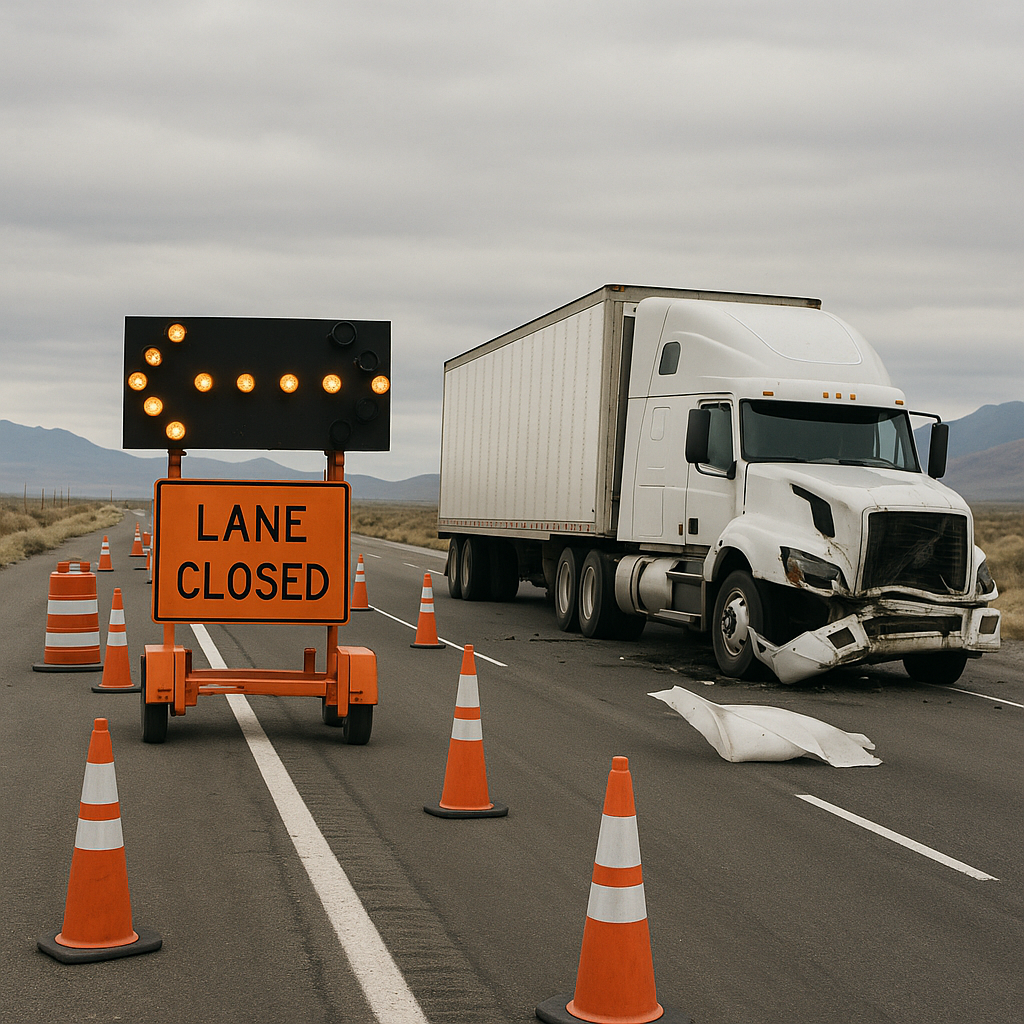
Why Do Lane Closures Cause Truck Crashes in Nevada?
Why Nevada Drivers Ask This Question
Nevada’s highways stretch for hundreds of miles through deserts, mountains, and thriving metropolitan areas like Las Vegas and Reno. With booming commerce, busy trucking routes, and ongoing road construction projects across the state, it’s no wonder Nevada drivers often ask: Why do lane closures cause truck crashes in Nevada?
This question comes up regularly among professional drivers, commuters, and everyone who has found themselves navigating narrowed lanes or bottlenecks on I-15, I-80, US-95, or even on local Las Vegas roadways. Understanding the reasons behind an uptick in truck crashes during lane closures is not only important for road safety—it can also help drivers, transportation companies, and policymakers take steps to reduce the risks.
Clear Explanation with Nevada Context
Nevada’s unique roadways and traffic patterns set the stage for particular dangers when lanes are closed for maintenance or development. When a construction project or accident narrows the available space, massive commercial trucks face major challenges.
Large trucks require much more space than passenger vehicles, both in terms of lane width and stopping distance. Here’s why lane closures cause truck crashes in Nevada:
– Reduced Maneuverability: Many Nevada highways have minimal shoulders and limited lanes. When one or more lanes close, trucks have less room to maneuver, change lanes, or avoid hazards.
– Sudden Merges and Bottlenecks: Construction zones often force vehicles to merge into fewer lanes with little warning. In these situations, trucks may be boxed in by smaller, faster-moving cars, increasing the odds of sideswipes or rear-end crashes.
– Variable Speed Traffic: Lane closures create abrupt changes in traffic speed. Trucks, which take longer to slow down or accelerate, may be unable to react in time if traffic ahead suddenly stops.
– Visibility Issues: Nevada’s intense sun, blowing dust, and glare can further reduce visibility in narrowed work zones, amplifying risks for all vehicles, but especially large trucks.
– Inadequate Advance Warning: Not all Nevada work zones provide ample signals or signage. When truck drivers don’t have enough warning about a closed lane, it can be difficult to merge safely, especially if the truck is towing a long trailer or operating in heavy traffic.
Nevada’s highways, such as I-15 through Las Vegas or sprawling stretches of US-95, frequently serve significant freight and commuter traffic. This makes disruptions from lane closures especially hazardous in the state, syncing high traffic volumes, semi-truck density, and unpredictable roadwork.
Helpful Background Information
Nevada sits at a crossroads for national and regional freight routes. Thousands of trucks travel daily from California, Arizona, and Utah, carrying goods to Las Vegas, Reno, and beyond. This steady flow means that any disruption—in this case, lane closures—causes far-reaching ripple effects.
Several factors make lane closures troublesome:
– High Volume Freight Corridors: Major interstates like I-80 and I-15 consistently rank as high-traffic freight corridors. Lane reductions create choke points, disrupting the flow of commercial and commuter vehicles.
– Frequent Construction: Rapid population growth in Nevada brings frequent road projects, especially in expanding areas like the Las Vegas Valley.
– Desert Extremes & Monotony: Long stretches of rural highways can lead to driver fatigue or inattention. When a lane abruptly closes in a low-traffic area, it can catch fatigued or distracted truckers off guard.
– Tourist and Event Traffic: During special events, like Las Vegas shows or Reno’s annual festivals, traffic surges can clash with scheduled roadwork, compounding congestion and collision risks.
Common Misconceptions
There are a few mistaken beliefs about why lane closures cause truck crashes in Nevada:
– “Truckers Aren’t Paying Attention”: While distraction plays a role in some incidents, the vast majority of professional drivers approach construction zones with caution. The challenge is often more about physics—big rigs can’t stop or merge as quickly as smaller vehicles.
– “It Only Happens at Night or in Bad Weather”: Lane closure crashes occur at all hours and in all conditions. In fact, many Nevada construction zones operate during daylight hours, when traffic is heaviest.
– “More Signage Means No Crashes”: Extra signage is helpful, but it can’t overcome all issues. Sudden traffic stalls or aggressive passing by impatient drivers can still lead to crashes, even when warnings are clear.
– “Only Out-of-State Trucks Are Involved”: Both local and out-of-state trucks are at risk. The danger isn’t about familiarity with the road, but rather the combination of lane reductions and heavy truck traffic.
Closing Paragraph
So, why do lane closures cause truck crashes in Nevada? The answer lies at the intersection of the state’s high-volume trucking routes, relentless growth, and the very nature of large commercial trucks. With more frequent lane closures to accommodate Nevada’s expanding infrastructure, traffic congestion, reduced maneuverability, abrupt merges, and poor visibility can all come together to create hazardous situations—especially for truckers. While more education, improved signage, and smarter construction zone planning can help, shared caution and respect on the road remain indispensable for everyone navigating Nevada’s ever-changing highway landscape.