
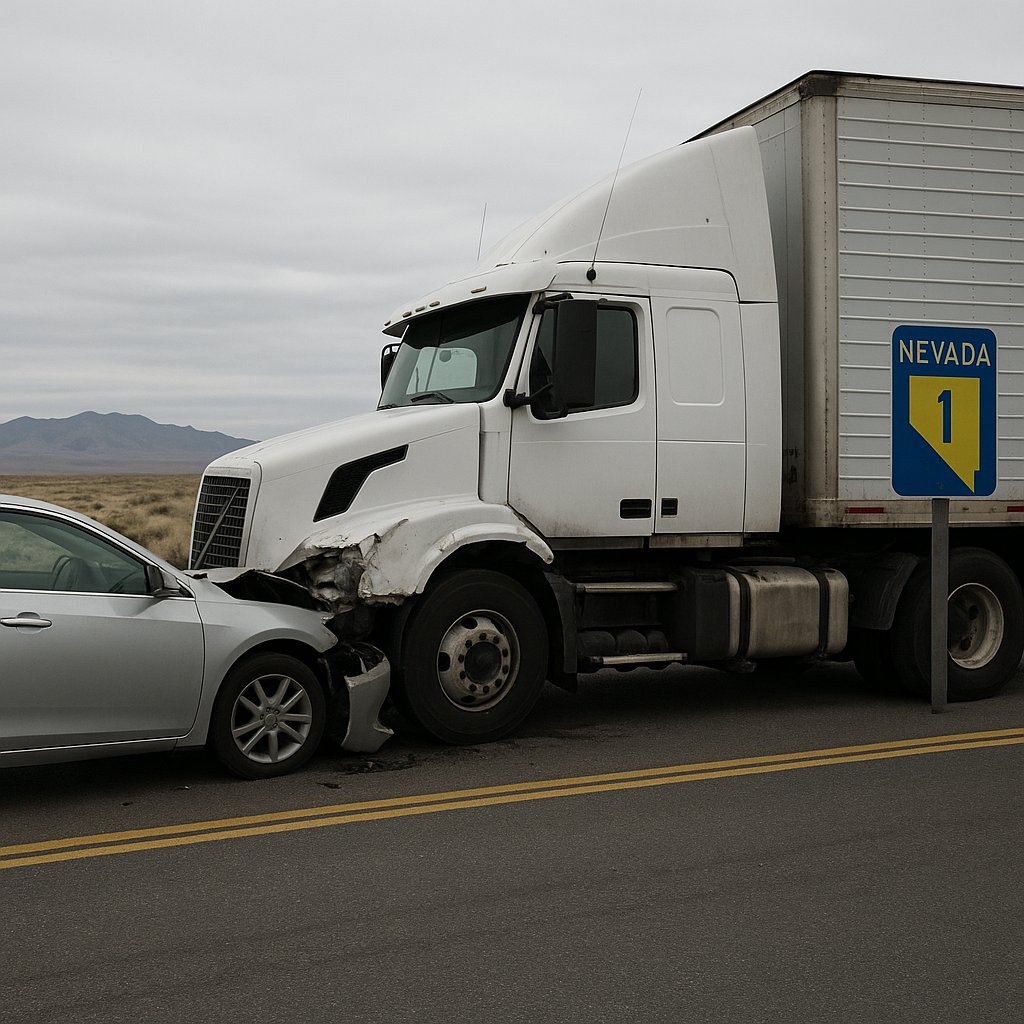
What if I Was Partially at Fault in a Nevada Truck Crash?
If you’ve recently been involved in a truck accident on Nevada’s busy roads, you might find yourself wondering, “What if I was partially at fault in a Nevada truck crash?” This is a common concern, especially when the circumstances of the collision seem complex or unclear. Knowing how Nevada law treats partial fault can be crucial for anyone navigating the aftermath of a truck accident.
Why Nevada Drivers Ask This Question
Truck accidents are not only more dangerous due to the sheer size of commercial vehicles, but they also tend to be far more complicated than typical car accidents. With multiple parties potentially involved—such as the truck driver, trucking company, vehicle manufacturer, and even local or state agencies responsible for road maintenance—determining fault is often anything but straightforward. Nevada drivers who may bear some responsibility in an accident often worry about the impact on their insurance claim or their ability to recover compensation for injuries and damage.
The situation becomes even trickier when you feel you played a part in the collision. Perhaps you braked suddenly, changed lanes without signaling, or misjudged the speed and distance of an oncoming truck. This raises pressing questions: Can you still seek compensation? Will your fault automatically prevent you from recovering damages? How does Nevada treat shared fault in trucking accidents?
Clear Explanation with Nevada Context
Nevada follows a legal principle known as modified comparative negligence, established in NRS 41.141 (Nevada Revised Statutes). This means that after a truck accident, fault is divided among all involved parties according to their level of responsibility for the crash.
If you’re partially at fault in a Nevada truck crash, here’s how it could impact your claim:
– You can still recover compensation, but only if you are less than 51% at fault.
– The amount you can recover will be reduced in proportion to your share of fault. For example, if you are found to be 30% responsible for causing a truck accident and the other party is 70% responsible, you can recover 70% of your total damages.
– If you are 51% or more at fault, Nevada law bars you from recovering any compensation from other parties.
Example: If your total damages after a truck crash are $100,000 and you’re found 25% at fault, your compensation would be reduced by $25,000, allowing you to recover $75,000.
This system aims to ensure that each party pays their fair share—and to prevent drivers who are mostly at fault from recovering damages.
Helpful Background Information
Understanding how fault is determined can help Nevada drivers better navigate the claims process. After a truck accident, insurance companies and legal representatives typically carry out investigations to gather evidence and assign fault percentages. Relevant factors include:
– Police reports
– Eyewitness statements
– Traffic camera footage
– Vehicle damage assessments
– Truck driver logs and maintenance records
Truck crashes are sometimes influenced by complex factors such as driver fatigue, vehicle overload, or mechanical issues. In these cases, various parties’ roles are scrutinized to determine whether more than one person or entity contributed to the accident.
It is not uncommon for the involved insurance companies to dispute fault percentages. These negotiations can affect how much you’re ultimately able to claim, making it essential for all parties to collect and retain as much evidence as possible.
Common Misconceptions
There are several misconceptions about being partially at fault in a Nevada truck crash. Here are a few key myths debunked:
Misconception 1: “If I’m at all at fault, I can’t recover any damages.”
In reality, Nevada’s modified comparative negligence law allows you to seek compensation even if you share some responsibility, as long as you are less than 51% at fault.
Misconception 2: “Fault is always straightforward to determine.”
Truck accidents involve complex scenarios and multiple parties, making the investigation process anything but simple. The initial assignment of fault can change as new evidence emerges.
Misconception 3: “Insurance will automatically split damages fairly.”
Insurance companies may attempt to minimize payouts by assigning more fault to the other party. This makes it crucial for drivers to be proactive in gathering evidence and documenting the scene.
Misconception 4: “The truck driver or trucking company is always more at fault due to their size or commercial vehicle status.”
While commercial vehicle operators have special regulations and responsibilities, fault is assigned based on the actions of all parties involved—not solely on vehicle size or occupation.
Closing Paragraph
Being partially at fault in a Nevada truck crash doesn’t automatically prevent you from seeking compensation, but it does influence your potential recovery and the overall claims process. Understanding Nevada’s modified comparative negligence rule helps clarify your options as you navigate what can be a stressful and complicated aftermath. If you’re facing such a situation, gathering evidence, documenting your experience, and promptly reporting the incident to your insurer are all essential steps. By knowing where you stand in terms of fault, you can approach the resolution process with greater confidence and clarity.