
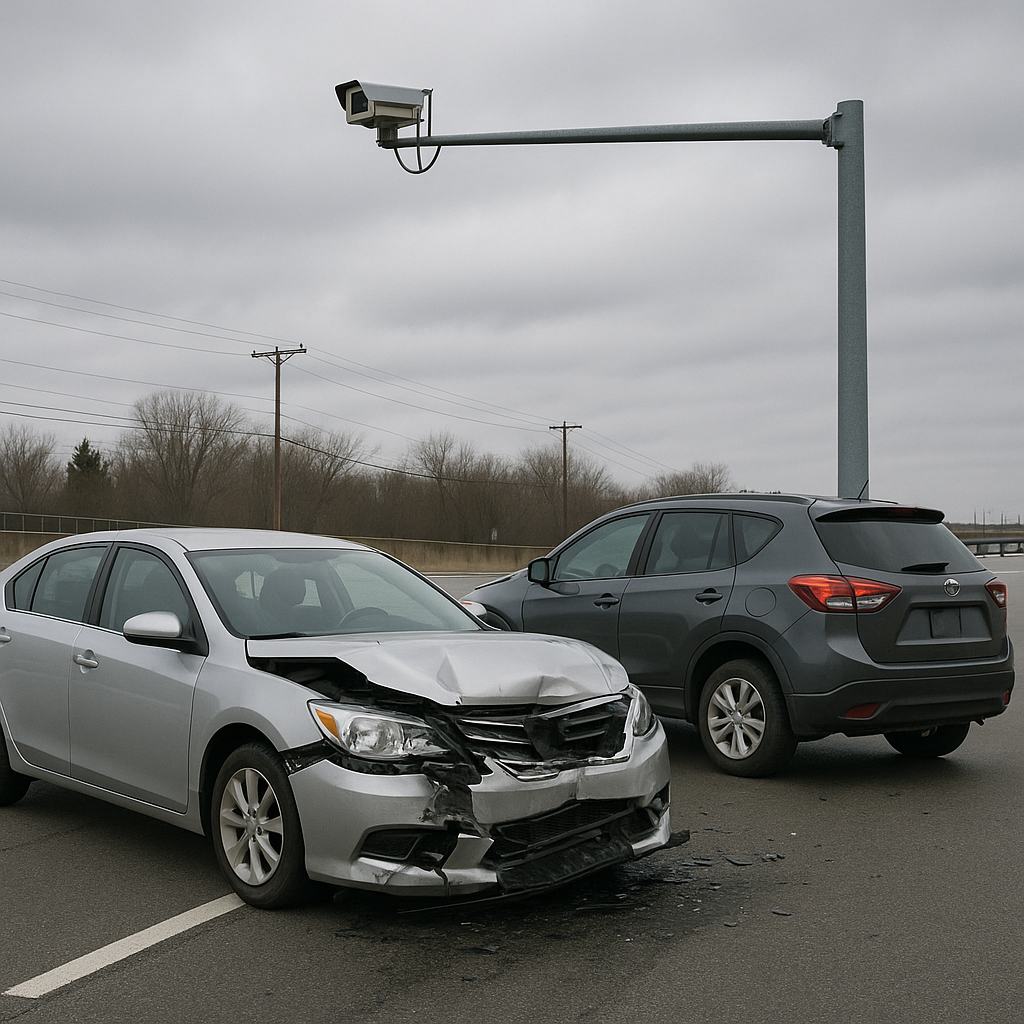
Can I Request NDOT Camera Footage After a Crash?
Why Nevada Drivers Ask This Question
Nevada’s extensive highway and freeway system is monitored by hundreds of cameras managed by the Nevada Department of Transportation (NDOT). These cameras provide real-time feeds used primarily for traffic management and public safety. When an accident occurs, involved parties often wonder whether they can request NDOT camera footage after a crash. The answer is not always straightforward, leading many drivers to ask about their rights and options.
Nevada drivers may find themselves needing such footage for several reasons. After a crash, questions around fault and responsibility quickly arise. Insurance companies, police reports, and sometimes legal proceedings rely heavily on clear evidence. Visual proof, like camera footage, could help clarify the events that led up to or caused the accident. This desire for clarity frequently prompts individuals to explore how, or if, NDOT footage might be obtainable for their case.
Clear Explanation With Nevada Context
NDOT operates a network of cameras primarily for real-time traffic monitoring, congestion control, and incident management. The feeds are designed to help NDOT staff and law enforcement monitor traffic flow, detect accidents, and provide up-to-date travel information to the public.
Can You Obtain NDOT Footage?
Generally, NDOT camera footage is not archived long-term. The primary function of these cameras is live monitoring, not legal documentation. According to NDOT policies, most camera feeds are either not recorded at all or are only stored for brief periods (if at all), mainly for traffic management—not for public requests or evidence gathering.
If someone wishes to request NDOT camera footage after a crash, it’s important to act quickly. There is a narrow window in which any footage that may exist can be requested, and there is no guarantee any relevant video was recorded or is still available by the time a request is made.
The Official Process
If you want to attempt a request, you would use Nevada’s public records process, submitting a formal inquiry to NDOT. This often involves a written request specifying the date, time, and exact location of the incident. Keep in mind, NDOT rarely releases footage to private individuals due to privacy laws, operational policy, and limitations on what is actually retained. In many situations, law enforcement has a higher chance of obtaining such footage as part of their investigative process.
Helpful Background Information
What Are NDOT Cameras For?
NDOT freeway cameras are part of an intelligent transportation system (ITS). Their main objectives are to:
– Monitor traffic congestion and flow
– Detect incidents and manage emergencies
– Share real-time traffic information with the public via websites and apps
These cameras are not security cameras. They are not intended or optimized to capture details such as license plates or driver faces. Often, camera angles or video quality are insufficient for detailed crash analysis.
Who Uses the Footage?
While the public can view many camera feeds live on NDOT websites, access to any recorded footage (if such exists) is tightly controlled. Law enforcement and NDOT use the content primarily for immediate response and public information. Very rarely are historical images or video clips available upon request—and then only under strict circumstances.
Common Misconceptions
1. “All crashes are recorded by NDOT cameras.”
Many Nevada drivers believe every accident on a highway is captured on video and available for later retrieval. In reality, NDOT camera feeds are often not actively recording. Even when footage is archived, it may only be stored for a matter of hours or days, if at all.
2. “I can easily get footage if I ask.”
While Nevada’s public records laws (NRS 239) allow individuals to request government documents, this doesn’t guarantee access to NDOT camera footage. Privacy laws, operational priorities, and retention policies often prevent the release of video to individuals.
3. “NDOT footage is high-definition and shows everything.”
NDOT cameras are designed for broad traffic monitoring rather than detailed scene analysis. The footage, if available, is often low in resolution and focused on the overall traffic flow rather than specific vehicles or incidents.
4. “Police can always get the footage for me.”
While law enforcement may have additional channels to request footage during investigations, even they are sometimes informed that the specific footage doesn’t exist or has already been overwritten.
Closing Paragraph
Requesting NDOT camera footage after a crash in Nevada is not a straightforward process. While the idea of retrieving video evidence sounds helpful, the practical limitations of how NDOT cameras operate—live monitoring, brief or nonexistent retention times, and privacy restrictions—mean that such footage is rarely available for private individuals after the fact. If you are involved in a crash, it is always wise to act promptly and to know that NDOT camera footage, if it even exists, is typically used internally for traffic management, not for public or legal use. Always consult with appropriate Nevada authorities or agencies for current procedures if you wish to pursue such a request.