
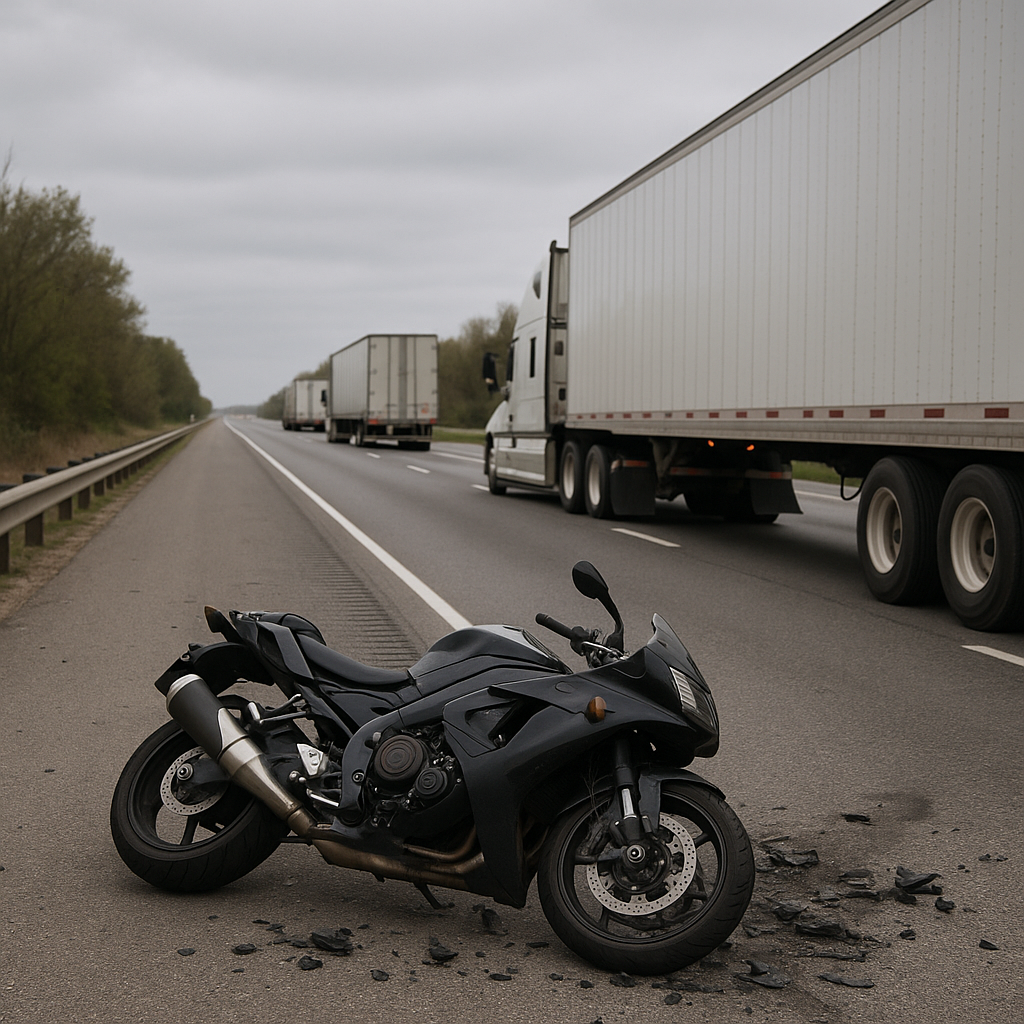
Commercial Truck Corridors and Motorcycle Crash Risk in Nevada
Navigating Nevada’s highways and byways brings motorists alongside a unique mix of commercial trucking activity, particularly on well-traveled freight corridors. These routes are crucial for trade and industry but come with distinct risks for motorcyclists. This article explores the landscape of commercial truck corridors in Nevada, the intersection with motorcycle safety, and how patterns of traffic influence collision risks.
—
Overview of the Freight Corridor or Trucking Activity
Nevada’s position as a critical link between West Coast ports and inland states gives its highways an outsized role in national freight movement. The state’s vast network of commercial truck corridors moves millions of tons of cargo annually, with Interstate 15 (I-15), Interstate 80 (I-80), U.S. Route 95, and U.S. Route 93 serving as arteries of economic activity. These routes connect major hubs like Las Vegas and Reno to California, Utah, and beyond.
I-15 sees heavy volumes as it links Las Vegas to Los Angeles and Salt Lake City, making it one of the busiest truck corridors in the region. I-80, stretching from the California border through Reno and across Northern Nevada, is vital for goods headed east and west. U.S. Route 95 intersects mining, agriculture, and tourism routes, channeling a variety of commercial loads through cities like Tonopah and Fallon.
Commercial trucking in Nevada is influenced by the state’s industries, wide-open landscapes, and rapidly growing urban centers. This heavy freight activity creates both economic dynamism and safety challenges, particularly when trucks share lanes with vulnerable road users like motorcyclists.
—
Common Truck Types and Freight Activity in the Area
On these bustling corridors, a range of commercial vehicle types are common, each with distinct operational characteristics:
– Long-Haul Tractor-Trailers: The most prevalent sight, these 18-wheelers haul everything from packaged consumer goods to machinery and perishable food products. Their enormous mass and lengthy stopping distances present visibility and maneuverability challenges, especially for motorcyclists.
– Refrigerated Trucks (“Reefers”): Running between Nevada’s agricultural zones, neighboring states, and distribution warehouses, these trucks transport temperature-sensitive goods and often keep to tight schedules.
– Hazardous Material (Hazmat) Carriers: Given Nevada’s mining activity and industrial sectors, these specialized trucks ferry chemicals, fuels, and mining byproducts, sometimes requiring escorts or specific routes to minimize risk.
– Flatbeds and Tankers: Supporting construction, mining, and manufacturing, these trucks can carry oversized loads which may protrude or shift, creating unpredictable road dangers.
Nevada’s tourism, hospitality, and convention industries—especially in Las Vegas—also drive significant freight flows, including deliveries of food, beverages, and event supplies. This can result in localized traffic clusters at expected (and sometimes unexpected) times.
For motorcyclists, each truck type introduces unique risks, from turbulent airflows to unexpected blind spots.
—
How Congestion or Merging Creates Risk
The interaction between commercial trucks and motorcycles is especially fraught in zones of heavy congestion or where merging traffic is common.
On interstates like I-15 and I-80:
– Merging hot spots: On-ramps and off-ramps around major urban centers (Las Vegas Spaghetti Bowl, Reno Spaghetti Bowl) intensify conflicts. Trucks require more space and time to enter or exit highways. When motorcycles are present in adjacent lanes or blind spots, abrupt merging can result in near-misses or collisions.
– Lane changes: Motorcyclists are often less conspicuous than other vehicles. When a truck driver cannot see a motorcycle in their large blind zones (“no-zones”), the risk of a side-swipe event increases. Nevada’s sunny weather can compound this, with glare reducing driver awareness even further.
– Stop-and-go traffic: In work zones or at accident sites, motorcycles may attempt to maneuver through slower-moving vehicles, while truck drivers have difficulty braking quickly or making sudden directional changes. This combination heightens risk, especially where lanes are narrowed for construction.
On rural stretches (such as U.S. Route 95 through central Nevada), the dangers shift:
– Passing maneuvers: Trucks and motorcycles both share a need to overtake slower traffic. However, the process is intensified by long stretches with limited visibility, unpredictable crosswinds, and the occasional appearance of wildlife—all of which can be hazardous, particularly for less experienced riders.
– Fatigue factor: Truck drivers and motorcyclists alike may travel for hours with minimal stops. Fatigue contributes to lapses in judgment and slower reaction times.
Motorcyclists must remain vigilant around trucks—particularly when traffic is changing patterns, speeds, or density.
—
Time-of-Day and Seasonal Traffic Trends
Nevada’s freight traffic is dynamic with clear time-of-day and seasonal trends that affect both commercial trucks and motorcyclists.
Time-of-Day Patterns
– Morning and Afternoon Peaks: The majority of trucking activity lines up with business hours, with a pronounced surge in the early morning (4-7 a.m.) and late afternoon (3-6 p.m.), matching warehouse schedules and delivery deadlines. Motorcyclists out for commutes or recreational rides during these peaks find themselves sharing lanes with high concentrations of large vehicles.
– Late Night/Early Morning: Some commercial truck traffic, especially from long-haul operations, continues overnight for timely deliveries. However, reduced visibility, fatigue, and drowsy driving become more common after midnight.
– Weekends: While overall truck traffic may lessen, motorcycles are more common as residents and tourists head out for recreational rides—especially near Lake Tahoe, Red Rock Canyon, and Valley of Fire. This increases truck-motorcycle interaction on scenic byways and in traffic bottlenecks.
Seasonal Variations
– Summer: Warmer months bring a surge of motorcycles to Nevada’s highways. This coincides with increased tourism, special events in cities like Las Vegas, and the busiest shipping schedules. Construction projects also peak during this time, leading to detours and work zones that challenge both truck drivers and motorcyclists.
– Winter: Fewer motorcycles are on the roads, especially in northern Nevada where highways may be icy. However, trucking remains steady as goods continue to move in and out of the state. Pass closures, snow plows, and chain controls can add further unpredictability.
– Shoulder Seasons (Spring/Fall): Transition periods can bring sudden changes in weather—wind, rain, or even snow—amplifying the hazard for motorcycles, which are more sensitive to environmental factors than passenger cars or trucks.
Motorcyclists planning trips on Nevada’s major freight corridors should consider these temporal and seasonal dynamics in their safety strategies.
—
Conclusion
Nevada’s commercial truck corridors are the lifeblood of its economy, driving prosperity while also shaping the road environment for all users. For motorcyclists, understanding the rhythm of trucking activity—from the types of vehicles on the road to when and where traffic surges—can make a significant difference in identifying high-risk scenarios. By recognizing how congestion, merging, and seasonal trends heighten motorcycle crash risk, riders and drivers alike can take practical steps toward safer travel across Nevada’s diverse highways and byways. Working together, road users can ensure that commerce and freedom on two wheels both flourish in the Silver State.