
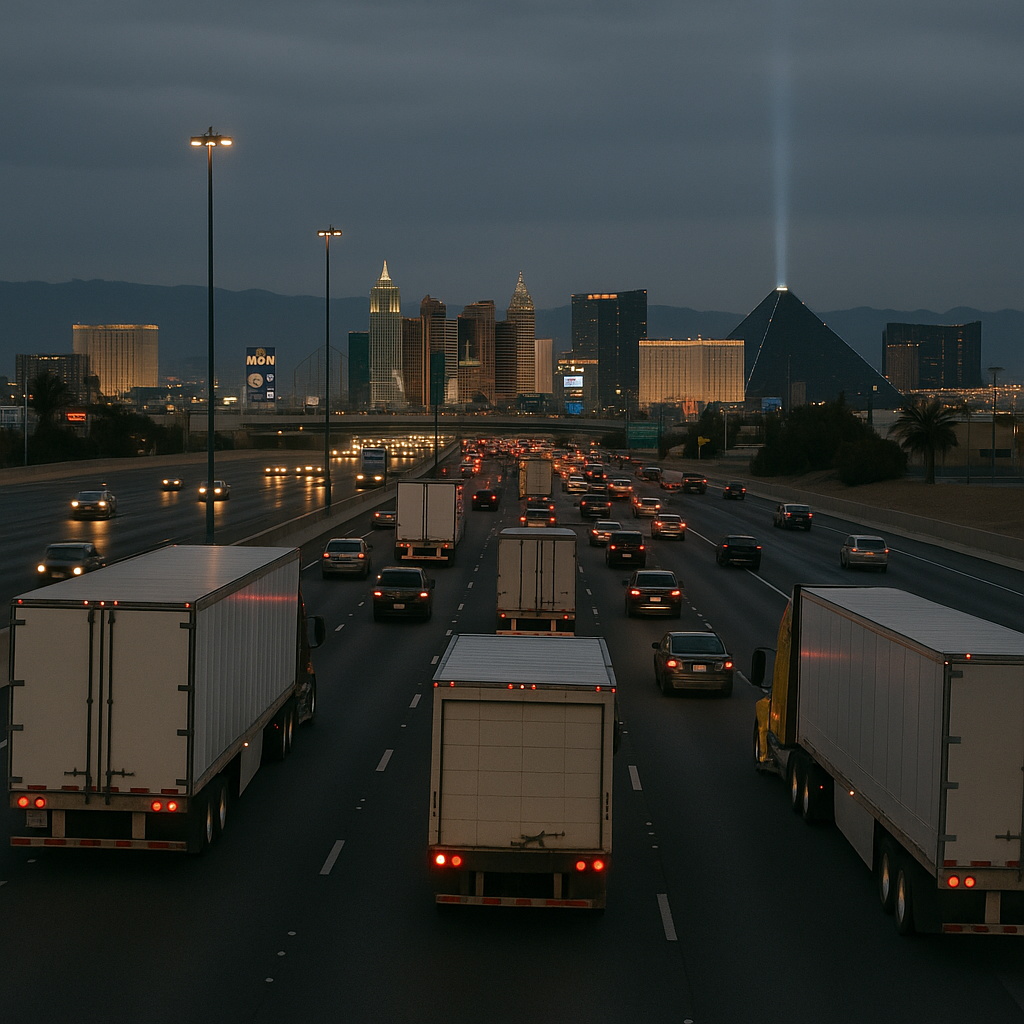
Evening Commute Truck Traffic Patterns in Las Vegas
Managing evening commute truck traffic in Las Vegas poses unique challenges and opportunities for both everyday drivers and the region’s robust logistics industry. The convergence of heavy vehicular movement on key freight corridors with the bustling flow of commuter traffic, especially during the late afternoon and early evening, shapes the region’s roadways in distinctive ways. Understanding these traffic patterns is critical not just for truck drivers and logistics firms, but also for local commuters, law enforcement, and city planners. This article explores the main trucking routes in Las Vegas, common freight activities, the risks of congestion and merging, and how time-of-day and seasonal trends affect traffic patterns across the city.
Overview of the Freight Corridor and Trucking Activity
Las Vegas functions as a vital logistical junction both for Nevada and for the broader Southwest United States. The city’s strategic placement near the intersections of major highways, including Interstate 15 (I-15) and U.S. Route 95, makes it a prime throughway for freight hauling from California, Arizona, and Utah. This crossroad status contributes significantly to consistent truck activity, especially along north-south and east-west routes.
Interstate 15 (I-15) is the lifeblood of Las Vegas’ freight activity. Stretching from Southern California through Las Vegas and further north, I-15 is a primary route for moving consumer goods, construction materials, and perishables. Compounding its importance, I-15 also links with local beltways such as the I-215 and the Summerlin Parkway, distributing truck traffic deeper into metropolitan Las Vegas and toward distribution centers, warehouses, and industrial parks mainly clustered in North Las Vegas and the southwest valley.
U.S. Route 95 also feeds industrial activity, supporting connections to Reno to the north and providing a crucial bypass for local delivery trucks as well as long-haul freight. The network of surface streets—such as Tropicana Avenue, Charleston Boulevard, and Decatur Boulevard—interlaces with these highways, creating alternate routes for local freight movement, though these are more impacted by city traffic during peak commute hours.
As the city continues to grow—bolstered by construction, retail, and a vibrant hospitality sector—so too does the complexity of evening commute truck traffic in Las Vegas. Demand surges in line with consumer seasons, major conventions, and construction booms, continually redefining traffic impact on freight corridors.
Common Truck Types and Freight Activity in the Area
The types of trucks found circulating through Las Vegas during the evening commute periods are as varied as the industries they serve.
– Long-haul tractor-trailers (18-wheelers): These rigs traverse I-15 and US 95, hauling freight between regional hubs. Their loads often include retail goods, electronics, automotive parts, and perishable foods bound for Las Vegas or onward to neighboring states.
– Delivery box trucks: Medium-sized trucks serve the “last mile,” delivering goods directly to stores, hotels, and restaurants across the city. They tend to circulate more through city streets and local business districts.
– Construction vehicles: As development surges, dump trucks, cement mixers, and flatbeds transporting construction materials are regular sights, especially near development hotspots in the valley’s expanding edges.
– Specialized haulers: With Las Vegas being an entertainment powerhouse, unique trucks carrying trade show booths, event equipment, or casino-related machinery are periodically seen, especially during major conventions.
Freight activity is not limited to long-haul runs. Evening hours frequently correlate with warehouse shifts ending, prompting an uptick in local delivery vehicles either finishing routes or returning to distribution centers. This means that not only the highways, but also feeder avenues and industrial park access roads, experience concentrated truck activity during the evening commute.
How Congestion or Merging Creates Risk
The evening commute in Las Vegas is characterized by a heavy blend of passenger vehicles and commercial trucks sharing space on crowded highways and intersections, particularly on and near I-15, I-215, and US 95. Congestion is at its highest between 3:30 p.m. and 6:30 p.m., just as shift changes occur at warehouses and service industries, coinciding with conventional end-of-workday traffic.
One major dynamic in the evening commute truck traffic in Las Vegas is the complication created by on-ramps and merging zones. For example:
– The Spaghetti Bowl interchange (where I-15 and US 95 cross near Downtown Las Vegas) is a notorious congestion hotspot. Trucks merging here must navigate tight spaces and rapidly changing traffic flows.
– Entry points from the beltways (I-215 and CC-215) onto I-15 face high congestion due to limited lanes and high traffic volume, increasing challenges for trucks that require a larger turning radius and longer acceleration/deceleration zones.
Risks arising from these patterns include:
– Sudden stops or slowdown chains when a truck merges or exits, especially if visibility is low or if passenger vehicles make abrupt lane changes to avoid being behind a slow-moving vehicle.
– Limited sight lines for passenger vehicles when following or attempting to overtake large trucks, which can obscure road hazards or slowed traffic ahead.
– Rear-end collisions or side-swipes due to merging confusion, especially in fast-moving or stop-and-go traffic segments.
While Nevada’s Department of Transportation (NDOT) and regional agencies closely monitor and manage these challenges—implementing smart signage, ramp-metering, and periodic construction to widen specific sections—the sheer volume during peak hours means situational risks persist.
Time-of-Day and Seasonal Traffic Trends
Evening commute truck traffic in Las Vegas follows recognizable patterns influenced by both the clock and the season.
Time-of-Day:
The most significant overlap of truck and commuter traffic in Las Vegas occurs between 4:00 p.m. and 6:30 p.m. This is when logistics operations are wrapping up day-shift deliveries, while the general workforce simultaneously heads home. Equally, many regional deliveries are scheduled to arrive before close of business or just after the dinner rush for the hospitality industry, reinforcing truck presence in this window.
Weekend vs. Weekday:
Friday evenings typically see an increase in both truck and passenger traffic on I-15 southbound, with weekend travelers joining freight haulers headed toward California markets. Conversely, truck flow may ease somewhat during the weekend evenings, but event-based surges (such as conventions or major sporting events) can spike both truck and passenger vehicles unexpectedly.
Seasonal Patterns:
– Summer: Construction activity picks up to avoid winter slowdowns, leading to more construction vehicles on the road. The tourism peak in summer also increases deliveries to hotels, casinos, and attractions.
– Fall and Winter: The run-up to holiday retail pushes bonuses local freight, as stores and warehouses ramp up inventory. Weather can impact north-south trucking—rare for Las Vegas itself, but snow in surrounding regions may force reroutes through the city or slowdowns that affect evening traffic volumes.
– Special Events: Las Vegas hosts numerous large-scale events, trade shows, and concerts year-round. These can disrupt standard traffic trends, occasionally leading to unusual evening surges of specialized freight vehicles delivering staging, electronics, and exhibits.
Neutral Closing Paragraph
Understanding the nuanced interplay of evening commute truck traffic in Las Vegas is essential for anyone using the region’s roadways—whether for business, logistics, or daily travel. As Southern Nevada continues to develop, city planners and transportation agencies are actively studying and adapting to these evolving patterns, aiming to keep goods moving efficiently while supporting the safety and comfort of all travelers. Regardless of the time of year, preparation, awareness, and mutual respect among commercial and commuter drivers remain key ingredients for navigating Las Vegas roads during the busiest hours of the day.