
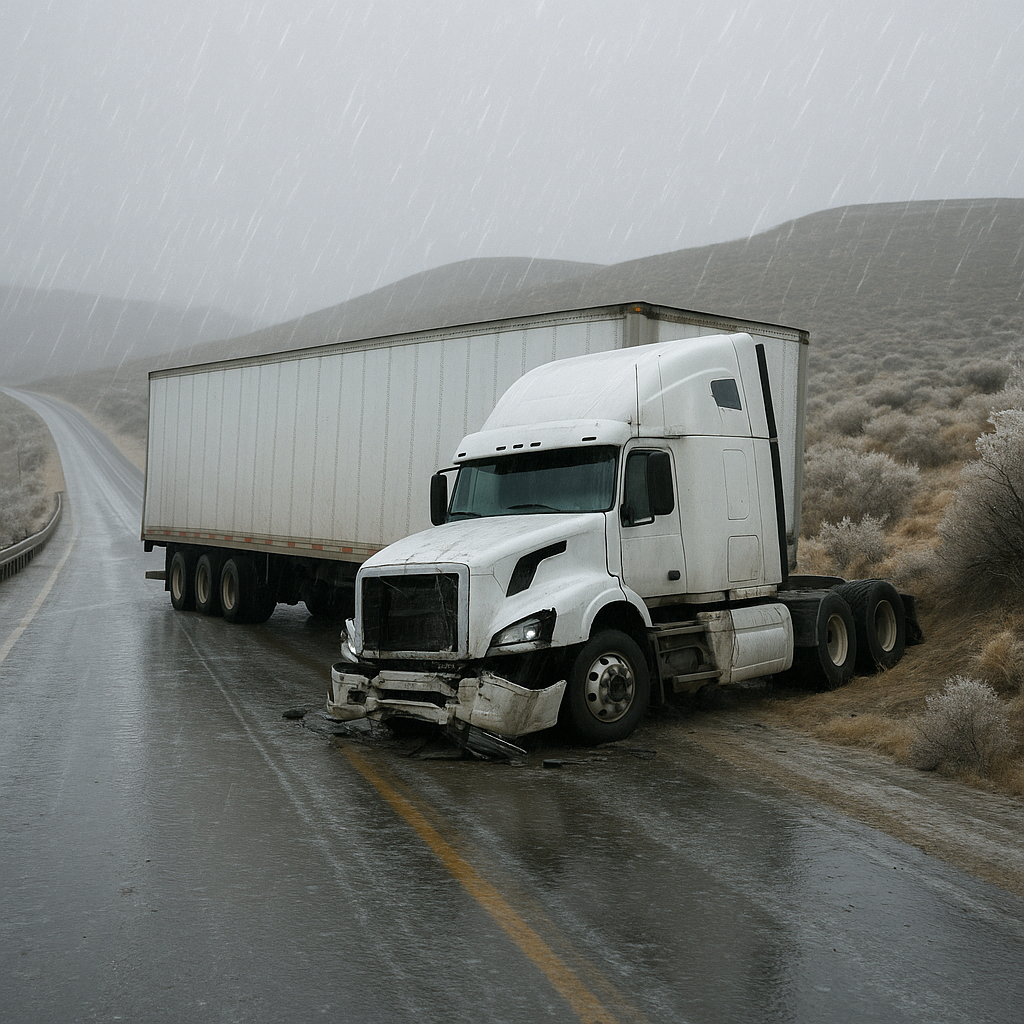
Freezing Rain and Truck Crash Risks in Nevada
Overview of the Nevada Weather or Road Condition Factor
Nevada is well-known for its arid climate, vast desert landscapes, and stretches of sun-baked highway. Yet, although much of the state basks under clear skies, its weather is far from predictable—especially during the coldest months of the year. One of the least expected but most dangerous weather phenomena that can impact road safety in Nevada is freezing rain. Unlike snow, which is often visible and somewhat easier to anticipate, freezing rain is a silent hazard. It can coat roadways with a nearly invisible layer of ice, often referred to as “black ice,” that presents significant risks, especially for commercial trucks.
Freezing rain occurs when a layer of warm air is sandwiched between two cold layers in the atmosphere. Snowflakes falling from high up in the clouds melt when they hit this warm layer and then refreeze on contact with the cold ground or surfaces, creating an ultra-slippery ice glaze. In Nevada, especially in higher elevations or during cold front passages in the winter or early spring, freezing rain can occur with little warning.
The state’s diverse geography means that while Las Vegas and the southern deserts are rarely affected, northern Nevada, mountainous regions near Reno and Lake Tahoe, and rural highways crisscrossing the state can all experience hazardous freezing rain events. Unlike other forms of precipitation, freezing rain doesn’t accumulate in visible drifts or piles; instead, it creates risky ice sheets, turning roads, bridges, and overpasses into treacherous surfaces in a matter of minutes.
How This Condition Affects Trucks Differently Than Cars
When roads in Nevada are coated with ice from freezing rain, all motorists are at risk, but trucks face unique—and often much greater—dangers. Commercial trucks, including semis and big rigs, are massive vehicles, typically weighing 20-30 times more than a standard passenger car. Their size and weight, combined with longer stopping distances, mean even a minor skid or loss of traction can lead to catastrophic results.
One of the primary ways freezing rain affects trucks differently is through loss of traction. Modern trucks are equipped with advanced braking and stability systems, but these are only as effective as the tires’ contact with the road. Icy roadways can overwhelm these safety features, causing trucks to jackknife—a situation where the trailer swings out from behind the cab—or completely lose control. Additionally, due to their high center of gravity, trucks are more prone to rollovers, especially if a patch of ice makes steering corrections sharp or abrupt.
Visibility is another concern. Freezing rain can quickly coat windshields, mirrors, and sensors with ice, giving even the most vigilant truck drivers less time to react. The challenge is compounded if truckers are unfamiliar with the unpredictable weather patterns of Northern Nevada. Unlike local drivers who may anticipate sudden weather shifts, interstate truckers might encounter freezing rain unexpectedly, particularly on remote highways such as I-80, US 50, or US 395.
Furthermore, the sheer momentum of a fully loaded truck means that once a skid starts on ice, regaining control is far harder than in a passenger car. Weight distribution can also change if the cargo shifts during a slide, further destabilizing the vehicle. Trucks also require more space for evasive maneuvers—a luxury often unavailable when roads are slick and crowded.
Why Crashes Can Become Severe Under These Conditions
The severity of crashes involving trucks during freezing rain events in Nevada arises from several factors tied directly to both the weather and the nature of trucking itself. First and foremost is the basic physics of mass and momentum. A fully loaded semi truck can weigh up to 80,000 pounds, making it a tremendous force should it go out of control. When braking or steering input is applied on slick ice, stopping distances increase exponentially compared to dry pavement.
Secondly, truck crashes on icy roads tend to cause chain-reaction incidents. A jackknifed truck may block multiple lanes on highways like I-80 or US 395, leading to additional vehicles sliding into the crash site before they have a chance to respond. In Nevada’s rural stretches, this can also mean that emergency response may be delayed, compounding risks for all involved.
The risk of hazardous material spills also rises in the event of a truck crash. Many trucks carry chemicals or fuels, so a collision or rollover caused by freezing rain isn’t just a matter of vehicle damage—it can also present environmental and fire hazards, particularly in ecologically sensitive or remote Nevada landscapes.
Structural factors are also at play. Many of Nevada’s overpasses and bridges ice over before surrounding road surfaces. Trucks encountering a seemingly clear stretch of freeway may hit black ice on a bridge or elevated section, resulting in loss of control mere seconds after road conditions appeared manageable. The surprise and suddenness of these transitions can catch even experienced drivers off guard.
Finally, limited visibility due to freezing rain means that both truck drivers and motorists behind cannot always see a developing crash in time to avoid becoming involved, increasing the likelihood of severe, multi-vehicle accidents.
Common Seasonal Patterns in Nevada
Freezing rain in Nevada is most common during the transitional months surrounding winter—primarily late fall, winter, and early spring. The risk is especially high in northern parts of the state, such as around Reno, Elko, and the mountain passes leading into the Sierra Nevada. The high desert and mountain valleys can experience sudden drops in temperature, turning drizzle into a sheet of ice in minutes. Weather patterns that bring warm, moist air over cold surfaces are ideal for freezing rain formation and are often associated with winter storms moving in from the Pacific Northwest.
Mountain passes, including those along I-80, US 50 (known as “The Loneliest Road in America”), and routes into Lake Tahoe, are particularly susceptible. Even when valleys remain relatively ice-free, high elevation sections can experience sudden ice formation overnight or during fast-moving storm systems.
The unpredictability is part of the challenge in Nevada. Sudden microclimates—where dry roads transition abruptly to dangerously icy conditions—catch local and out-of-state truckers by surprise. While southern Nevada and metro Las Vegas rarely face such conditions, residents and travelers in the northern and elevated regions must remain especially vigilant from November through March.
Nevada’s Roadways and Responsibility
Maintaining safety during freezing rain is a shared responsibility. While the Nevada Department of Transportation (NDOT) works diligently to monitor conditions and apply treatments like salt and sand, the rapid formation of black ice often outpaces mitigation efforts. Both truck drivers and motorists are advised to monitor weather forecasts, understand the warning signs of freezing rain, and proceed with caution during suspect conditions.
Technology, such as weather alerts and advanced trucking navigation systems, is helping, but vigilance remains key on Nevada’s unique and varied roads. Whether you’re behind the wheel of a car or a massive commercial truck, recognizing the dangers of freezing rain can go a long way towards promoting safety for all.
Freezing rain truck crash risks in Nevada are a real, sometimes underestimated threat that demands respect—both for the power of nature and the challenges of sharing the road in winter’s unpredictable embrace. By understanding how this phenomenon develops and impacts truck travel, Nevadans and the countless truck drivers passing through can work together to reduce risks and ensure safer journeys all year round.