
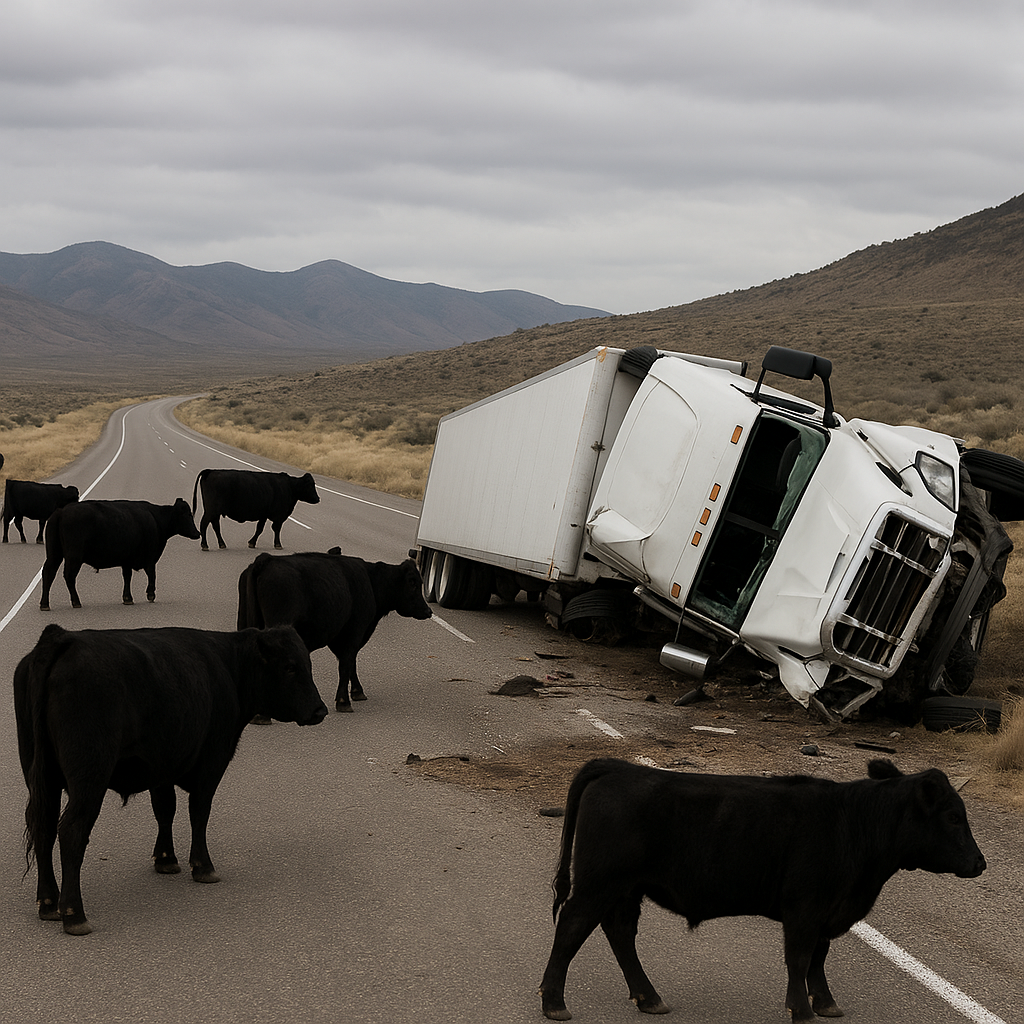
How Cattle on Roads Affect Rural Nevada Truck Crashes
Driving across rural Nevada is an iconic experience marked by sweeping desert vistas, remote highways, and expansive ranch lands. However, one unique hazard consistently challenges drivers and contributes to truck crashes in rural Nevada: cattle on roads. Unlike other parts of the country, much of Nevada remains open range, allowing livestock to roam freely across highways. This article explores the impact of cattle on roads, why truck crashes in these situations can be especially severe, and how seasonal conditions influence the risk.
Overview of the Nevada Weather or Road Condition Factor
Nevada’s highways wind through remote high desert, sagebrush valleys, and mountainous terrain. The state’s rural roads are often two-lane highways with minimal lighting, long stretches between services, and limited cell coverage. Crucially, many routes traverse open range country—public and private lands where ranchers’ cattle can graze without fencing separating livestock from the roadway. Unlike some states where livestock crossing roads is rare or carefully controlled, encountering cattle on Nevada highways is a routine and sometimes dangerous occurrence.
Weather also plays a significant role in rural driving safety. Nevada’s climate varies drastically, with summer days often exceeding 100 degrees and winter months bringing snow, ice, and below-freezing nights to higher elevations. Rain is rare, but sudden storms can create slick conditions, while dusk and dawn bring low visibility due to glare or darkness. Road maintenance in rural areas may be less frequent, meaning shoulder and pavement conditions can be unpredictable.
How This Condition Affects Trucks Differently Than Cars
Trucks—especially large tractor-trailers, livestock haulers, and flatbeds—interact with the hazard of cattle on roads in ways distinct from passenger vehicles. The sheer size and weight of commercial trucks drastically increase both stopping distance and collision force compared to cars. A fully loaded semi-truck can weigh up to 80,000 pounds, making sudden stops for unexpected obstacles nearly impossible.
On rural Nevada highways, truck drivers often travel at speed limits of 65 to 75 miles per hour—the same as, or even higher than, passenger vehicles. But trucks need more space and time to react. When cattle suddenly appear on the road (frequently hidden by curves, brush, or over hills), a truck’s ability to maneuver or brake safely is severely limited. Even emergency steering can be dangerous for trucks; swerving too abruptly can lead to rollovers, jackknifing, or loss of cargo control.
Additionally, rural Nevada’s lengthy stretches without rest areas mean truckers are sometimes driving for long periods, potentially leading to fatigue or reduced alertness. Nighttime runs are common, but truck headlights may not fully illuminate the dark roadways ahead—making cattle increasingly difficult to spot in advance.
Why Crashes Can Become Severe Under These Conditions
The combination of large vehicles, cattle on roads, and Nevada’s rural conditions dramatically increases crash severity. There are several reasons why:
1. High Impact Forces: When a truck collides with a cow (which can weigh over 1,000 pounds), the impact can significantly damage the vehicle, cause cargo shifts, or even breach the truck’s cab. Trucks may then veer off the road, jackknife, or tip over.
2. Limited Emergency Response: Rural Nevada’s isolation means help is often many miles—and a long response time—away. Accidents can result in delays for emergency medical care, increasing the risk of severe outcomes.
3. Chain-Reaction Crashes: In some instances, a collided truck can block the roadway entirely, or set off a series of crashes if other vehicles are following and unable to stop in time. Debris, cattle carcasses, and spillage of cargo or fuel can further complicate the situation.
4. Environmental Hazards: In the aftermath of a crash, especially in winter, occupants can be exposed to harsh weather while awaiting rescue. Summer heat also presents serious dangers to stranded drivers and passengers.
5. Visibility and Road Layout: Narrow, winding roads with limited sightlines increase the risk of not seeing cattle until it’s too late, especially at night or in stormy conditions.
Common Seasonal Patterns in Nevada
Crashes involving cattle on rural Nevada roads follow some seasonal patterns due to livestock management and environmental conditions:
Spring and Early Summer:
As range grasses grow, ranchers may move cattle to higher pastures or across public lands that intersect with highways. Calving season also increases the likelihood of encountering cows with calves—slower-moving and less predictable.
Late Summer and Fall:
Hot, dry conditions often force cattle to range farther from water sources. This may bring herds closer to or directly across roads in search of streams, troughs, or low areas where water pools after rare rainstorms. Meanwhile, shorter daylight hours mean more trucking traffic happens during early mornings and evenings, increasing the chance of low-visibility encounters.
Winter:
At higher elevations, snow can blanket rangeland, prompting ranchers to move cattle to lower, often more accessible areas—sometimes parallel to highways. Icy roads and swirling snow reduce traction and visibility for both truckers and livestock. In particularly harsh winters, cattle may cluster near plowed or salted roads for easier walking and feeding, often wandering onto roadways.
Year-Round Considerations:
Open range laws and grazing rights mean cattle may be present at any time of year. Nevada law requires drivers to be cautious and grants substantial rights to livestock owners; fencing and warning signs are less common in truly rural areas. Local ranching events, such as roundups or cattle drives, sometimes involve large groups of animals on or near roadways. Truck drivers are advised to remain especially alert when traveling near known grazing areas or when “Cattle Crossing” signs appear.
Neutral Closing Paragraph
Cattle on roads present a unique and significant challenge for drivers in rural Nevada, particularly those operating large trucks. Understanding the interplay of open range grazing, varying weather conditions, and long, isolated stretches of highway can help truckers, motorists, and ranchers alike be more mindful of these risks. While this longstanding aspect of Nevada’s rural landscape cannot be eliminated, increased awareness and caution remain essential for all who travel the Silver State’s backroads. Ultimately, cooperation and vigilance on the part of every road user can help reduce the frequency and severity of rural Nevada truck crashes involving cattle on the roads.