
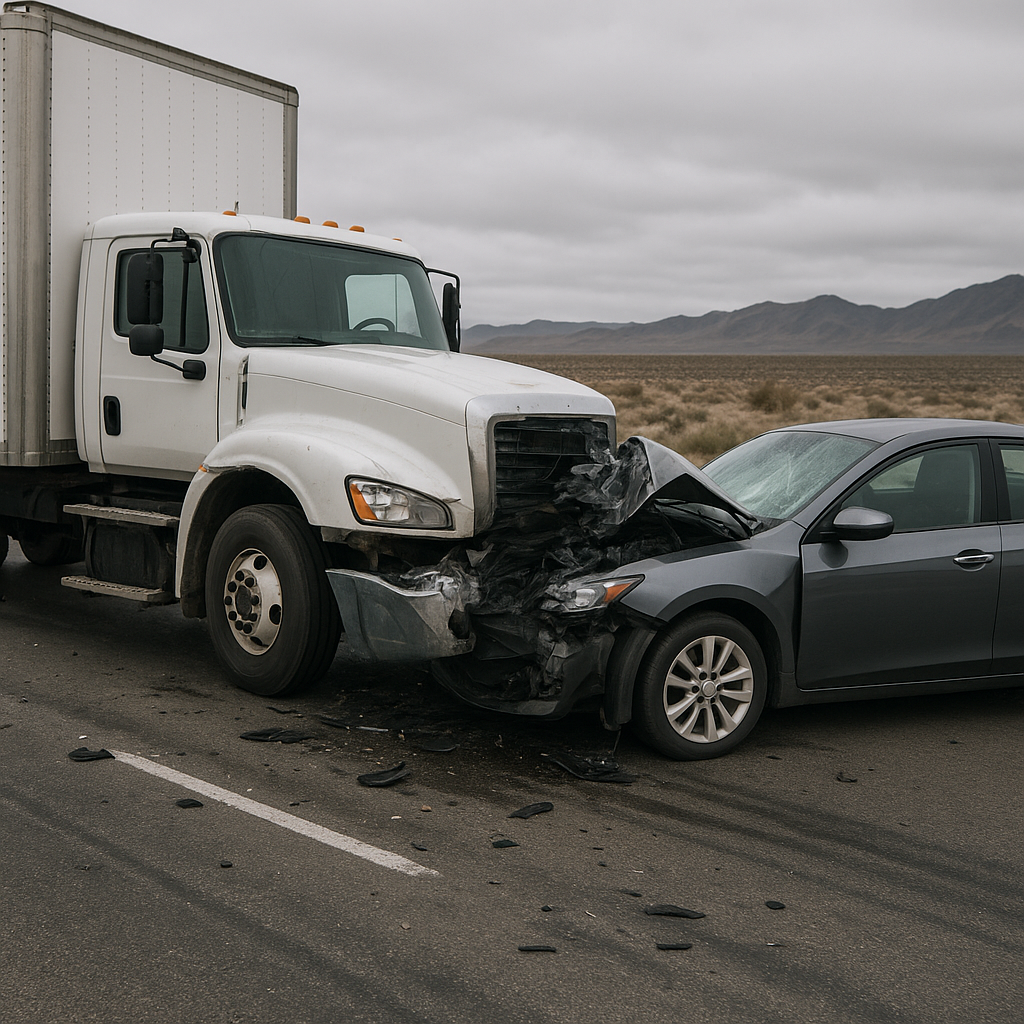
How Dangerous Are Nevada Truck Accidents Compared to Car Crashes?
Why Nevada Drivers Ask This Question
Nevada’s highways and city streets see a wide range of traffic, from family cars to massive eighteen-wheelers bound for California, Arizona, or the bustling streets of Las Vegas. With the state’s economy powered by tourism, trucking, and cross-country commerce, it’s no surprise that concerns about roadway safety often lead Nevada drivers to ask: How dangerous are Nevada truck accidents compared to car crashes? Local news frequently features accidents involving commercial trucks on I-15, US-95, or the infamous Spaghetti Bowl, raising questions about the true risks drivers face sharing the road with big rigs.
Nevada drivers want to understand not only the dangers of being involved in a truck accident but also how these compare to more common passenger car crashes. This knowledge can impact how people drive near trucks, their choices for travel, and their awareness on the road.
Clear Explanation with Nevada Context
When looking at Nevada truck accidents compared to car crashes, the data consistently shows that collisions involving large commercial trucks tend to be significantly more dangerous, particularly for occupants of smaller vehicles. While both kinds of accidents can lead to injury or death, several key factors make truck accidents notably more severe in the Silver State.
Truck accidents often involve vehicles that can weigh up to 80,000 pounds—vastly heavier than even the largest SUVs. On Nevada’s high-speed interstates, a collision between a semi-truck and a car can result in devastating outcomes, with far greater potential for catastrophic injury, multi-vehicle pileups, and prolonged closures of major transport routes.
According to recent statistics from the Nevada Department of Transportation (NDOT), large trucks are involved in a smaller proportion of total crashes compared to passenger vehicles. However, when trucks are involved, the likelihood of fatal or severe injury increases considerably. For example, crashes involving trucks are far more likely to result in fatalities or life-altering injuries compared to typical car-on-car collisions.
Helpful Background Information
Nevada’s unique geography and economy contribute to the prevalence and severity of truck-involved accidents. The state is a hub for the movement of goods, with highways like I-80 and I-15 serving as critical arteries for freight traffic between the West Coast and the interior of the United States. This means a higher volume of large trucks on the roads, especially in and around major cities like Las Vegas, Reno, and the logistical hub city of Sparks.
Weather also plays a role. Dust storms in central and southern Nevada, snow in the north, and intense summer heat can all increase the risk of accidents—and when trucks are involved, the consequences amplify. Due to their size and weight, trucks have longer stopping distances, larger blind spots, and more difficulty maneuvering in adverse conditions.
Data from the Federal Motor Carrier Safety Administration (FMCSA) show that the fatality rate for truck accidents is generally higher in rural areas, which make up much of Nevada’s roadway system. On highways with high speed limits and long stretches between towns, an out-of-control truck can cause significant damage before emergency services can arrive.
Common Misconceptions
A common misconception many Nevada drivers hold is that trucks are to blame in the majority of accidents with passenger vehicles. In reality, national and state data indicate that passenger vehicle drivers are often at fault—sometimes due to unsafe passing, lingering in truck blind spots, or misjudging a truck’s speed and turning time. Nevertheless, the consequences for car drivers are disproportionally greater, so a cautious approach around trucks is still warranted.
Another misconception is that truck accidents only occur on rural highways. While it’s true that many severe Nevada truck accidents happen on open interstates or highways, a substantial number also occur in urban settings. Congested city streets, tight off-ramps, and distracted drivers can all contribute to truck-car collisions in places like the Las Vegas Strip or the Reno Spaghetti Bowl interchange.
Lastly, some believe that newer trucks with advanced safety technology have significantly reduced the danger. While features such as automatic braking and lane-departure warnings are making progress, the sheer size and inertia of a fully loaded truck still make any collision potentially serious.
Closing Paragraph
When comparing Nevada truck accidents to car crashes, it becomes clear that truck accidents are generally more dangerous—especially for occupants of smaller vehicles. Nevada’s highways, high volumes of freight traffic, and variable weather all contribute to elevated risks. While all road users should exercise caution, understanding the distinct dangers posed by commercial trucks can help Nevada drivers make safer choices behind the wheel. Staying vigilant, respecting trucks’ limitations, and knowing the facts can go a long way toward reducing risks on Nevada’s busy roadways.