
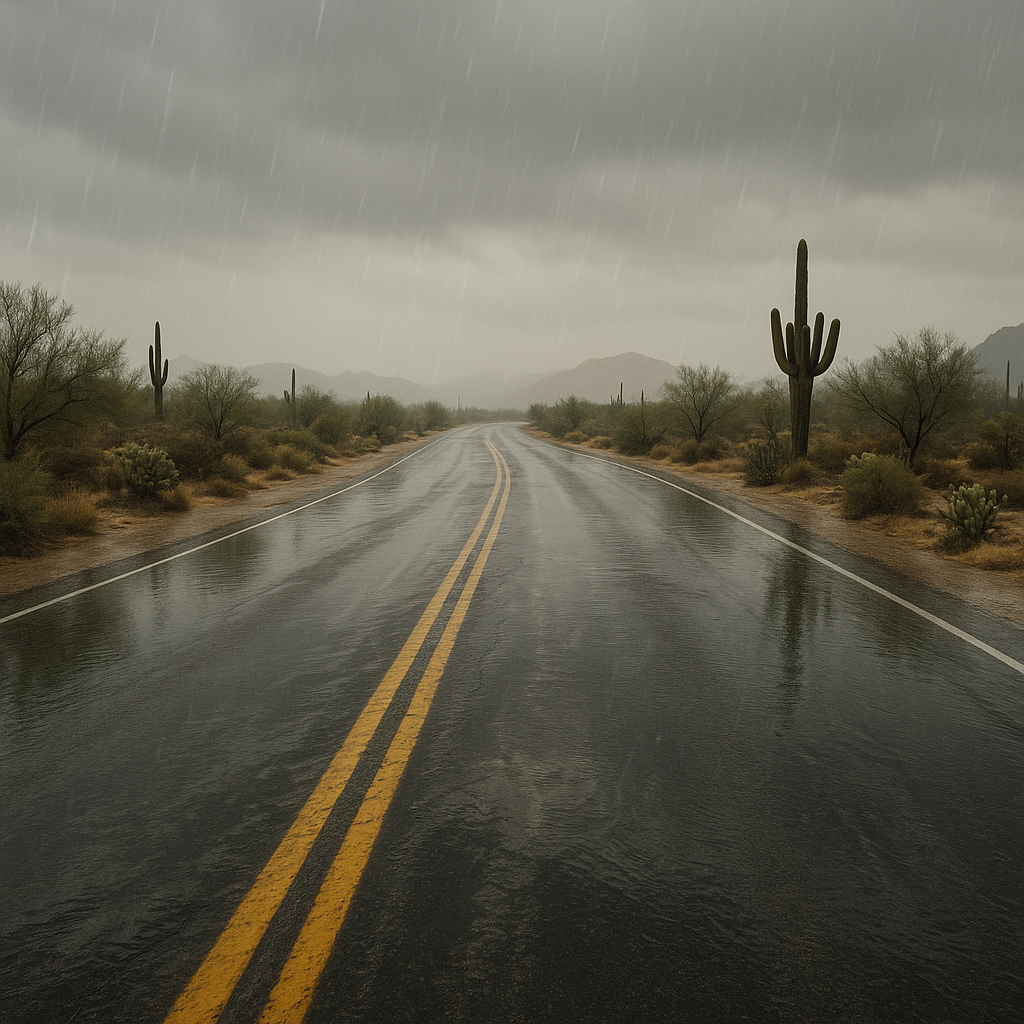
How Desert Rain Causes Slick Road Conditions in Nevada
Overview of the Nevada Weather or Road Condition Factor
Nevada’s landscape is defined by its sprawling deserts, rolling mountain ranges, and vast stretches of open highway. While the Silver State is famous for its arid climate—receiving as little as 7 inches of rain annually in places—the occasional desert rainstorm can turn typically safe roads into hazardous routes. Unlike regions that receive regular rainfall and where road surfaces are washed frequently, Nevada’s dry spells allow debris, oil, dust, and rubber particles to accumulate on asphalt. When rain finally arrives after weeks or months of drought, it doesn’t just quench the parched earth—it creates dangerously slick road conditions across highways such as I-15, I-80, and US-95.
This seemingly minor rain event can create disproportionately risky driving environments, catching both residents and visitors by surprise. In fact, “desert rain slick road conditions” are a significant cause of accidents in Nevada’s urban centers (like Las Vegas and Reno) and along rural highways slicing through desert stretches. Understanding how these conditions develop, their unique dangers for different types of vehicles, and their seasonal patterns can help drivers prepare and respond appropriately, reducing the risk of crashes when the desert sky opens up.
How This Condition Affects Trucks Differently Than Cars
When rain hits Nevada’s desert roads after an extended dry spell, the mix of contaminants that’s built up on the asphalt forms a thin, greasy film—much slipperier than rainwater alone. For heavy commercial trucks, which routinely travel through Nevada transporting goods between California, Utah, and other states, this slickness poses particular challenges.
Longer Stopping Distances: Trucks, due to their massive weight and momentum, already require more distance to stop than passenger cars. On a freshly rain-slick desert roadway, that stopping distance can double, especially if the truck is fully loaded or traveling downhill.
Hydroplaning Risk: While passenger cars are susceptible to hydroplaning, large trucks with broader tires can also hydroplane if water pools on the oily surface, momentarily losing traction and steering control. Given a truck’s size, regaining control quickly is more difficult.
Trailer Sway and Jackknife Risks: The combination of a slick surface and strong desert winds—a common occurrence in Nevada—can cause a trailer to sway or even jackknife if a driver makes a sudden maneuver, such as hard braking or sharp steering to avoid another vehicle.
Braking and Cornering: Since desert rain often falls in short, intense bursts, the initial wetness doesn’t wash away the buildup on the road but instead turns it into a slippery paste. Trucks—particularly those with empty trailers (sometimes called “bobtails”)—are at higher risk of losing grip on turns or during braking.
Because Nevada is a major corridor for cross-country trucking, these risks aren’t hypothetical—they’re encountered regularly during the state’s infrequent rainstorms. Awareness and adaptation are critical for both truck drivers and other road users sharing the highway.
Why Crashes Can Become Severe Under These Conditions
Crashes on wet desert roads in Nevada often become more severe than those that occur under other adverse weather conditions. There are several reasons for this heightened severity:
Sudden and Unanticipated Loss of Traction: Many Nevada drivers are not used to driving in the rain, especially under “first rain after dry spell” conditions. The lack of habitual, smooth driving techniques in slippery conditions—such as gentle braking, gradual steering, and slowing down—leads to a higher likelihood of losing control.
Higher Speeds: Nevada’s highways, especially in rural stretches, have relatively high speed limits, and both locals and travelers are accustomed to maintaining swift speeds due to wide, open roads and clear weather. When rain falls suddenly, vehicles may not reduce their speed in time, increasing the risk of hydroplaning or skidding, resulting in higher-impact collisions.
Visibility Issues: Desert rainstorms often begin with heavy dust followed by rain, creating murky, low-visibility conditions. In urban areas like Las Vegas or Reno, first rain also brings up road oils, causing a rainbow sheen on the pavement that can further obscure hazards.
Multi-Vehicle Collisions: The slick roads and reduced visibility can quickly lead to multi-car pileups, especially during periods of heavy traffic such as the morning or evening rush on I-15 in Las Vegas or I-80 near Reno.
Delayed Emergency Response: In Nevada’s rural areas, the vast distances between towns can mean longer emergency response times. In severe storms or flash floods, accessibility can be further reduced, compounding the consequences of crashes that occur during slick road conditions.
All of these factors combine to make desert rain much more than an inconvenience—it’s a real hazard that can escalate quickly into life-threatening situations if drivers are not vigilant and adaptive.
Common Seasonal Patterns in Nevada
Nevada’s climate is characterized by long, dry periods punctuated by seasonal rain events, most notably the summer monsoons and scattered winter storms. Understanding these patterns provides context for why “desert rain slick road conditions” occur:
Summer Monsoons (July–September): The majority of Nevada’s rain falls during the late summer monsoon season. During this period, thunderstorms can appear with little warning, releasing sudden, heavy downpours after weeks of hot, dry weather. Roads in southern Nevada (Clark County, including Las Vegas and Henderson) are especially prone to becoming slick as accumulated residues are suddenly activated by the rainfall.
Winter Storms (November–March): Although less dramatic than monsoon rains, winter brings Pacific storm systems that drop rain—and occasionally snow—in the region. In northern Nevada, around Reno and Carson City, roads that have been dry for months can suddenly become slick when the first winter rain hits, especially at lower elevations.
Shoulder Seasons: The spring and fall months generally receive less precipitation, but any isolated rainstorm after a significant dry spell is capable of producing the same slick conditions, particularly on highways and in urban areas with heavy traffic.
Local Variations: Microclimates in Nevada—such as the difference between the Las Vegas Valley and the higher elevations of the Sierra foothills—also play a role. For example, the desert floors may see an explosive increase in slickness with even a light sprinkle, while mountain areas may face black ice as rain freezes on chilled surfaces.
Conclusion
Desert rain slick road conditions are a serious, if infrequent, hazard across Nevada. While the state’s dry climate might lure drivers into a false sense of security, the reality is that a single, brief downpour can dramatically change roadway safety in an instant. The mixture of accumulated road grime, high desert speeds, and sporadic visibility puts all drivers—especially those operating heavy trucks—at increased risk during and after rain. By understanding Nevada’s weather patterns, recognizing how and why rain creates hazardous driving surfaces, and adjusting driving habits during these rare but dangerous events, we can all contribute to safer travels on the Silver State’s highways. Whether you are a local resident, a truck driver, or a visitor exploring Nevada’s unique beauty, remaining vigilant during rainstorms will help keep our roads safer for everyone.