
How Do Investigators Reconstruct Nevada Truck Accidents?
When serious truck accidents happen on Nevada’s roads, the aftermath can be overwhelming for everyone involved. Key to understanding exactly what happened—and why—is accident reconstruction. But how do investigators reconstruct Nevada truck accidents? Here’s a deep dive into the process, why it matters in the Silver State, and what drivers should know.
Why Nevada Drivers Ask This Question
Nevada’s highways see significant commercial truck traffic, especially on busy routes like I-15, I-80, and the famous “Spaghetti Bowl” interchange in Las Vegas. With so many big rigs sharing the road with commuters and tourists, multi-vehicle collisions and serious accidents are unfortunately not uncommon. After such incidents, people want answers: What caused the crash? Who was at fault? Could the wreck have been prevented?
Truck accidents often result in major property damage, injuries, and, sadly, sometimes fatalities. This makes accurate reconstruction critical for insurance claims, determining liability, and helping prevent similar tragedies in the future. That’s why so many Nevada drivers—especially those involved in a crash—wonder how professionals piece together exactly what happened.
How Investigators Reconstruct Nevada Truck Accidents
Reconstructing a truck accident is a detailed, science-based process. Investigators use a mix of traditional investigative methods, modern technology, and Nevada-specific knowledge to analyze the events leading to the crash. Here’s how it typically works:
Helpful Background Information
Scene Analysis:
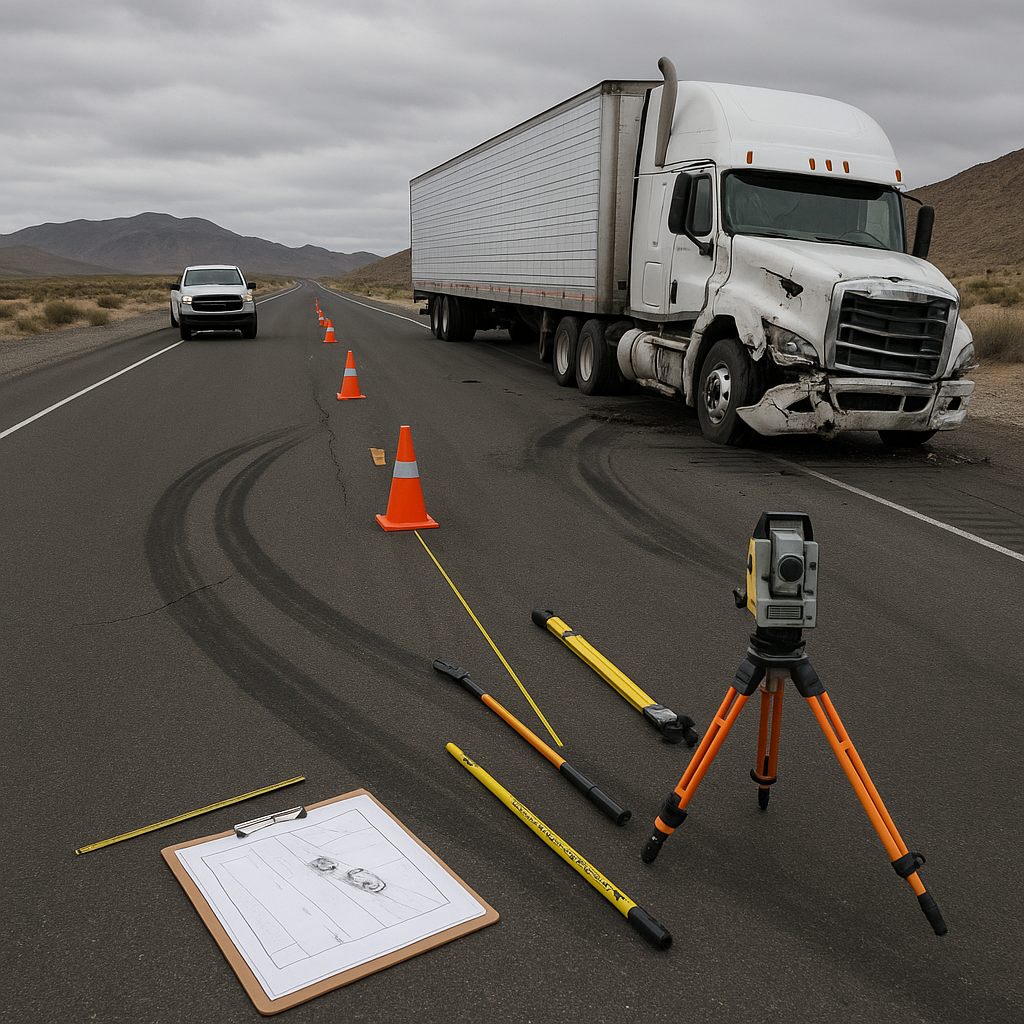
Investigators start by visiting the crash scene as soon as possible. They document everything: the positions of the vehicles, debris, skid marks, road conditions, weather, traffic signals, and signage. In Nevada, where stretches of highway can be open desert with few landmarks, every physical clue becomes even more valuable.
Event Data Recorder (EDR) Analysis:
Most commercial trucks are outfitted with EDRs—sometimes called “black boxes.” These devices capture important data like speed, brake usage, steering input, and throttle position in the moments before the crash. Investigators download this data to establish what actions the truck driver took and how the truck was performing up to the incident.
Witness Statements:
Eyewitness statements from drivers, passengers, and bystanders are collected to add context. In Nevada, police reports often include dashcam footage summaries or 911 call transcripts, which can be invaluable for establishing timelines.
Photographic & Video Evidence:
Investigators gather photos and any available video footage. Nevada’s highways and intersections, particularly in urban areas like Las Vegas or Reno, are sometimes covered by cameras that can help clarify what happened before and after the impact.
Vehicle Damage Assessment:
Crashes with big rigs often leave significant physical evidence. Analyzing the type and location of damage on both the truck and other vehicles helps determine angles of impact, speeds, and directions of travel.
Reconstruction Software:
Using all the physical data, investigators often turn to computer modeling. Advanced reconstruction software can simulate the accident, allowing experts to test different scenarios and visualize the most likely chain of events. Nevada’s wide, open highways can pose challenges for modeling, but software can account for the higher rural speed limits and unique desert conditions.
Common Misconceptions
“It’s just a matter of looking at damage.”
Some believe that simple observation of vehicle damage is enough. In reality, truck accident reconstruction in Nevada involves complex analysis that goes far beyond surface appearances.
“The police always get it right.”
While law enforcement conducts initial investigations, many Nevada truck accidents require dedicated accident reconstruction specialists who bring advanced tools and deeper expertise.
“Weather and environment don’t matter in Nevada.”
Despite the state’s reputation for dry weather, investigators always consider environmental factors. High winds, sudden rain, dust storms, and even Nevada’s intense sun can all play a role in contributing to or worsening an accident.
“Black boxes record everything.”
Truck EDRs capture valuable data, but they don’t record video or audio, and only store specific types of mechanical information. Other evidence is still essential to complete the picture.
Closing Paragraph
Truck accident reconstruction in Nevada is a rigorous process that blends on-scene investigation, technology, expert analysis, and local knowledge. By carefully piecing together physical evidence, electronic data, and witness accounts, investigators work to clarify the causes of serious truck crashes—and answer the questions that matter most to those involved. Whether on the highways outside Las Vegas, the mountain passes near Reno, or the long stretches of open desert, understanding how experts reconstruct Nevada truck accidents helps everyone appreciate the importance of thorough, science-driven investigations in making the state’s roads safer.