
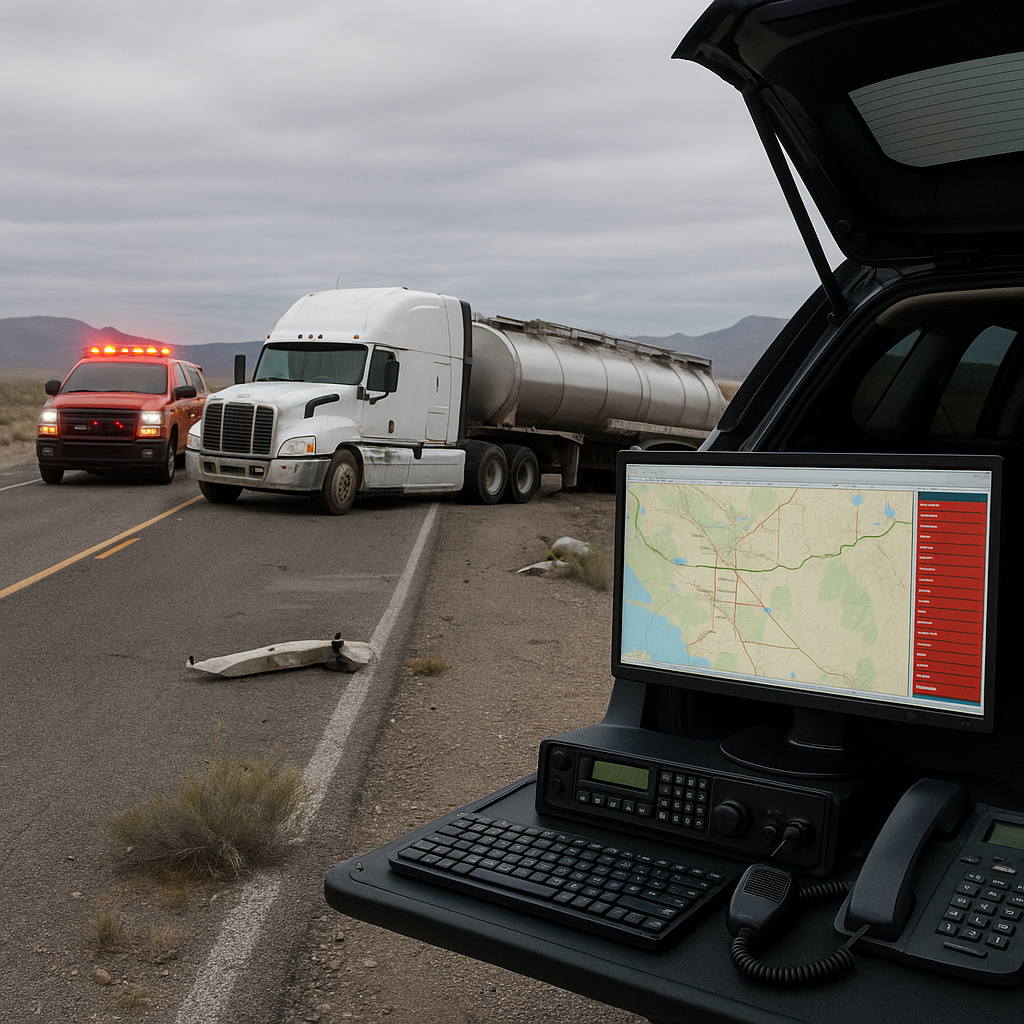
How Emergency Dispatch Works After Nevada Truck Crashes
Large commercial trucks play a pivotal role in Nevada’s economy, transporting goods across highways from Las Vegas to Reno and beyond. Yet when truck crashes occur, they can lead to complicated and urgent situations that require swift, coordinated action. Understanding how emergency dispatch works after a Nevada truck crash sheds light on the systems, agencies, and common challenges involved in initiating a rapid response—ultimately helping to promote safety for all Nevadans.
Overview of Crash Response and Reporting Systems in Nevada
When a truck crash happens on Nevada’s roads, the emergency dispatch process springs into action, designed to save lives, reduce road hazards, and support efficient investigation. Nevada’s crash response system centers around several interconnected components: 911 calls, emergency communications centers, first responder mobilization, and coordinated inter-agency efforts.
At the heart of this process are Public Safety Answering Points (PSAPs), more commonly known as 911 call centers. These facilities are located throughout the state, covering both urban regions like Clark County and more rural stretches near Elko or Carson City. When someone reports a truck crash—whether another driver, a witness, or the truck driver themselves—the call is received by trained dispatchers who assess the situation, gather critical information, and determine which agencies to mobilize.
Nevada’s statewide emergency communication network leverages advanced technology to provide accurate information on a crash’s location and severity. This system helps dispatchers pinpoint accidents on major interstate highways like I-15 or I-80, as well as rural state roads. Rapid data sharing streamlines the process, ensuring that law enforcement, emergency medical services (EMS), fire departments, and highway maintenance crews can all coordinate their response as efficiently as possible.
Common Agencies and Reporting Steps
In the event of a Nevada truck crash, several key agencies and teams work together through a predefined set of reporting and response steps:
Law Enforcement
The lead agency at the crash site is usually the Nevada Highway Patrol (NHP) for incidents on highways and state roads, or county sheriff’s offices and local police for city streets and rural routes. Officers are dispatched to the scene to secure the area, direct traffic, assess any legal violations, and begin documenting the circumstances of the crash.
Emergency Medical Services (EMS) and Fire Departments
If the crash involves injuries or if there is a risk of fire (often a concern when fuel-laden trucks are involved), EMS and local fire departments are dispatched simultaneously. EMTs and paramedics provide immediate care and transport injured parties to nearby hospitals. Firefighters may handle vehicle fires, hazardous material spills, or rescue operations if individuals are trapped.
Nevada Department of Transportation (NDOT)
For crashes involving large trucks, NDOT may be notified to assist with road closures, traffic control, debris removal, and repairs to infrastructure (e.g., damaged guardrails, signage). NDOT teams work alongside law enforcement to implement real-time traffic diversions and ensure roadways are safe for travel.
Hazmat Teams
Commercial truck crashes sometimes involve hazardous cargo. In such cases, specialized hazardous materials (hazmat) units may be called to the scene to contain spills and prevent environmental contamination. These teams assess risks, coordinate cleanup, and communicate with federal or state environmental agencies when necessary.
Mutual Aid and Inter-Agency Communication
In more complex or disruptive truck accidents, multiple agencies—including bordering states’ resources, private towing services, and regional emergency operations centers—may be involved. Clear channels of communication and pre-established mutual aid agreements help streamline the entire response process, from initial reporting to final cleanup.
Documentation Typically Involved
Thorough documentation is essential after a truck crash in Nevada—for insurance, regulatory compliance, and potential future proceedings. Although the exact paperwork can vary based on each incident’s specifics, several standard reports and records are commonly generated:
– Crash Report: Law enforcement compiles an official crash report, detailing the time, location, vehicles, parties involved, and their statements, as well as diagrams and witness information.
– Dispatch Logs: Emergency dispatch centers maintain precise records of incoming calls, information relayed, and times of each response action.
– Medical Records: EMS teams document all medical care provided at the scene and during transport, noting injuries and interventions.
– Hazmat Incident Reports: If hazardous materials are involved, specialized incident reports outline the substance in question, containment measures, and environmental impacts.
– NDOT and Traffic Reports: Any road closures, diversions, or infrastructure repairs are logged by NDOT teams.
Collectively, these documents help ensure accountability, facilitate investigations, and support efforts to prevent future incidents.
Common Reporting Misunderstandings
Despite strong systems in place, various misunderstandings and misconceptions about how emergency dispatch works after a Nevada truck crash persist. One common area of confusion is the belief that only those directly involved in a crash can report an incident. In reality, anyone who witnesses or comes upon a crash scene may contact 911, and timely reporting from bystanders often accelerates emergency response.
Another frequent misunderstanding involves the expected speed of emergency arrivals. While dispatchers work to mobilize first responders as quickly as possible, response times may be impacted by factors such as traffic congestion on urban interstates, remoteness of rural crash sites, or adverse weather conditions like dust storms and winter snow. This variability can lead to frustration, but responders prioritize based on the severity and potential risk to victims and the public.
Some people also assume that all information relayed to 911 is instantly shared in full with on-scene responders. Dispatchers must process and prioritize information, and there can sometimes be gaps or delays in communication—especially if initial reports are unclear or contradictory.
Lastly, truck drivers and witnesses can be unsure about the appropriate types or amount of information to provide. While giving clear, concise information helps, dispatchers are trained to guide callers through essential questions, focusing on location, the number and nature of injuries, and any obvious hazards such as fire, fuel leaks, or traffic blockages.
Neutral Closing Paragraph
Emergency dispatch systems play a vital, behind-the-scenes role every time a Nevada truck crash occurs. Multiple agencies and professionals coordinate to ensure that each incident is managed as effectively as possible, prioritizing community safety and efficient roadway management. Being aware of how the process works—along with its potential challenges—can promote better understanding and realistic expectations among Nevada’s drivers, witnesses, and the broader public.