
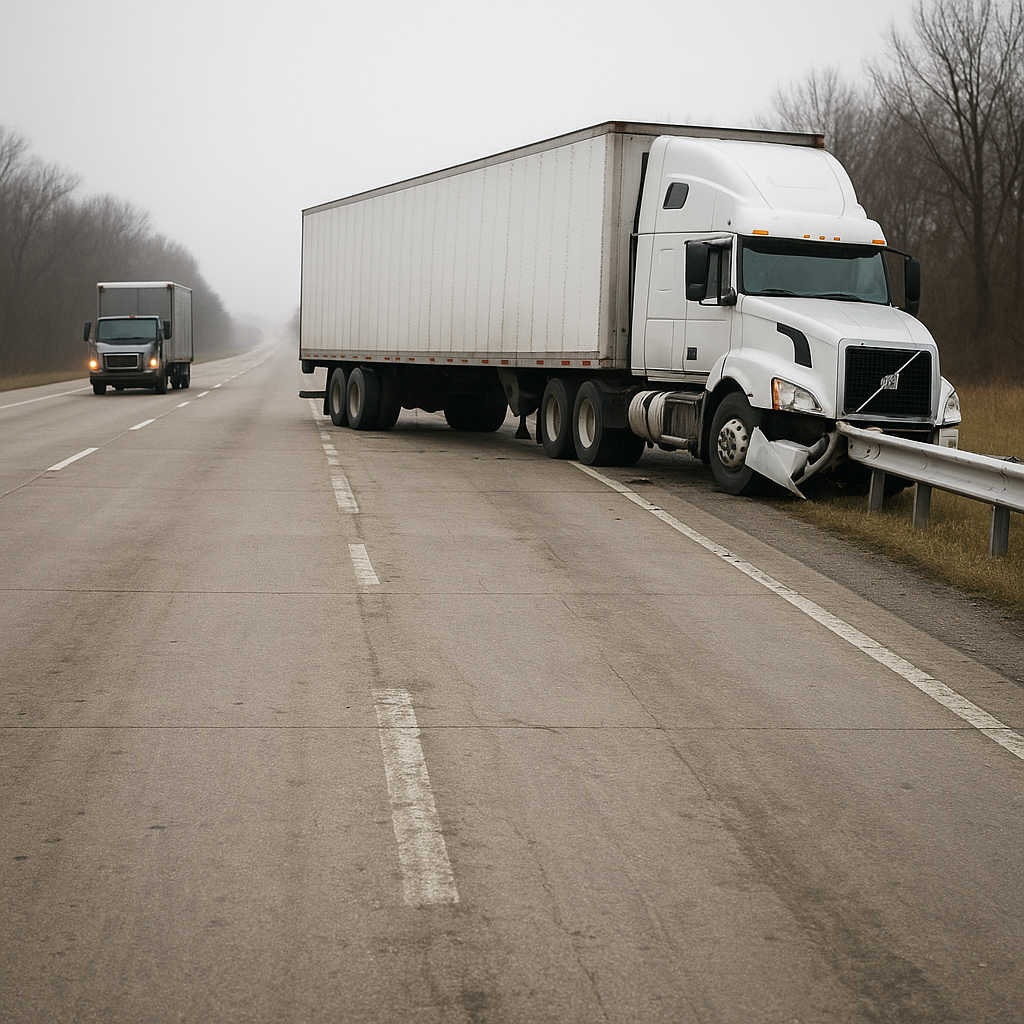
How Faded Lane Markings Increase Truck Accident Risk in Nevada
Nevada’s vast roadways, crisscrossing everything from Las Vegas’s urban sprawl to the remote stretches of the Great Basin, play a crucial role in commercial transportation. One seemingly minor yet critically important factor in roadway safety is the visibility of lane markings. Faded lane markings are more than just an aesthetic concern; in Nevada, their deterioration is a hidden danger, particularly for large trucks. Understanding how faded lane markings increase truck accident risk is essential for everyone sharing Nevada’s highways and byways.
The Nevada Environment: Weather and Road Conditions
Nevada’s unique climate and road conditions present significant challenges for road infrastructure—especially its lane markings. With scorching summers, dramatic temperature swings, and lengthy stretches of arid desert, the Silver State’s roadways endure constant exposure to ultraviolet (UV) rays, dust, sand, and thermal stress.
Las Vegas, Reno, and smaller communities throughout Nevada frequently see temperatures soar above 100°F in summer, while winter nights in higher elevations can drop well below freezing. This creates a freeze-thaw cycle where road surfaces expand and contract, slowly eroding asphalt and the paint used for lane markings. Windstorms kicking up abrasive dust and sand further scuff away reflective paint. Additionally, the Nevada Department of Transportation faces immense logistical challenges repainting markings on thousands of miles of rural highway, meaning faded lines can persist for months.
The state’s heavy use of de-icing chemicals and snowplows in the Sierra Nevada slopes near Lake Tahoe also accelerates paint degradation. As a result, many of Nevada’s most-traveled highways—whether urban interstates or rural two-lane roads—suffer from faded, cracked, and nearly invisible lane markings.
The Impact on Trucks Versus Cars
While faded lane markings pose risks for all drivers, these risks are magnified for the thousands of trucks operating in and through Nevada each day. Truck drivers face a distinct set of challenges:
Navigation and Lane Discipline
Large trucks require far more road space than passenger cars. When lane markings become faint, truck drivers may struggle to gauge their precise lane position, especially at night or during inclement weather when low visibility or glare obscure what little paint remains visible.
Blind Spots and Limited Maneuverability
Trucks have significant blind spots along their sides and immediately behind their trailers. Judging lane position without clear visual cues becomes difficult, increasing the risk of drifting into adjacent lanes—a danger to both the truck and nearby vehicles.
Increased Stopping Distance
Should a truck inadvertently drift out of its lane due to unclear markings and make abrupt movements to correct course, their increased size and weight make recoveries difficult. Maneuvers that would be trivial for a car (like minor lane adjustments) become hazardous undertakings in a semi-truck, raising the chances of rollovers or jackknifing.
Longer Hours and Fatigue
Truck drivers often work long, monotonous hours under strict schedules. Fatigue can impair attention and reaction times, making it even more challenging to compensate for unclear lane boundaries. On Nevada’s endless, isolated highways, faded lane markings compound driver fatigue by increasing the mental effort required for safe navigation.
Why Crashes Can Become Severe Under These Conditions
Every driver relies on well-marked lanes to maintain safe distances and understand traffic flow. For trucks, the stakes are higher for several reasons:
High-Speed Corridors
Major Nevada highways—like I-15, I-80, and US-95—are designed for high-speed travel by both cars and large commercial vehicles. Any uncertainty about lane positioning at highway speeds multiplies the risk of collisions. Faded markings can cause trucks to stray from their intended lanes, especially during passing or merging maneuvers.
Size and Weight Disparity
When a truck unintentionally drifts or encroaches on another lane, the consequences are often more severe than a similar incident involving passenger cars. The sheer mass of a loaded truck increases the force of impact dramatically, leading to greater injury and property damage in the event of a collision.
Reduced Reaction Time
Events unfold quickly at highway speeds. When an unexpected obstacle appears—such as another vehicle inadvertently drifting due to faded lines—the window for action shrinks. If lane boundaries are ambiguous, all drivers have less time to react appropriately, but trucks (with heavier loads and longer stopping distances) are even more at risk of being unable to avoid a crash.
Chain Reaction Potential
Truck accidents on Nevada highways frequently involve multiple vehicles—particularly in areas with heavy tourist or commuter traffic, like around Las Vegas or Reno. A single truck departing its lane can trigger pileups, jackknife incidents, or even secondary crashes involving hazardous material spills or blocked highways, further escalating the severity of the situation.
Common Seasonal Patterns in Nevada
Seasonal cycles play a significant role in the fading of Nevada’s lane markings and, consequently, the risk they pose:
Summer
Extreme heat and powerful sunlight accelerate the breakdown of reflective lane paint. The baking effect also causes layers of paint to peel away, especially in areas with high traffic density or frequent truck traffic. Dust storms, common in the central and southern parts of the state, can further erode markings.
Winter
Northern Nevada experiences snow and ice, calling for frequent plowing and chemical de-icing. This mechanical and chemical abrasion rapidly wears away the most visible paint. Melting snow also turns sandy shoulders and medians into slush, dragging debris across travel lanes and further obscuring or eroding markings.
Spring
The transitional period brings increased travel and weather variability, exposing faded lane markings as snow recedes. High spring winds throughout Nevada stir up dust that coats or abrades paint, making already faded markings even less visible.
Fall
As tourist and trucking activity peak during the mild autumn months, lane markings that suffered through summer remain unaddressed in many places, compounding risks during one of the busiest travel periods.
Working Toward Safer Nevada Roads
Nevada’s challenging environment makes maintaining clear, reflective lane markings a tough but vital task, especially for commercial trucks. Faded lane markings increase truck accident risk by turning routine navigation into a guessing game—raising the chances of lane departures, sideswipes, and more catastrophic events.
Staying aware of road conditions, particularly faded markings, is essential for all drivers. Roadway safety improvements—such as more durable lane marking materials or increased re-striping frequency—can play a vital role in protecting everyone who travels Nevada’s highways. By understanding how environmental factors and truck dynamics interact, the community can better advocate for safer roadways and reduce accident risks throughout the Silver State.