
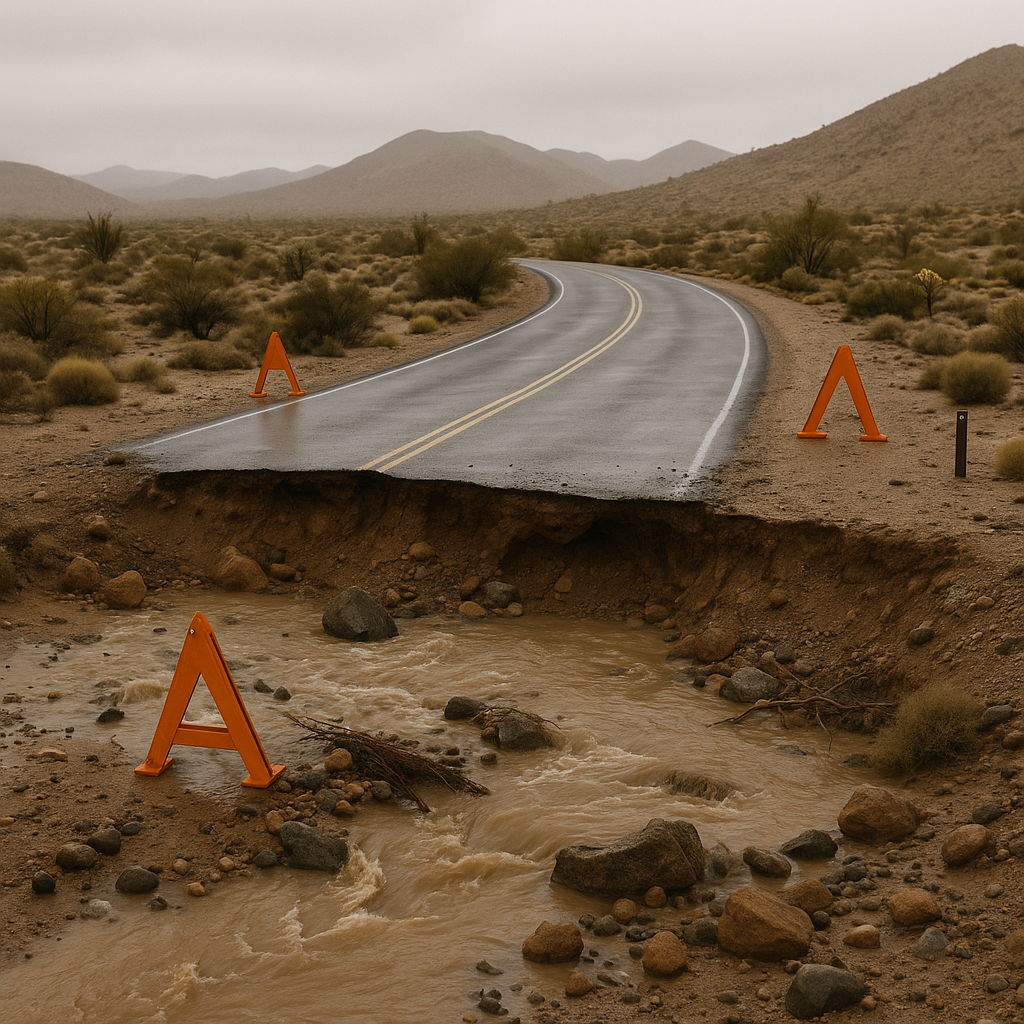
How Flash Floods Create Hidden Hazards on Desert Roads
Nevada’s dramatic desert landscape is matched only by its equally dramatic weather. While the state is famous for its vast stretches of sunbaked highway and arid beauty, it also faces a unique and unpredictable hazard: flash floods. Far from being rare, these rapid, localized floods often sweep through arid regions, including Nevada’s barren highways and city outskirts, turning normally safe roads into a patchwork of hidden perils.
Understanding how flash floods create hidden hazards on desert roads is critical for Nevada drivers—especially as these dangers can escalate the risk of severe crashes, particularly for trucks and commercial vehicles navigating the state’s transport lifelines.
Overview of Nevada’s Weather and Road Condition Factors
Nevada boasts a predominantly arid and semi-arid climate, with less than 10 inches of annual rainfall across much of the state. The terrain is famous for its mountain ranges and sprawling valleys, with highways frequently running through remote desert expanses. Despite the general dryness, Nevada can experience intense, brief downpours—most common during the late summer monsoon season and after sudden storm systems.
Because the desert landscape is hard-packed with little vegetation, rainwater can’t soak into the ground as it might elsewhere. Instead, water rapidly runs off into natural channels, arroyos, and, all too often, across highways and dirt roads. These high-speed surges of water, called flash floods, can develop in minutes—even when rain is falling far from the actual road.
This unique convergence of climate and topography creates the perfect recipe for hidden hazards. Washouts, debris, eroded roadbeds, and mud-caked asphalt can appear in places that were perfectly safe moments before. Low-lying dips in highways, underpasses, and bridges are at particular risk, but even rural dirt tracks and city boulevards can become treacherous with little warning.
How This Condition Affects Trucks Differently Than Cars
While flash floods are dangerous for any vehicle, they present especially daunting challenges for truck drivers and operators of commercial vehicles traversing Nevada’s critical freight corridors.
Weight, Size, and Instability
Trucks, with their heavier weight and larger size, respond differently to flash-flooded roads. On the one hand, their heft might offer a deceptive sense of security—surely, a semi or a heavy-duty pickup won’t be moved by a few inches of water? In reality, just one foot of rapidly moving water can dislodge most vehicles, including large trucks. The water’s force can erode pavement underneath wheels or push against wide side surfaces, destabilizing even the burliest rigs and trailers.
Cargo Hazards
A loaded commercial truck can act as a battering ram if it loses control in a flood zone. Shifting or toppling cargo presents secondary hazards, turning basic loss-of-control events into potential multi-vehicle disasters, hazardous material spills, or long traffic stoppages on rural highways with limited detour options.
Stopping Distance and Traction
Truck tires are designed for long-haul durability and load-bearing capacity, not for sudden stops on water-slick asphalt or muddy surfaces. In unexpected washouts, a truck’s increased stopping distance and reduced maneuverability amplify the risks, as the driver might be unable to react in time to sudden road collapse, debris, or hidden potholes washed open by floodwaters.
Why Crashes Can Become Severe Under These Conditions
Flash floods don’t just make Nevada’s roads slippery—they rapidly transform them into unpredictable, dynamic hazards.
Unseen Road Damage
After floodwaters recede, the road can seem deceptively safe. In reality, hidden undermining is common—softened roadbeds, crumbling shoulders, or deep holes under thin layers of unbroken pavement. Driving over such damaged spots can result in sudden tire blowouts, loss of control, or outright vehicle rollovers, especially at highway speeds.
Limited Visibility and Deceptive Waters
Dust storms or nightfall can make floodwaters almost invisible, especially on unlit desert roads. Puddles may mask deep washouts or newly formed sinkholes. Drivers, mistaking water for a shallow puddle, may attempt to cross only to become stranded, swept away, or face catastrophic damage to their vehicle’s engine and electrical systems.
Chain-Reaction Collisions
On Nevada’s busy cargo corridors, where trucks and commuters mix at freeway speeds, a single flood-related mishap often triggers multi-vehicle pileups. Blocking lanes, jackknifed rigs, or scattered debris can cause subsequent vehicles to swerve or stop abruptly—amplifying the severity and scope of crashes.
Limited First-Responder Access
In sparsely populated stretches of Nevada, it can take first responders crucial extra time to reach the scene of a flood-related accident. Damaged or totally washed-out road sections may hinder rescue vehicles, worsening outcomes if injuries or hazardous spills develop.
Common Seasonal Patterns in Nevada
Nevada’s flash flood and road hazard risks are closely tied to its weather cycles and seasonal changes.
Monsoonal Thunderstorm Season (July–September)
Most flash floods in Nevada occur during the summer “monsoon” season. Moist air from the south collides with the dry Nevada desert, sparking violent, short-lived thunderstorms capable of dropping multiple inches of rain in less than an hour. Regions around Las Vegas, Reno, and central Nevada are commonly affected. Thunderstorms can cause otherwise dry creeks to become raging torrents that overflow highways, city streets, or remote dirt roads, often with very little warning.
Winter and Spring Rains
While less intense than monsoonal deluges, winter and early spring can see prolonged rainfall, particularly in northern Nevada. Saturated soils or rapid snowmelt in the mountains occasionally trigger slower-moving but equally hazardous flood conditions that can damage roads, bridges, and culverts over time. These persistent events can create lasting damage, resulting in weakened road infrastructure that might not be apparent until a crisis arises.
Urban and Rural Divide
Flash-flood risks aren’t limited to remote highways or off-road trails. Urban areas like Las Vegas are also vulnerable—especially neighborhoods built in former washes. Runoff from intense rain can instantly overwhelm city drainage and turn intersections into rivers, potentially trapping vehicles and flooding underpasses.
Post-Fire Flooding
After wildfires have scorched Nevada’s hillsides, the absence of vegetation leaves soil loosely packed and prone to rapid erosion. The next rainstorm can trigger mudslides or deposit large debris onto roads, compounding typical flash-flood hazards and rendering even more stretches dangerous—sometimes long after the rain itself has passed.
Staying Aware and Prepared: Nevada’s Ongoing Challenge
Every year, Nevadans and visitors alike are caught off-guard by how quickly and dramatically desert roads can change during a flash flood. As a driver in Nevada, staying aware of weather forecasts, observing posted warnings, and respecting barriers or closure signs can go a long way in preventing dangerous encounters with hidden road hazards.
Above all, it’s important to remember that desert roads can harbor risks long after the water itself is gone. Whether piloting a car, semi, or pickup, cautious driving, alertness to weather patterns, and patience in the face of unexpected obstacles are the best defenses against the desert’s most unpredictable threats. Staying informed ensures that Nevada’s roads remain as safe as possible—even when nature sends a sudden surge through the dry, open landscape.