
How Fog Lights and Headlights Affect Crash Prevention in Nevada
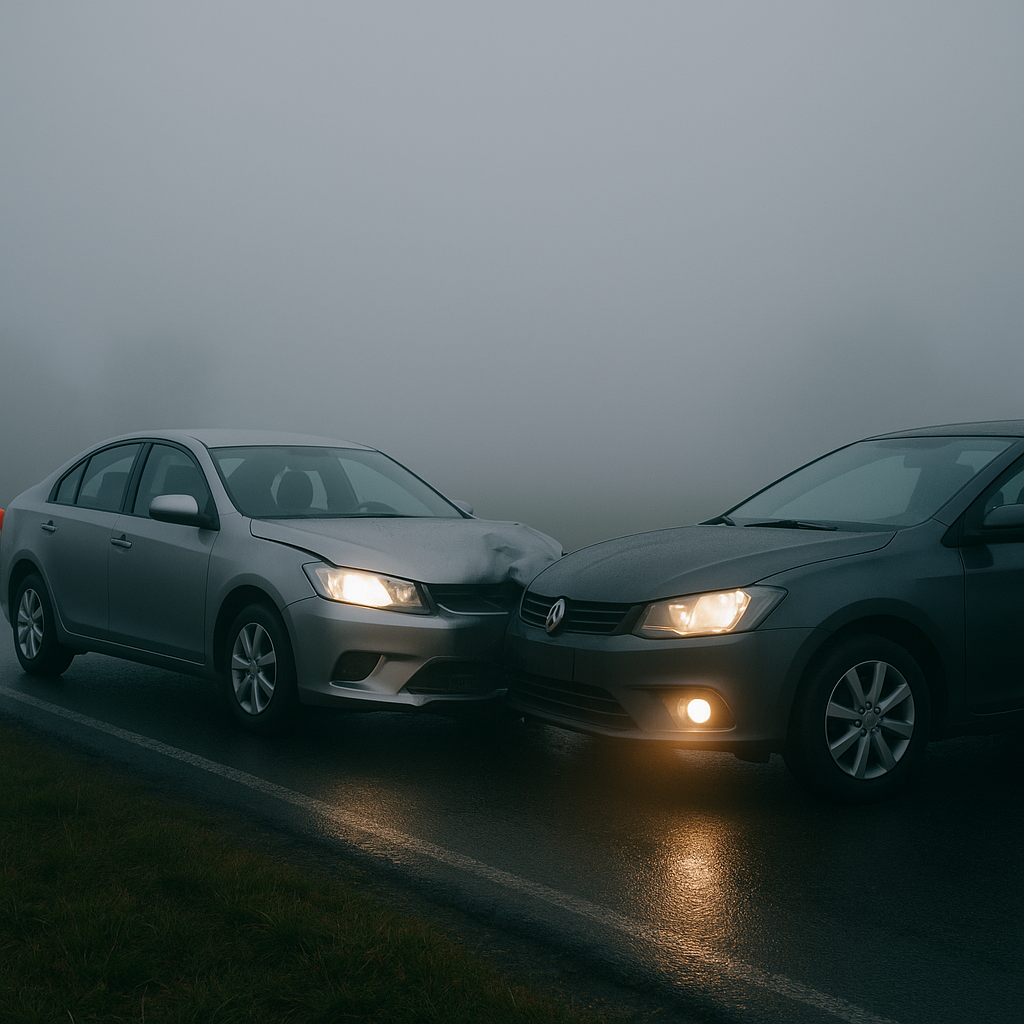
Nevada’s highways stretch across wide open deserts, mountain passes, and the fast-growing cities of Las Vegas and Reno. While the Silver State is famous for its dry air and sun-drenched landscapes, drivers routinely face unique visibility challenges—especially when dusk, dawn, dust storms, and rare but notorious fog make an appearance. Understanding how fog lights and headlights factor into crash prevention in Nevada’s particular climate isn’t just technical: it’s vital for every road user.
Overview of Nevada Weather and Road Conditions
While the word “Nevada” is Spanish for “snow-capped,” most of the state is defined by arid deserts, high elevations, and extreme temperature shifts. Nevada’s climate varies significantly: winter brings snow and fog to mountainous regions like Lake Tahoe, while elsewhere, sudden dust storms known as “haboobs” can whip across the highway with little warning. Monsoonal downpours and flash floods are also a concern in the warmer months.
Even on seemingly clear days, temperature inversions and localized microclimates can cause banks of fog to accumulate in valleys or along rivers, such as the Truckee or Humboldt. Limited rainfall means that when fog does occur, it can catch drivers off guard, leading to disorientation and slow reaction times on the roads.
Dust, wildlife crossing, and long distances between towns all add further complexity. In these conditions, visibility isn’t merely a matter of convenience—it’s a critical safety concern. That’s why the proper use of fog lights and headlights has a direct impact on crash prevention in Nevada.
How This Condition Affects Trucks Differently Than Cars
Trucks—whether freight-hauling tractor-trailers on I-80 or work pickup trucks on rural roads—present unique challenges in poor visibility. Their size, speed, and mass make them both harder to stop and harder to see.
Visibility Challenges
Because commercial trucks sit higher off the ground and have a longer stopping distance, they need to detect hazards further ahead than smaller vehicles. Headlights alone may not be sufficient in thick fog, as high beams can reflect back and actually decrease visibility. Fog lights, mounted lower, can illuminate the road immediately in front of the truck, helping drivers spot obstacles earlier.
For smaller vehicles, fog lights can also be an asset during dense mist or dust, but for trucks, the benefits are compounded by the sheer size of their blind spots and the slower reaction time needed to maneuver or halt such a heavy vehicle.
Reaction and Perception
In foggy conditions, the risk of multi-vehicle pileups increases. Trucks, due to their size and longer braking distances, are slower to react to sudden traffic changes. If a passenger car without fog lights or with ineffective headlights is traveling ahead of a truck, the truck driver may not see it in time if the car suddenly brakes or swerves. The outcome can be catastrophic, especially at highway speeds.
Why Crashes Can Become Severe Under These Conditions
Visibility is only one part of the equation; the dynamics of a crash worsen dramatically when drivers can’t see.
Reduced Reaction Time
When dense fog or blowing dust cuts visibility to a few dozen feet, drivers have almost no time to react to obstacles. The limited warning amplifies the chances of high-impact collisions, as vehicles may not slow down enough before encountering a stopped car, an obstacle, or even an animal on rural highways.
Pile-Up Risk
On Nevada’s high-speed interstates, sudden patches of fog often catch out even the most cautious drivers. When drivers follow taillights too closely (a common reaction when visibility drops), one mishap can result in chain-reaction pileups involving both cars and trucks. The larger and heavier the vehicle, the more severe the crash is likely to be.
Misjudged Distances
Headlights and fog lights play a crucial role in making vehicles visible to each other. Standard headlights may scatter in thick fog, causing glare or giving drivers a false sense of visibility. Fog lights, properly aimed, project a wide, low beam with a sharper cutoff, reducing scatter and improving the ability to see lane markings and road edges. This clear delineation can mean the difference between staying on the pavement or drifting into another lane—or off the road entirely.
Severity of Injuries
With higher speeds customary on Nevada highways, the energy involved in collisions increases. In low-visibility scenarios, the inability to spot hazards until the last second means accidents tend to be higher impact. Large trucks, with their increased mass, compound this risk, sometimes leading to multi-vehicle traumatic events involving severe injuries or worse.
Common Seasonal Patterns in Nevada
Understanding when visibility challenges are most common can help drivers anticipate when fog lights and headlights become essential tools for crash prevention.
Winter: Fog and Snow in the North
From November through March, communities around Lake Tahoe, Reno, and Elko are vulnerable to valley fog and winter storms. Radiational cooling at night can cause fog, especially in basins and near rivers, while snow squalls further decrease visibility. Nighttime and early morning drivers are the most at risk.
Spring: Temperature Swings and Morning Mist
Rapid temperature changes in spring—especially in the state’s high desert areas—can give rise to patchy morning fog. Agricultural regions near Fallon or Yerington can experience this microclimate effect suddenly. Most fog dissipates by late morning, but can still catch commuting drivers off guard.
Summer: Dust Storms and Monsoon Rains
During the summer, especially in southern Nevada, thunderstorms can generate powerful dust storms that sweep across highways. Las Vegas and Henderson are periodically hit by high winds and blowing dust in the afternoons, sometimes reducing visibility to near zero. Standard headlights frequently prove inadequate—fog lights, complemented by low-beam headlights, help drivers maintain orientation.
Fall: Dry Air and Inversion Layers
In autumn, with drier air and cooling temperatures, temperature inversions can trap moisture near the ground, producing ground fog—particularly in valleys and low-lying areas. This is common around dawn, coinciding with morning commutes.
Closing: The Importance of Visibility Tools for Nevada Drivers
Nevada’s distinctive combination of desert expanses, elevation shifts, and variable weather demands more than just attentive driving. Using fog lights and headlights correctly is a fundamental measure for crash prevention on the state’s roads. Proper lighting improves your own vision, helps others see you, and minimizes the risks of dangerous chain-reaction crashes—whether you drive a compact car on city streets or a semi-truck across the interstate. By staying alert to Nevada’s changing weather conditions and responding with effective use of your vehicle’s lighting, you can help reduce the likelihood of severe collisions and keep the Silver State’s highways safer for everyone.