
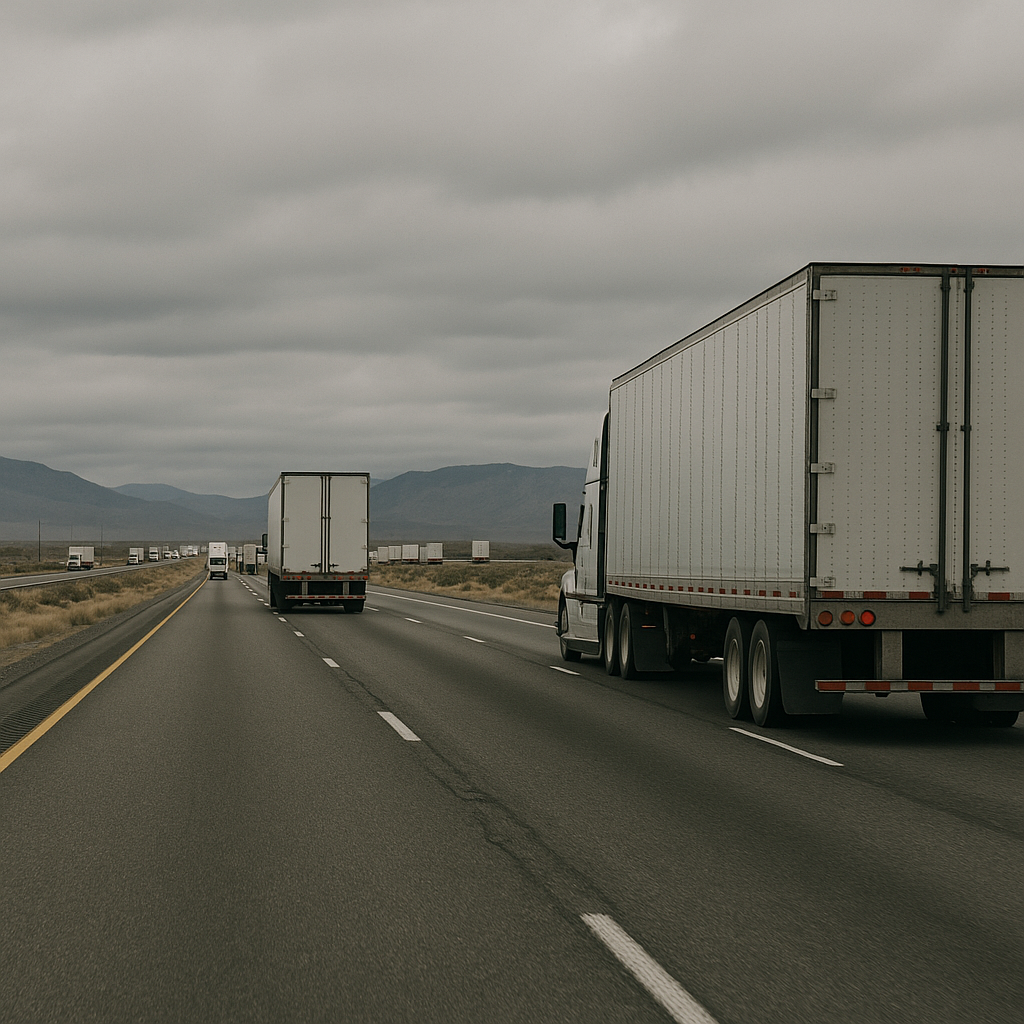
How Freight Surges Affect Nevada Highways
Nevada, with its vast landscapes, robust logistics hubs, and central positioning in the American Southwest, serves as a critical artery for nationwide trucking. The Silver State’s highways, especially the 400-mile stretch of Interstate 80 (I-80) and the bustling arteries like I-15, bear witness to dramatic increases in freight traffic during periods of economic uplift, supply chain shifts, or holiday surges. But how do these surges affect the daily realities of Nevada’s roads, communities, and highway safety? This article explores how freight surges affect Nevada highways, focusing on corridor trends, truck activity, congestion risks, and time-based patterns.
Overview of the Freight Corridor or Trucking Activity
Nevada lies at a crossroads of western trade. With major corridors like I-80 connecting California with Utah and points east, and I-15 carrying traffic from Southern California toward the Rockies, the state is uniquely positioned as a trucking linchpin. More than 75% of Nevada’s communities rely primarily on trucks for the movement of goods, giving the state an outsized role in regional logistics.
The state’s economy leans heavily on gaming, tourism, warehousing, and manufacturing. Distribution centers cluster in the Reno-Sparks area and the growing logistics hub of North Las Vegas. These hubs generate intense trucking activity, particularly with the rise of e-commerce and warehousing for “just-in-time” inventory strategies. Large companies move freight—everything from consumables and electronics to gaming equipment and building materials—into, out of, and through Nevada.
During freight surges, often sparked by national holidays, back-to-school seasons, or emergencies like supply chain disruptions, truck volumes can swell as shippers scramble to keep goods flowing. These surges don’t just increase truck counts; they change traffic rhythms, alter on-ramp and off-ramp dynamics, and challenge the capacity of highways originally designed for lighter, more predictable traffic.
Common Truck Types and Freight Activity in the Area
Nevada highways see a diverse parade of commercial vehicles—each with distinct roles and impacts. Understanding which trucks dominate the roadways is key to appreciating how freight surges affect Nevada highways:
– 53-foot Dry Van Trailers: The backbone of long-haul freight, used for everything from packaged food to electronics.
– Refrigerated Trucks (Reefers): Critical for perishable goods and pharmaceuticals, these trucks often increase in volume around holidays and harvests.
– Flatbeds: Important in construction-heavy regions like Las Vegas, they carry oversized materials and equipment.
– Tanker Trucks: Hauling fuels and bulk liquids, these are crucial for industrial and agricultural needs.
– Double and Triple Trailers: Permitted under Nevada law, these combinations are typical on I-80 and designed for maximum cargo efficiency.
During a surge, shippers may put more trucks on the road, including longer combination vehicles. This adds not only to the volume but also to the complexity of traffic maneuvers, which require additional stopping distance and present larger blind spots for all drivers.
On key corridors like I-80 and I-15, it is not uncommon to see convoys of company fleets passing through, restocking regional warehouses or delivering to major distribution points. The ramps around Reno-Sparks and North Las Vegas become hotspots for high-frequency merging, especially as local delivery trucks enter the busy interstate flow.
How Congestion or Merging Creates Risk
The most significant safety concern during freight surges is congestion and the increased likelihood of dangerous merging situations. Trucks are larger, slower to accelerate, and require more space to maneuver than passenger vehicles. On Nevada highways, this means that congestion at critical bottlenecks or interchanges can create hazardous conditions.
When more freight moves through the corridor, several risk factors intensify:
– Longer Vehicle Platoons: Multiple trucks traveling together reduce gaps for merging or passing, making it difficult for passenger vehicles to enter or exit highways safely.
– Frequent Lane Changes: Drivers seeking to overtake slow-moving trucks may weave, increasing the risk of side-swipe collisions or rear-end crashes.
– Ramped Up Entrance/Exit Use: Local trucks merging into high-speed interstate traffic may encounter smaller gaps, particularly near distribution centers and rest areas.
– Visibility Issues: Trucks in close formation reduce sightlines for other motorists, challenging their ability to anticipate sudden slowdowns or stopped traffic ahead.
These risks are particularly acute around urban interchanges, such as the Spaghetti Bowl in Las Vegas or the Reno spaghetti bowl interchange, where multiple highways converge and traffic density peaks.
Truck drivers often manage this risk with professional skill, but during surges—when less experienced or out-of-town drivers may be pressed into service—the margin for error shrinks. The Nevada Department of Transportation (NDOT) reports that truck-involved crashes tend to spike during periods of heavy freight traffic, especially in transition zones from rural to urban highways.
Time-of-Day and Seasonal Traffic Trends
Timing plays a significant factor in how freight surges affect Nevada highways. In general, commercial traffic follows predictable patterns, but surges can skew these established trends and stretch highway limits in new directions.
Time-of-Day Patterns:
– Morning and Afternoon Peaks: Many long-haul drivers adhere to schedules designed to avoid congested urban centers at rush hour, but during freight surges, these windows compress as more trucks share the road. Delivery deadlines tied to early morning or late afternoon business hours stack truck traffic on top of commuter volumes, especially near major cities.
– Night Runs: Some companies dispatch trucks after dark to skirt daytime congestion. Nighttime trucking, while reducing some surface tension, also introduces risks from low visibility and driver fatigue—both of which are amplified with more trucks on the road during a surge.
Seasonal Peaks:
– Holiday Rushes: The ramp-up before Thanksgiving, Black Friday, Christmas, and New Year’s Day sees exponential increases in freight traffic along I-15 (serving Las Vegas and commerce from California) and I-80 (the main east-west freight route).
– Construction Season: Spring and summer bring higher volumes of heavy equipment shipments—visible in the uptick of flatbeds and oversized vehicles.
– Agricultural Harvests: Northern Nevada’s produce movement, especially for crops like alfalfa or onions, adds tanker and reefer traffic during late summer and early fall.
– Event-Driven Surges: Major conventions or sporting events in Las Vegas draw sudden truck volumes for setups and breakdowns.
NDOT and transportation agencies prepare for these periods by enhancing road maintenance schedules and informing the public about expected delays. Still, the human element—how drivers respond to unexpected slowdowns or prolonged travel times—remains a challenge.
Neutral Closing Paragraph
Freight surges are an unavoidable part of Nevada’s vital role in regional and national commerce. While these surges can challenge highway capacity, safety, and congestion patterns, they also underscore the importance of efficient infrastructure and driver awareness on and off the road. By understanding the factors that shape Nevada’s freight corridors—from truck types to seasonal demand—stakeholders can work together to support safe and resilient transportation for goods and people alike. As Nevada continues to grow as a logistics hub, managing the impacts of freight surges on its highways will remain an essential part of keeping the lifeblood of the state—its highways—moving safely and smoothly.