
How Highway Closures Are Managed After Truck Crashes in Nevada
Truck crashes on Nevada highways pose significant challenges for both safety and transportation logistics. With its strategic location and major interstates like I-15 and I-80, Nevada is a crucial link in the country’s freight network. When crashes occur, particularly those involving large trucks, swift and coordinated responses are essential to ensure public safety and minimize travel disruptions. This article explores how highway closures are managed after truck crashes in Nevada, highlighting the agencies involved, reporting mechanisms, common documentation, and frequent misconceptions.
Overview of Crash Response and Reporting Systems in Nevada
Nevada’s highways are monitored and maintained through an intricate system involving numerous local, state, and sometimes federal agencies. When a truck crash happens, these agencies work collaboratively to assess the situation, protect those at the scene, and determine if and how the highway should be closed.
Prompt management begins with the detection of a crash—either through calls from motorists, automated detection systems on major highways, or direct observation by law enforcement patrols. The Nevada Department of Transportation (NDOT) and law enforcement agencies then leverage a variety of tools and communication networks to coordinate an efficient response.
Traffic management centers, such as the NDOT Freeway Service Patrol and regional operations centers, serve as central hubs. They communicate with incident responders, emergency medical personnel, and public affairs teams to provide timely traffic updates and closure information via highway message boards, local news outlets, and digital platforms like NDOT’s website and 511 Nevada Travel Information hotline.
Common Agencies and Reporting Steps (Educational)
The complexity of managing a truck crash on a major Nevada highway necessitates the collaboration of several key agencies, each with defined roles:
Nevada Highway Patrol (NHP): NHP is typically the first state agency to arrive at the scene, especially on interstates and state highways outside city jurisdictions. Troopers secure the crash area, ensure safety, and initiate preliminary investigations.
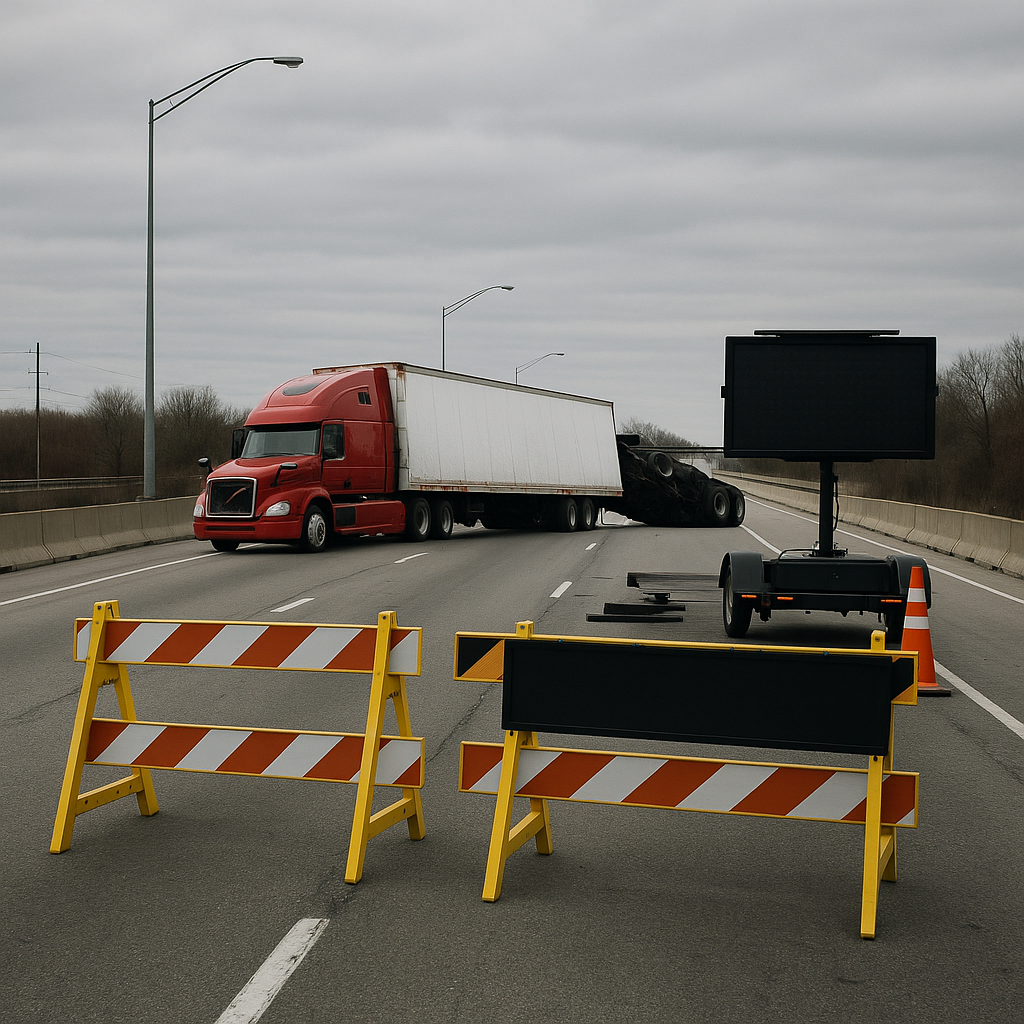
Nevada Department of Transportation (NDOT): NDOT is central to managing traffic flow, setting up detours, deploying traffic control devices (like cones and barriers), and updating digital message boards with real-time closure information.
Local Law Enforcement and Fire Departments: Municipal police or fire departments may take the lead within city limits or when a crash affects both state and local roads. Fire and rescue teams provide medical attention, manage fuel spills, and address hazardous materials if necessary.
Commercial Vehicle Enforcement (CVE) and Federal Agencies: If cargo spills or hazardous materials are involved, CVE officers and sometimes specialized federal teams (such as the National Transportation Safety Board) may participate in the investigation and removal process.
Traffic Management Centers: These centers coordinate real-time response, monitor road cameras, and relay information between agencies to ensure smooth communication, minimizing closure time.
The process generally begins with law enforcement assessing the safety risk posed by the wreckage, debris, or spilled cargo. If the crash blocks a lane, a full or partial closure may be put in place. NDOT then enacts traffic management plans, determines detour routes, and provides public notifications.
Documentation Typically Involved
Paperwork and digital records are a fundamental aspect of managing highway closures after truck crashes. Documentation assists in investigations, supports insurance claims, and informs future infrastructure planning.
Crash Reports: Law enforcement prepares detailed crash reports, which can include diagrams of the incident, statements from involved parties and witnesses, and initial assessments of cause and fault. These are official documents recorded with the agency and often shared with NDOT and other relevant parties.
Traffic and Closure Logs: NDOT and law enforcement keep logs of all actions taken during an incident—such as the decision timing for closures, placement of signage, and reopening of lanes. This log forms part of the incident’s historical record.
Environmental and Hazmat Reports: In the event of a hazardous spill or environmental risk, specialized documentation is required. Fire departments, hazardous material response teams, and environmental agencies may all contribute reports assessing impact and describing remediation steps.
Tow and Recovery Documents: If commercial trucks require towing, recovery teams typically issue reports summarizing the condition of vehicles and cargo, recovery methods used, and timeframes involved.
Public Communications: Press releases, social media updates, and notifications made via NDOT’s 511 system are also documented, ensuring consistent public outreach and accurate records of what information was distributed and when.
Each of these records plays a role in both immediate response coordination and after-action reviews, helping agencies refine protocols and improve future crash management.
Common Reporting Misunderstandings
Misconceptions often surround how highway closures are managed after truck crashes, particularly regarding who is responsible, how closures are decided, and what information is publicly available.
Responsibility Confusion: It’s common for the public to attribute closures solely to one agency (like the police or NDOT). In reality, crash management is highly collaborative, with multiple agencies coordinating based on jurisdiction, safety risk, and resource availability.
Assumption of Immediate Reopening: Travelers sometimes believe highways reopen as soon as vehicles are cleared. In fact, closures can persist due to lingering hazards (like fuel spills), the need for infrastructure assessment, or continued investigation by law enforcement. Ensuring roadway safety often takes longer than anticipated by the public.
Misunderstanding the Reporting Process: There’s often confusion about how crash information is reported and disseminated. While digital platforms and real-time feeds provide updates, official documentation—like crash and environmental reports—takes time to complete, review, and share.
Overlooking Environmental Factors: Many assume only vehicle damage or physical obstructions prompt closures. However, weather, hazardous material concerns, and road surface damage all play significant roles in closure decisions and durations.
Recognizing these common misunderstandings helps the public set realistic expectations and emphasizes the importance of coordinated, thorough response efforts.
Neutral Closing Paragraph
Highway closures managed after truck crashes in Nevada represent a concerted effort by numerous agencies dedicated to public safety, efficient transportation, and careful documentation. The process is shaped by thorough reporting systems, multi-agency collaboration, and detailed review of each incident’s unique circumstances. While closures can be an inconvenience to travelers and freight companies alike, these necessary actions ensure both immediate safety and long-term confidence in Nevada’s vital highway infrastructure. For those who encounter closures, understanding the complexities behind the process can help foster patience and appreciation for the work being conducted behind the scenes.