
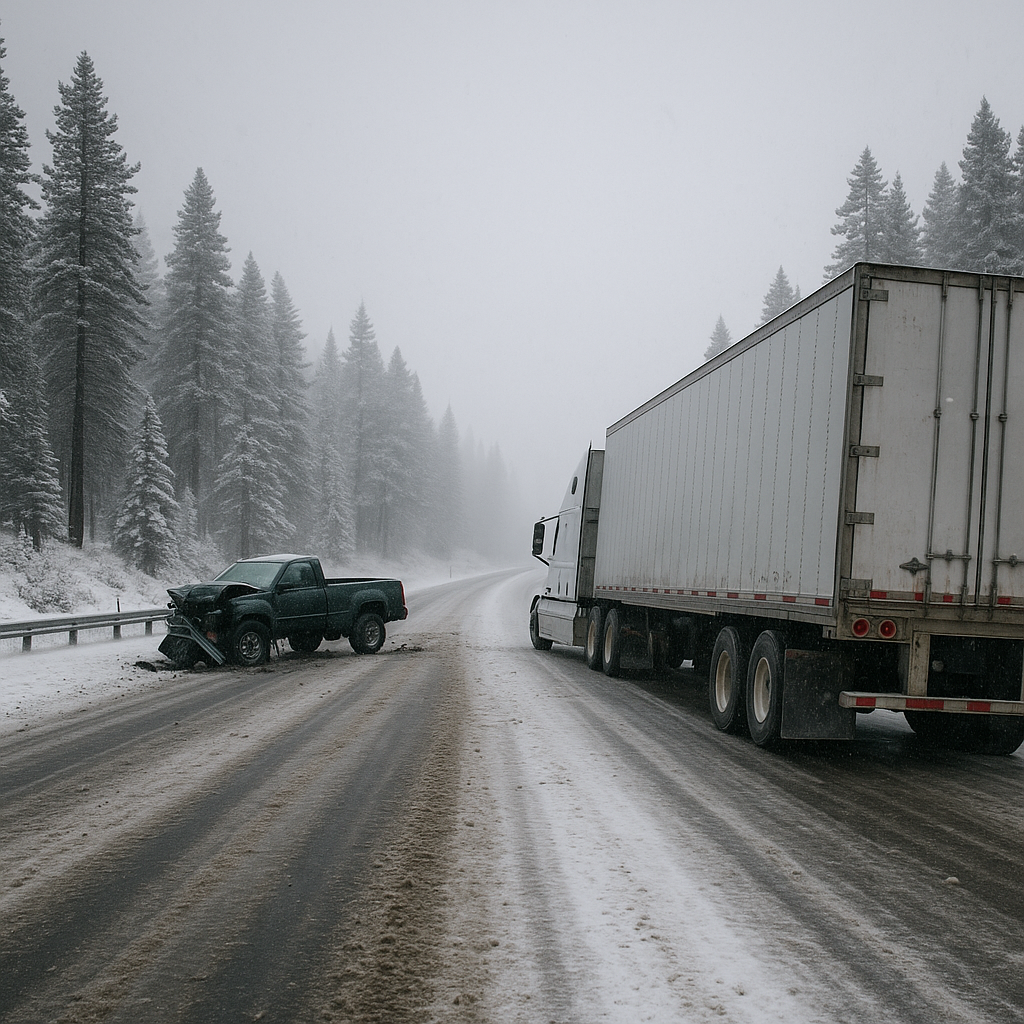
How Lake Tahoe Weather Affects Truck Accident Risk
Overview of the Nevada Weather or Road Condition Factor
Lake Tahoe, straddling the Nevada-California border, sits in a unique microclimate shaped by its mountainous topography and high elevation. While the lake is internationally celebrated for its natural beauty, the region’s weather—particularly on the Nevada side—presents significant challenges for drivers, especially those operating commercial trucks. Sudden snowstorms, icy roads, heavy winds, and fluctuating temperatures around Lake Tahoe create a dynamic and sometimes hazardous roadway environment. Understanding how Lake Tahoe weather increases the truck accident risk is essential for everyone using highways like US-50, SR-28, and the I-580 corridor around Carson City.
At roughly 6,200 feet above sea level, the lake is encircled by steep grades, narrow passes, and curving routes. These are regularly impacted by winter snow, springtime thaw cycles, and summer thunderstorms. Nevada drivers contend with diverse conditions often within a single journey, making this area one of the most weather-volatile regions in the entire state.
How This Condition Affects Trucks Differently Than Cars
Size, Weight, and Braking Considerations
Trucks, especially large commercial vehicles and semi-trailers, react very differently to adverse weather conditions than typical passenger cars. The sheer size and weight of trucks demand longer stopping distances under the best circumstances. When snow or ice reduces traction on Lake Tahoe’s winding mountain roads, those distances dramatically increase. Even a light dusting of snow or thin layer of ice can mean the difference between controlled braking and a multi-vehicle pileup for a fully loaded rig.
Maneuverability Challenges
Most car drivers can quickly adjust steering or lane position when encountering an obstacle or slippery patch. Trucks, however, have far less maneuverability, especially on steep grades or during tight turns common in the Lake Tahoe region. Trucks are also more susceptible to “jackknifing”—where the trailer swings out and forms an acute angle to the cab—especially when braking or accelerating on slick surfaces.
Wind Sensitivity
High winds, which are frequent on exposed passes above Lake Tahoe, may push a passenger car but are far more dangerous for a high-profile truck. The boxy shape of many commercial vehicles acts like a sail, catching gusts and creating a risk of tipping or veering out of lane. This loss of control is acutely hazardous on narrow Nevada mountain roads with few guardrails and sharp drop-offs.
Visibility Issues
Snowfall, fog, and blowing snow are common in Tahoe’s winter and shoulder seasons. Reduced visibility makes it harder for truck drivers to judge distances, anticipate curves, or spot stopped traffic. At night or in low-visibility conditions, the stopping challenge is compounded by the slower reaction times inherent to moving a heavy vehicle.
Why Crashes Can Become Severe Under These Conditions
High-Speed Impacts
Physics plays a central role here. When a multi-ton truck loses traction and control on Lake Tahoe’s slick or windy passes, its inertia carries immense force. Even a slow-speed collision with a barrier or another vehicle can have devastating consequences due to the truck’s mass.
Hazardous Rescue Conditions
The severity of crashes is also influenced by the difficult rescue environment. Incidents on snowy mountain roads in Nevada can leave vehicles stranded in inaccessible locations. Emergency responders may take longer to reach the scene, and cold exposure puts accident victims at further risk, especially at night or during active snowstorms.
Cargo Hazards
Lake Tahoe sees heavy commercial traffic carrying everything from retail goods to hazardous materials. In the event of a crash, spilled cargo can block lanes, cause environmental contamination (such as fuel leaks into local streams), or create fire risks. The combination of hazardous cargo with poor weather amplifies the consequences of any collision.
Multi-Vehicle Pileups
Reduced visibility and icy roads mean that accidents can quickly escalate. A single jackknifed truck may block an entire road, leaving following vehicles little time or space to stop. In such scenarios, chain-reaction crashes involving dozens of cars and trucks have occurred on Nevada’s mountain roads.
Common Seasonal Patterns in Nevada
In Nevada, the Lake Tahoe region experiences very distinct seasonal weather that affects truck accident risk in different ways throughout the year.
Winter: Snowstorms and Black Ice
Lake Tahoe winters are characterized by frequent snowfall, sometimes in heavy, fast-moving bands known as “Tahoe Tuesday” storms. Snow can start falling with minimal warning, quickly covering roadway markings and hiding patches of black ice. Temperatures often oscillate above and below freezing, leading to refreezing cycles that create slick surfaces, especially at dawn and after dark.
Trucks operating in these conditions are required to use tire chains but even chains cannot guarantee traction on some of the steepest inclines, such as Kingsbury Grade or the summit approaches on US-50. Black ice—near-invisible thin layers of ice forming on the pavement—is a persistent hazard, especially in shaded or wind-exposed areas.
Spring: Melting and Mudslides
As winter transitions to spring, daytime thaw and nighttime freezes lead to fractured pavement and puddle-covered roads. Melting snowpack saturates the ground, sometimes causing mudslides or falling boulders. Truck drivers must remain alert for sudden road closures, debris in the roadway, and rapidly changing traction. Suspension and tire stress increase as trucks navigate over potholes left by freeze-thaw cycles.
Summer: Heat and Sudden Thunderstorms
Summer brings hot, dry conditions to much of Nevada, but the Lake Tahoe basin frequently experiences brief afternoon thunderstorms. These storms may produce heavy rain, slicking roads and, occasionally, flash floods. Heated pavement can become slick with oils, especially after a rain following a long dry spell. High winds from thunderstorms also pose a rollover risk for trucks on exposed routes.
Fall: Early Snow and Freezing Fog
Autumn weather can turn wintry without much notice. Early snowfalls may come before road crews have transitioned to winter operations, leaving roads unprepared for truck traffic. Freezing fog is also common in the valleys and low passes, reducing visibility while creating a thin, icy glaze on the roadway.
Conclusion
The Lake Tahoe region on Nevada’s border presents a microcosm of the west’s most challenging driving environments, especially for truck drivers. From winter’s unanticipated snowstorms and black ice to summer’s sudden thunderheads and high winds, every season brings unique hazards that can elevate truck accident risk. Understanding how Lake Tahoe weather affects truck accident risk doesn’t just inform professional drivers—it also helps all road users appreciate the dynamic conditions and make safer choices. By respecting Nevada’s mountain climate and staying aware of changing road conditions, drivers can better navigate these beautiful but perilous highways throughout the year.