
How Nevada Chain Controls Affect Trucking Safety
Nevada is famous for its scenic highways, stretching deserts, and towering mountain passes. But every winter, snow and ice can transform these roadways into challenges for everyone—especially for commercial trucking. One of the key safety measures Nevada implements is the use of “chain controls.” Understanding how Nevada chain controls affect trucking safety is vital for transport businesses, drivers, and anyone sharing the Silver State’s roads.
Overview of the Nevada Weather or Road Condition Factor
Nevada’s climate is best known for its arid deserts and hot summers, but anyone who’s traveled across the state in winter knows how quickly conditions can turn treacherous. The state boasts dramatic elevation changes, with routes scaling through the Sierra Nevada and Ruby Mountains, and crossing high desert plateaus. In the winter months—typically from November through March—these areas can be blanketed by snow and ice, while strong winds whip across open stretches of highway.
The combination of heavy snow, black ice, freezing fog, and hazardous winds contributes to a marked increase in roadway risks during the winter. Highways most affected include Interstate 80 near Donner Pass, US 50’s “Loneliest Road” sections, and mountainous corridors like SR 431 (Mount Rose Highway). Nevada’s Department of Transportation (NDOT) keeps a close watch, frequently issuing chain requirements for certain vehicle classes when conditions deteriorate.
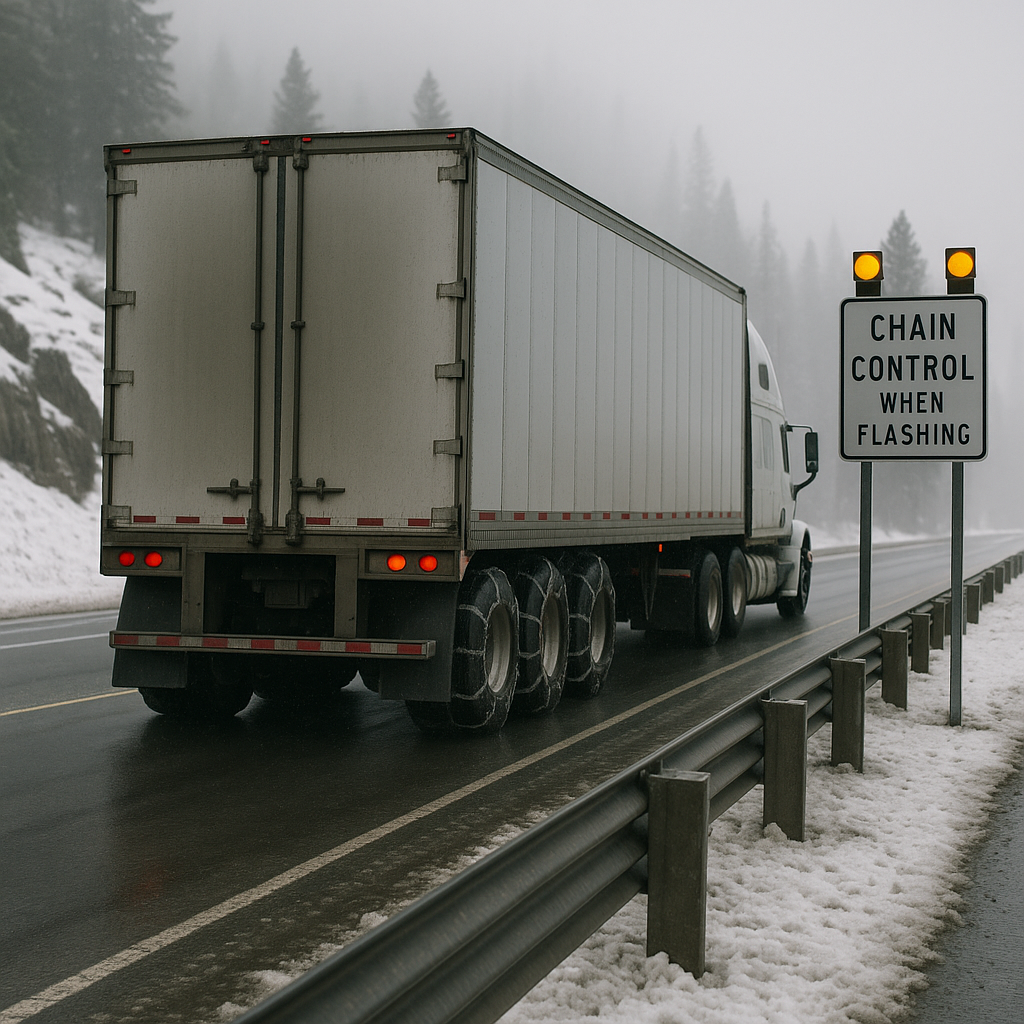
“Chain control” means the state mandates vehicles—especially those over 10,000 pounds—to install tire chains or approved traction devices. When activated, these rules are strictly enforced, with checkpoints and fines for non-compliance. The intent is to prevent vehicles, particularly heavy trucks, from losing control, jackknifing, or becoming immobilized and blocking critical routes.
How This Condition Affects Trucks Differently Than Cars
Chains level the playing field on ice and snow, but trucks and passenger vehicles face fundamentally different challenges in winter conditions. Nevada chain controls trucking safety protocols are designed with these differences in mind.
While passenger cars are lighter and more agile, trucks present much more mass and require dramatically more distance to stop. A loaded 18-wheeler can weigh up to 80,000 pounds—compared to a car’s 3,000 or 4,000. The immense weight creates momentum that even the best anti-lock brakes and traction controls often struggle to manage on slick surfaces.
Key factors differentiating trucks:
– Braking Distance: On dry pavement, trucks already need more room to stop; throw in ice, and the required distance can increase severalfold, even with chains.
– Traction Issues: Even with required chains, not all wheels are chained on a tractor-trailer. Trailers, which follow the tractor, are particularly prone to sliding or swinging out.
– Difficulty Navigating Grades: Steep ascents or descents, like those on I-80 through the mountains or the Ruby Mountains’ Emigrant Pass, are challenging for large trucks to maintain control on, especially under slippery conditions.
– Risk of Jackknifing: Chains help reduce the chance, but the risk cannot be eliminated, particularly during downhill braking or sudden maneuvers.
Enforcement of chain controls helps mitigate these risks by maximizing traction and stabilizing heavy vehicles. However, the installation and removal of chains for trucks is more complex and time-consuming compared to cars. Trucks may need to chain up multiple axles, and incorrect installation can actually reduce traction or lead to equipment failures.
Why Crashes Can Become Severe Under These Conditions
Crashes involving commercial trucks in winter weather are often far more severe than those involving only passenger vehicles. There are several reasons for this, many of which are directly influenced by the conditions that lead the state to issue chain controls:
– Mass and Energy: The sheer weight of trucks translates to more kinetic energy in any collision, increasing the potential for severe damage and injury.
– Cargo Hazards: Commercial trucks often haul hazardous materials, oversized loads, or multi-trailer “road trains,” which add complexity and risk to winter crashes.
– Blockage and Delays: When trucks lose control and crash in mountainous or remote Nevada highways, they can completely block the roadway for hours, stranding hundreds of other motorists in sub-freezing temperatures.
– Visibility Problems: Winter storms can bring blizzard conditions with near-zero visibility. Large trucks have longer blind spots and need more time to react—not just to road hazards, but to other vehicles, plows, or sudden obstacles.
– Chain Failures: Inadequately installed or poorly maintained chains can snap, wrap around axles, or fail to improve traction at all, unexpectedly sending a truck out of control.
– Recovery Hazards: Attempting to remove a stuck truck or clear an accident scene in a winter storm puts rescue crews at additional risk.
Properly implemented, Nevada’s chain controls significantly reduce both the frequency and severity of these dangerous scenarios by requiring an added level of precaution and preparedness when severe weather hits.
Common Seasonal Patterns in Nevada
Nevada chain controls trucking safety measures are most likely to be enacted during specific climatic patterns and seasons. While the most famous of Nevada storms sweep in from the Pacific over the Sierra Nevada, the Silver State is no stranger to wide-ranging winter weather:
– November to April: Most chain control advisories occur from late fall into early spring, coinciding with snowstorms and prolonged freezing periods in higher elevations.
– Sierra Nevada storms: Powerful winter systems, often called “atmospheric rivers,” can dump several feet of snow in a matter of days on roads like I-80 and US 50 around Lake Tahoe.
– Cold snaps: Arctic fronts can push south into Nevada’s valleys and plateaus, turning rain to freezing rain or snow and causing black ice on previously clear roads.
– Spring and autumn surprises: Unpredictable weather can bring early or late-season snows, catching some travelers off guard.
Nevada’s official NDOT road advisories and variable message signs are updated promptly, but weather can change quickly. Even short windows of icy conditions can prompt a chain restriction, particularly for trucks ascending or descending mountain passes with many switchbacks and steep drops.
Neutral Closing Paragraph
In conclusion, Nevada’s chain control system plays a critical role in ensuring trucking safety during the hazardous conditions brought by the state’s diverse and often unpredictable winter weather. While compliance with chain requirements adds time and operational challenges for truckers, it is a proven measure that benefits both the trucking industry and the traveling public by reducing risks on icy and snowy roadways. Staying informed about chain control alerts and seasonal weather trends enables truck drivers and fleet managers to plan ahead, minimize delays, and prioritize safety without the need for guesswork. Ultimately, informed cooperation with Nevada’s chain controls helps keep people, cargo, and critical roadways moving safely through the seasons.